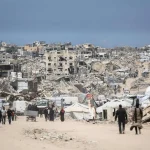

The stalled delivery of Pope Francis’s donated vehicle intended for use as a pediatric ambulance in Gaza underscores the escalating logistical and political impediments to humanitarian aid and, critically, investment in essential infrastructure within the Palestinian territories. While framed as a charitable gesture, the bureaucratic delays highlight a systemic risk assessment increasingly prevalent amongst sovereign wealth funds and international financial institutions considering projects in the region. The incident isn’t merely about a single vehicle; it’s a potent symbol of the heightened due diligence now required, impacting timelines and potentially increasing the cost of capital for any initiative – from healthcare provision to renewable energy projects – targeting the region.
From a sovereign wealth fund perspective, the situation reinforces the need for robust political risk insurance and the structuring of investments through multilateral development banks. Funds like the Qatar Investment Authority, Mubadala Investment Company, and the Public Investment Fund of Saudi Arabia are actively diversifying beyond traditional energy assets, with a growing interest in social impact investments. However, the Gaza vehicle case demonstrates that even seemingly uncontroversial humanitarian efforts are vulnerable to protracted delays, raising questions about return on investment and the feasibility of long-term commitments. This will likely lead to a preference for projects in more politically stable MENA markets – Egypt, UAE, and Saudi Arabia – at least in the short to medium term.
The implications for venture capital are equally significant. While fintech and e-commerce are experiencing growth in the Palestinian territories, attracting seed and Series A funding will become demonstrably harder. Investors already grapple with limited exit opportunities; the added layer of logistical uncertainty and potential for project disruption will further deter risk appetite. Regional infrastructure development, particularly concerning essential services like healthcare and transportation, relies heavily on both public and private capital. The current impasse serves as a cautionary tale, potentially diverting investment towards nations offering more predictable regulatory environments and streamlined import/export processes.
Ultimately, the delayed delivery is a microcosm of broader challenges facing the MENA region. It’s a stark reminder that geopolitical considerations consistently outweigh purely economic factors, and that even well-intentioned initiatives require meticulous planning, extensive stakeholder engagement, and a realistic assessment of the operational hurdles. The incident will likely accelerate the trend of investors prioritizing projects in nations actively pursuing economic diversification and demonstrating a commitment to regional stability, potentially exacerbating existing economic disparities within the region.