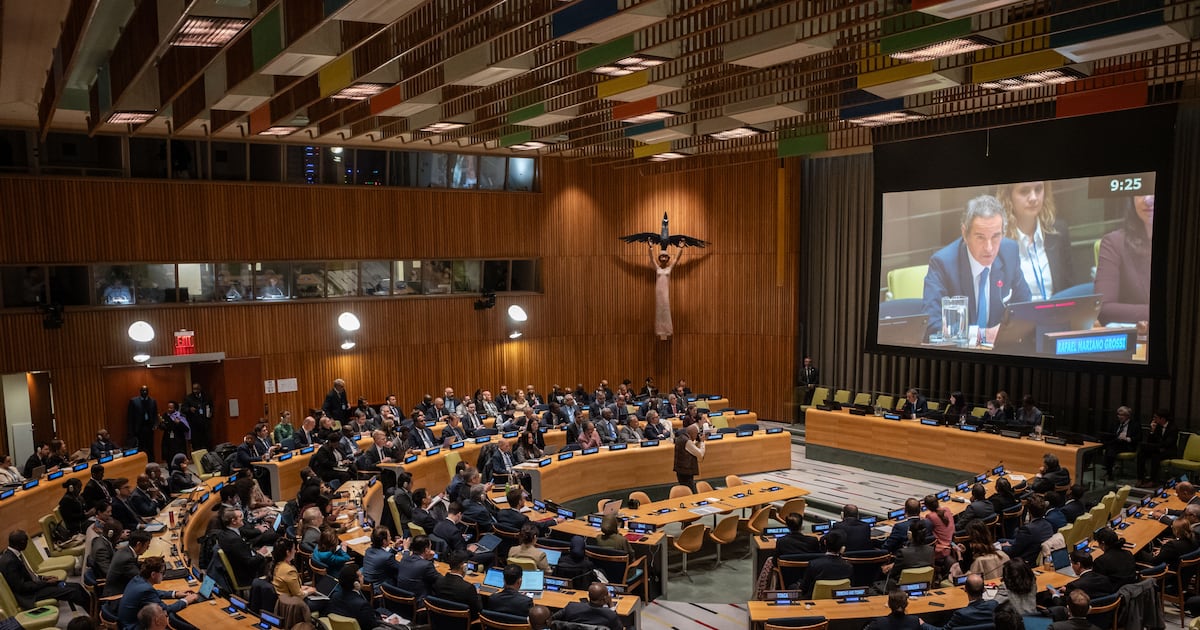

The ongoing deliberations for the next United Nations Secretary-General are highlighting a critical juncture for the global body, with all four candidates – Rafael Grossi, Michelle Bachelet, Rebeca Grynspan, and Macky Sall – acknowledging a significant erosion of trust and effectiveness. This internal assessment carries profound implications for the Middle East and North Africa (MENA) region, particularly concerning sovereign capital deployment, venture capital flows, and the development of regional infrastructure.
A primary business impact stems from the heightened uncertainty surrounding international cooperation. MENA nations, increasingly focused on diversifying their economies beyond hydrocarbons, rely on stable geopolitical frameworks and predictable international institutions for attracting foreign direct investment and securing crucial development financing. A weakened UN could lead to increased regional instability, thereby deterring long-term private sector engagement and potentially disrupting vital infrastructure projects. Sovereign wealth funds across the region, substantial accumulators of capital, may become more risk-averse, potentially shifting allocations towards perceived safer havens. Conversely, a revitalized and effective UN could foster greater confidence, encouraging increased investment in areas such as renewable energy, digital infrastructure, and sustainable development initiatives – all critical for MENA’s future economic diversification.
The implications for venture capital and technological advancement in MENA are equally significant. The UN’s role in promoting global partnerships and facilitating knowledge sharing can accelerate the adoption of new technologies and the growth of local tech ecosystems. If the UN’s efficacy is perceived as diminished, the region could face slower access to international funding and expertise, potentially hindering the ambitious digital transformation agendas of countries like the UAE, Saudi Arabia, and Egypt. Moreover, the UN’s focus on sustainable development and human rights can influence investment priorities, potentially driving capital towards socially responsible and environmentally conscious ventures. A renewed commitment to multilateralism, championed by candidates like Grynspan and Sall, could unlock further opportunities for cross-border innovation and investment within the region.
Finally, the future of regional infrastructure development is intrinsically linked to the UN’s ability to foster international collaboration. Large-scale infrastructure projects in MENA often require coordinated efforts and international financing. A more effective UN could facilitate the mobilization of resources and expertise for initiatives such as cross-border energy grids, enhanced transport networks, and sustainable water management systems. Conversely, a perception of institutional weakness could lead to delays, increased costs, and a fragmentation of regional development efforts. The chosen Secretary-General’s leadership in addressing global challenges – from climate change to geopolitical conflicts – will undoubtedly shape the international landscape within which MENA nations pursue their ambitious infrastructure development plans, impacting their long-term economic competitiveness and regional integration.