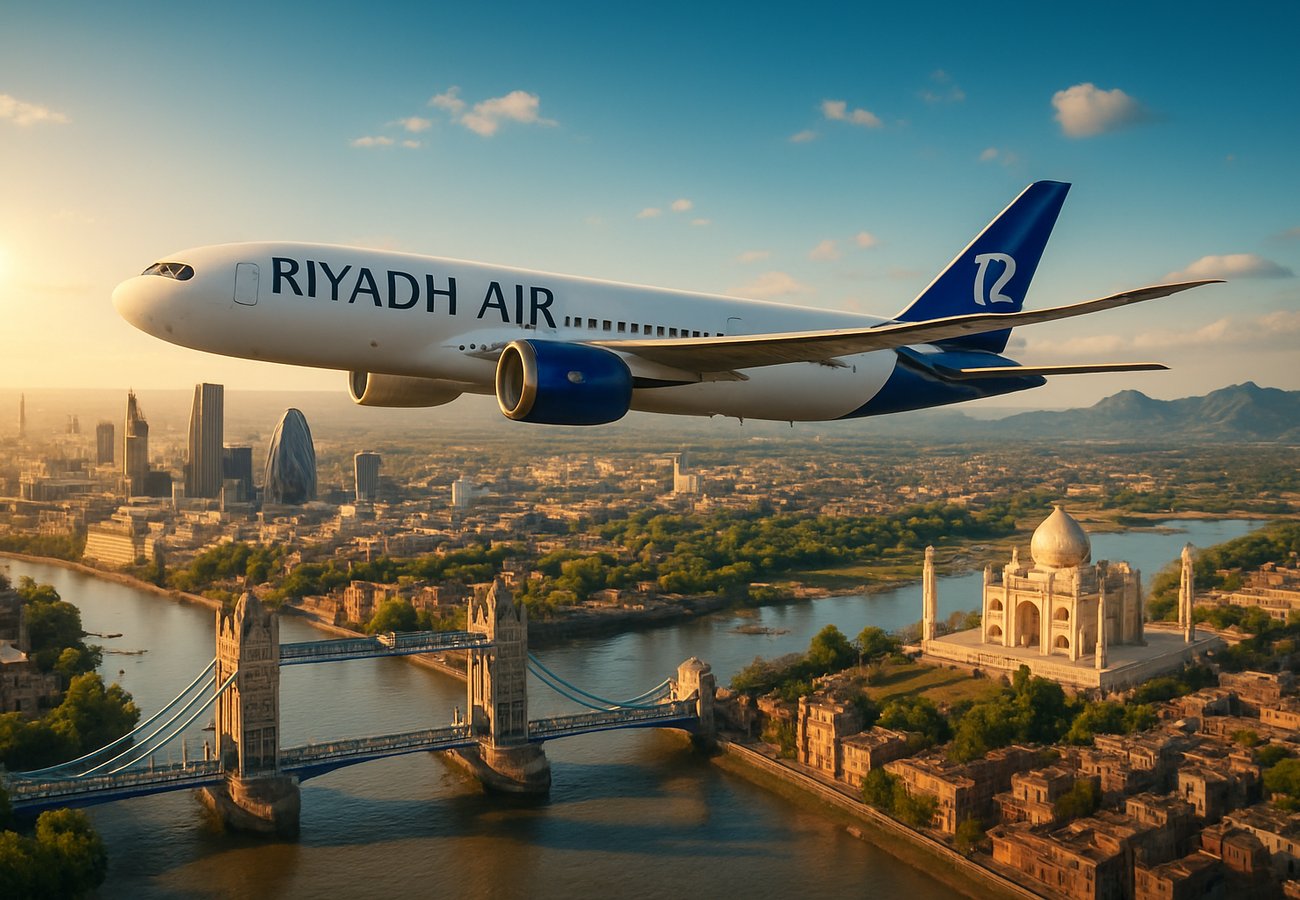

Riyadh Air’s establishment as a sovereign-backed venture by Saudi Arabia’s Public Investment Fund (PIF) marks a strategic recalibration of capital allocation toward aviation infrastructure, a critical lever in Vision 2030’s economic diversification agenda. The PIF’s investment—backed by vast sovereign capital—underscores a calculated risk in modernizing Saudi Arabia’s transport sector, moving beyond traditional oil revenues to secure high-growth aviation assets. By leveraging PIF’s liquidity and regulatory support, Riyadh Air bypasses typical startup capital constraints, enabling rapid expansion into premium international routes while positioning Saudi Arabia as a central node in global aviation networks. This sovereign-led model not only de-risks the airline’s scalability but also signals a broader geopolitical intent to substitute regional infrastructure vulnerabilities with self-reliant, tech-driven solutions. The Boeing 787-9 Dreamliner fleet, chosen for its fuel efficiency and digital cockpit advancements, exemplifies this convergence of sovereign capital and technological innovation, reducing operational costs and aligning with global sustainability mandates.
The business impact of Riyadh Air’s route expansion extends beyond tourism, targeting high-margin business travel and premium tourism segments in Europe, South Asia, and the Middle East. By connecting Riyadh directly to London, Madrid, and Bangkok, the carrier disrupts legacy hub-and-spoke models through shorter, more efficient flight paths, capturing affluent demographics underserved by existing carriers. Sovereign capital mitigates the financial risks of entering competitive markets dominated by state-owned giants like Emirates and Qatar Airways, while venture capital-adjacent private partnerships may emerge to fund tech-driven ancillary services—such as AI-optimized baggage systems or contactless boarding—enhancing passenger experience and operational margins. Regionally, Riyadh Air’s success could catalyze investments in mid-tier airports across the Gulf and North Africa, fostering a new market for aviation tech providers. However, this growth also risks fragmenting the region’s air traffic management ecosystems, necessitating coordinated investments in next-gen airspace surveillance and cybersecurity infrastructure to accommodate increased cross-border traffic.
The ripples of Riyadh Air extend into the MENA region’s broader infrastructural and economic architecture. Saudi Arabia’s prioritization of aviation as a public-private tech-play signals a paradigm shift in sovereign infrastructure spending, where capital flows are directed toward digital logistics, smart airport systems, and sustainable aviation fuel (SAF) production. This could inspire neighboring Gulf states to parallel investments, creating a competitive but collaborative regional tech ecosystem. For venture capital players, opportunities may arise in supporting startups focused on alternative fuels, predictive maintenance using IoT, or blockchain-enabled passenger data management. The airline’s strategic choice of destinations—prioritizing markets with high Saudi diasporas or burgeoning tourism demand—highlights the importance of data analytics in regional economic planning, a domain where public-private partnerships under sovereign oversight are likely to dominate. Ultimately, Riyadh Air’s model represents a blueprint for leveraging sovereign capital not merely as economic stimulus but as a tool for geopolitical and technological soft power, reshaping the MENA’s role in global value chains.