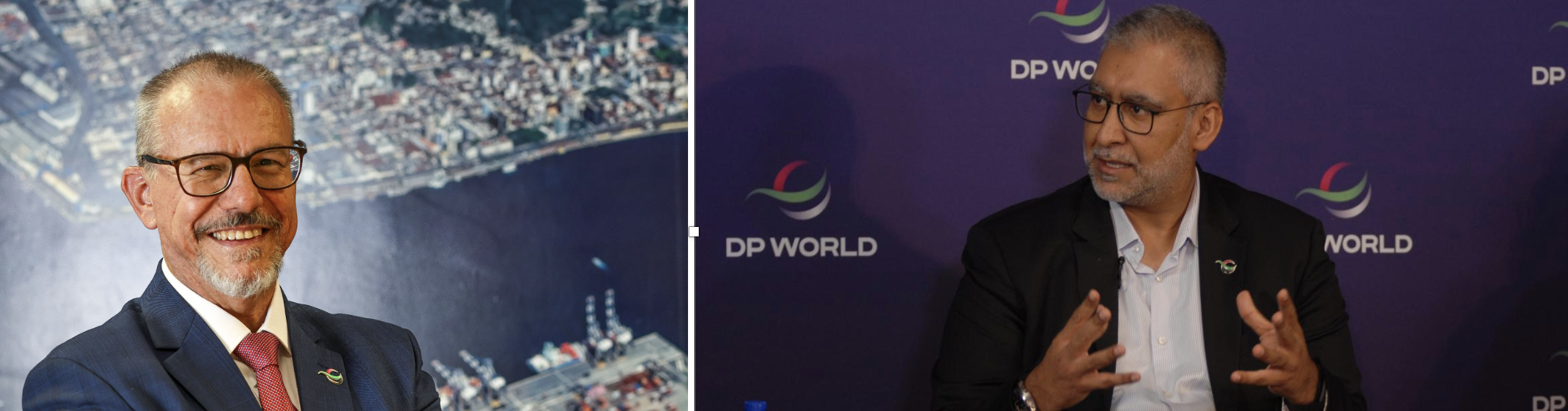

DP World’s unveiling of the Brazil-Africa Link logistics corridor at Intermodal South America 2026 represents a calculated bet on deepening South-South trade flows that carry significant implications for Gulf sovereign wealth funds and regional infrastructure investors. The integrated corridor connecting the Port of Santos to DP World’s operations in Angola and Mozambique—leveraging a network spanning three port terminals, 52 warehouses, and over 4,250 vehicles—positions the Dubai-based logistics giant to capture a growing share of Brazil-Africa bilateral trade, estimated at over $20 billion annually. For MENA-based institutional capital, this development underscores the strategic imperative of anchoring assets in multimodal trade corridors that connect high-growth emerging markets across three continents.
The timing of this expansion coincides with accelerating Gulf sovereign wealth fund deployment into African infrastructure. Saudi Arabia’s Public Investment Fund, Abu Dhabi Investment Authority, and Qatar Investment Authority have all signaled intensified appetite for African logistics and port assets, viewing them as critical nodes in diversifying away from oil-dependent revenues. DP World’s corridor—providing end-to-end visibility from Brazilian export origins to African distribution networks—offers a template for the kind of integrated infrastructure plays sovereign capital seeks: predictable cash flows, operational leverage, and strategic positioning at the intersection of agricultural commodity flows and consumer goods demand. The company’s R$3.6 billion capacity expansion at Santos, targeting 2.1 million TEUs by 2028, directly enhances the throughput backbone supporting this corridor.
From a competitive dynamics perspective, the Brazil-Africa Link intensifies pressure on regional players to accelerate their own corridor strategies. DP World’s control of terminals in Angola’s Luanda and Mozambique’s Beira—combined with its economic free zone investments—creates a vertically integrated offering that rivals including MSC, CMA CGM, and state-backed operators will find difficult to replicate without substantial capital commitment. For MENA logistics firms and their financial backers, the message is clear: the next phase of value creation lies not in isolated port concessions but in orchestrating integrated supply chain networks that span multiple jurisdictions. The Brazil-Africa corridor demonstrates that the winners in this environment will be those capable of bundling maritime, inland, and digital infrastructure into seamless trade solutions—a model Gulf investors should examine closely as they scale their African infrastructure portfolios.