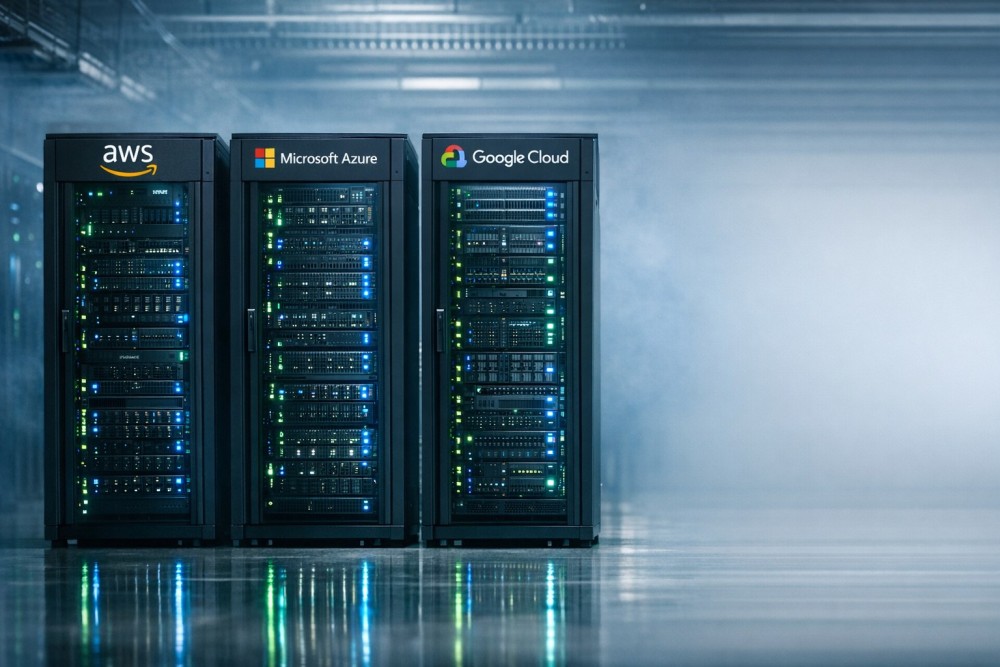

The competition among leading hyperscalers has evolved beyond a general struggle for market share; it is now a strategic contest focused on securing AI workloads, achieving capital expenditure efficiency, and capturing the primary revenue streams of the coming decade. For investors, the selection of appropriate hyperscaler exposure or associated supply-chain beneficiaries represents one of the most significant strategic allocations within the US technology sector, with direct ramifications for the global technology landscape.
In the Middle East and North Africa, the structural advantages of these hyperscalers translate into critical sovereign capital and regional infrastructure development. The substantial backend commitments and AI revenue run rates demonstrated by these hyperscalers underpin the financial viability of large-scale data centre projects across the region. Such investments necessitate a corresponding commitment from sovereign wealth funds to ensure the long-term energy and economic infrastructure required for these compute-intensive operations, thereby anchoring future digital growth.
Venture capital and corporate investment flows are increasingly aligning with these hyperscaler strategies, particularly concerning custom silicon and networking solutions that reduce dependency on traditional GPU suppliers. The significant capex intensity, predominantly directed towards AI infrastructure, creates a cascade effect benefiting local technology suppliers and regional data centre construction. Consequently, institutional investors are advised to evaluate not only the direct hyperscaler positions but also the resilience of the broader regional infrastructure ecosystem, ensuring that sovereign capital deployments are commensurate with the substantial long-term AI commitments underpinning the next generation of MENA digital transformation.