
The extensionof Quantum Art’s Series A funding by $40 million highlights a pivotal moment in private equity’s appetite for high-growth technology ventures. While the Israeli quantum computing startup’s success underscores the global shift toward quantum-as-a-service (QaaS) models—a strategy now central to firms like IBM and IonQ—its financial trajectory offers a blueprint for venture capital (VC) dynamics in the Middle East and North Africa (MENA). The oversubscribed round, spearheaded by Bedford Ridge Capital and joined by global players such as Hudson Bay and Poalim Equity, demonstrates that cutting-edge infrastructure plays are increasingly viewed as low-risk, high-reward bets. For MENA, where VC ecosystems are still maturing, this signals a potential catalyst to channel sovereign and private capital toward similar disruptive technologies. The region’s growing pitchbook for advanced computing, semiconductors, or AI-driven solutions could draw inspiration from Quantum Art’s oversubscribed extension, fostering a regional VC culture that prioritizes scalability and technical differentiation.
The business impact of Quantum Art’s funding spree extends beyond its immediate operations, posing strategic questions for sovereign capital deployment in MENA. Governments across the region, seeking to diversify economies beyond hydrocarbons, are increasingly leveraging sovereign wealth funds to target future-oriented tech sectors. Quantum computing—seen as a strategic frontier—aligns with this goal. Sovereign entities in the Gulf, akin to Singapore or Denmark, may emulate Israel’s approach by partnering with firms like Quantum Art to build local QaaS platforms or semiconductor clusters. However, the $164 million raised by Quantum Art underscores the capital-intensive nature of quantum R&D, a challenge for many MENA economies with limited domestic expertise. Sovereign capital here would need to bridge this gap, potentially via public-private partnerships to establish regional quantum labs or training ecosystems. The success of Quantum Art could thus act as a case study for MENA policymakers aiming to attract sovereign investments in high-tech ventures, balancing risk with long-term economic resilience.
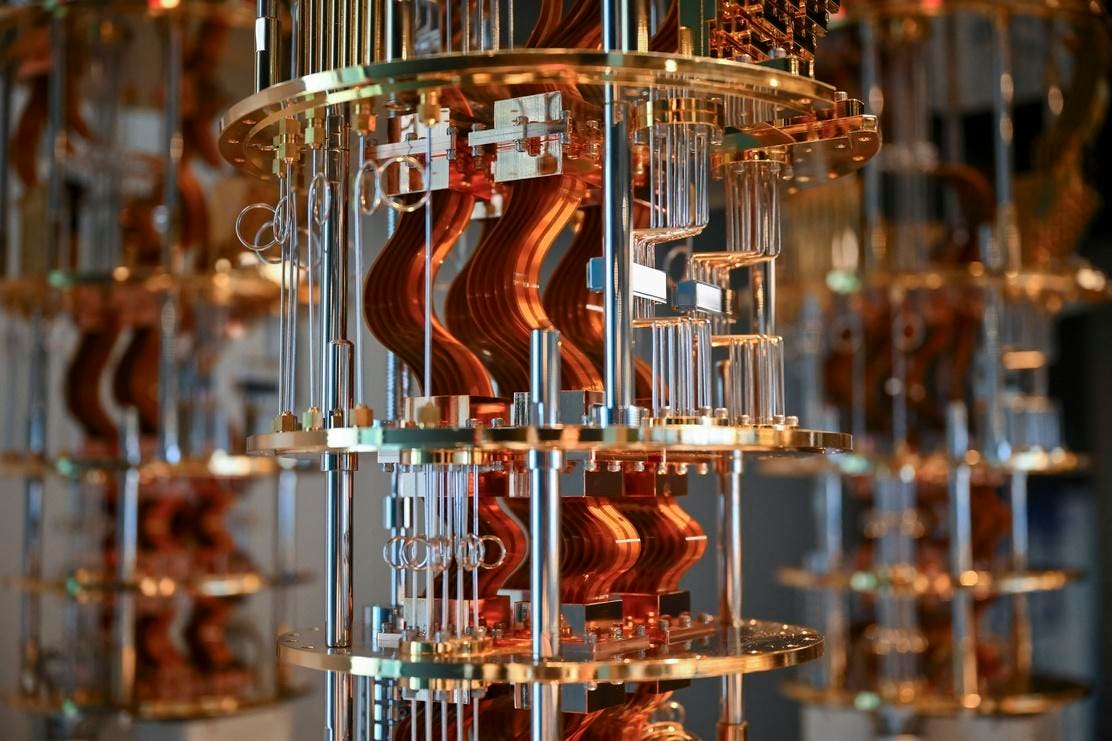
Regional infrastructure implications remain a critical consideration. Quantum Art’s QaaS model relies on advanced optical systems and scalable trapped-ion architectures, requiring robust digital infrastructure—a stark contrast to many MENA markets still grappling with basic connectivity gaps. For the region to compete globally, sovereign and VC players must prioritize investments in cloud computing, photonics labs, and quantum-ready data centers. This could manifest through MENA-based QaaS providers leveraging Gulf-state funds or European partnerships to develop localized infrastructure. Additionally, Quantum Art’s emphasis on software-driven scaling (e.g., optical segmentation and error correction) suggests that physical infrastructure costs could be mitigated through innovative design—a lesson for MENA startups aiming to compete without massive capital expenditure. The $40 million extension also highlights investor confidence in QaaS as a viable go-to-market strategy, a model that MENA entrepreneurs might adopt to reduce barriers to entry in quantum computing. However, without coordinated infrastructure development, the region risks becoming a consumer rather than a contributor to this global tech shift, undermining its potential to capture sovereign or VC-led growth opportunities.