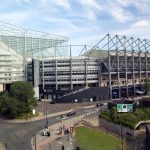
The Public Investment Fund’s (PIF) delegation, accompanied by the Reuben brothers, has landed in Newcastle to assess the financial calculus of redeveloping St James’ Park versus erecting a new, purpose‑built arena at Leazes Park. At stake is a £100 million uplift in annual club revenue that the board earmarks as essential to transform Newcastle United into a consistent European contender. The sovereign fund’s willingness to inject capital reflects a broader Gulf‑led strategy to diversify asset classes beyond hydrocarbons, positioning sport‑related infrastructure as a conduit for long‑term yield and soft power across the MENA region.
From a venture‑capital perspective, the stadium decision carries outsized implications for ancillary ecosystems: hospitality startups, digital ticketing platforms, and IoT‑enabled fan‑engagement firms stand to attract early‑stage financing anchored to the club’s upgraded facilities. A modernised venue with expanded capacity and premium hospitality suites would unlock naming‑rights agreements and corporate hospitality blocks, creating a pipeline of recurring cash flows that can be securitised or bundled into sovereign wealth fund‑backed mezzanine debt instruments.
Infrastructure analysts note that the preferred outcome—whether a £300‑million redevelopment or a £450‑million greenfield project—will likely be underpinned by a public‑private partnership model mirroring recent UAE and Saudi stadium ventures. Such arrangements can accelerate regional construction standards, integrate sustainable design mandates, and catalyse transport upgrades around Tyneside, delivering spill‑over benefits to the North East’s logistics and tourism sectors.
Strategically, the PIF’s engagement signals a decisive shift from passive ownership to active asset‑creation, aligning Newcastle United’s trajectory with the Kingdom’s Vision 2030 ambition to export Saudi capital into high‑visibility global assets. The final stadium verdict will therefore serve as a litmus test for sovereign investors’ appetite to back large‑scale, revenue‑generating sports projects, and could set a precedent for future MENA‑led investments in European football infrastructure.