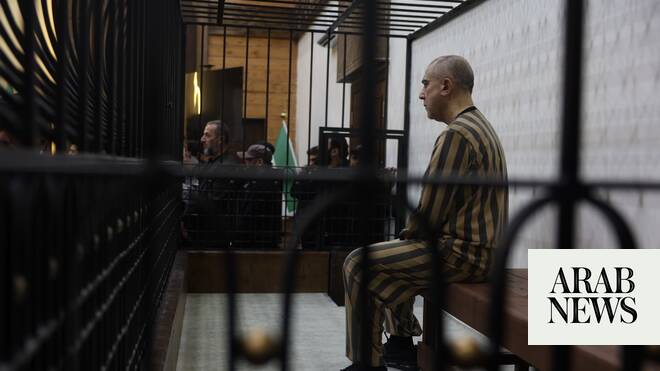

Damascus — The commencement of Syria’s first public trial of former Assad regime officials marks a pivotal inflection point for sovereign capital allocation and regional investment sentiment across the MENA basin. The appearance of Atef Najib, former head of the Political Security Branch in Daraa, before the Damascus courtroom on charges related to crimes against the Syrian people signals a decisive shift in the transitional justice timeline that sovereign wealth funds and institutional investors have been monitoring since Bashar Assad’s December 2024 removal. The trial’s public nature, coupled with the in-absentia indictment of Maher Assad and other senior security figures, establishes a legal precedent that will fundamentally shape the risk calculus for capital re-entry into Syrian markets.
Regional infrastructure implications extend well beyond Syria’s borders. Gulf Cooperation Council sovereign wealth vehicles, particularly those from the UAE and Saudi Arabia, have maintained strategic patience on Syrian reconstruction commitments pending clarity on governance accountability frameworks. The current judicial proceedings provide that institutional clarity. Qatar’s diplomatic re-engagement and Turkey’s security cooperation arrangements further suggest that cross-border infrastructure corridors—particularly energy transit routes and logistics networks connecting the Levant to Gulf hubs—may accelerate from planning to procurement phases within the next 18 to 24 months.
Venture capital sentiment toward the broader Levant corridor remains cautiously optimistic. Early-stage fund managers with MENA mandates have flagged Syria’s potential as a post-conflict market, though portfolio construction will likely prioritize Jordan and Lebanon as intermediary staging points before direct Syrian deployment. The transitional government’s ability to demonstrate sustained judicial momentum will serve as the primary catalyst for venture outflows. Estimated reconstruction costs exceeding $250 billion create substantial opportunity for infrastructure-focused private equity, provided rule-of-law indicators continue their current trajectory.