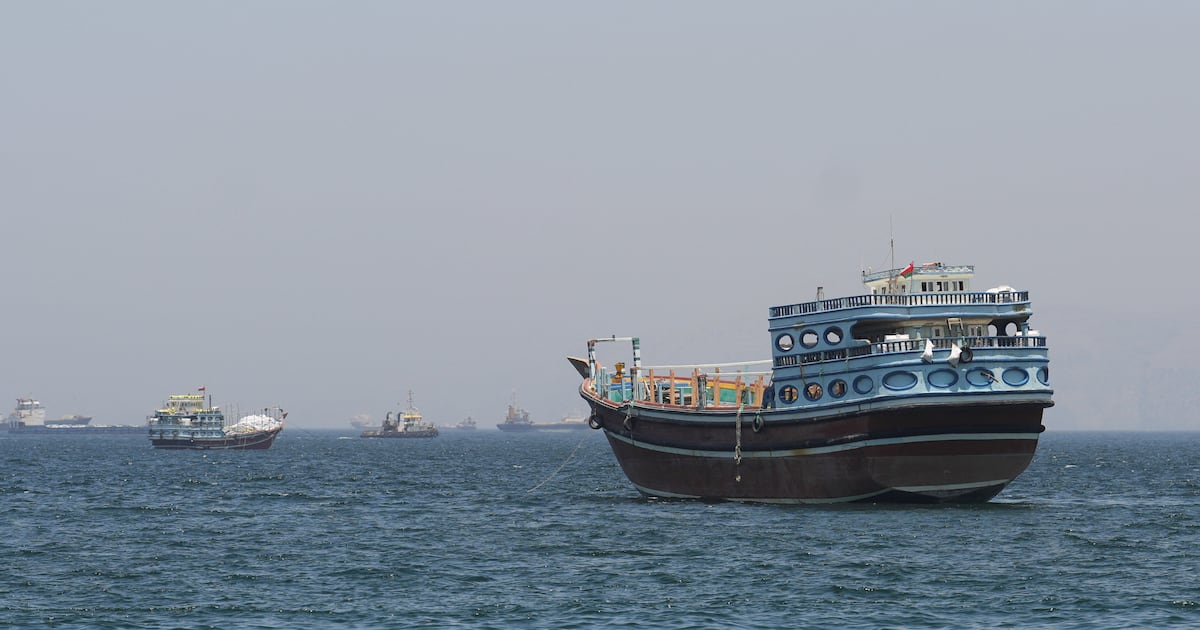

The deployment of Project Freedom represents a critical juncture for regional sovereign capital allocation and infrastructure resilience across the Gulf Cooperation Council states. With Iran’s two-month blockade of the Strait of Hormuz disrupting approximately 21% of global petroleum liquids trade, energy-dependent economies from Saudi Arabia to the UAE face mounting pressure to diversify supply routes and de-risk critical maritime infrastructure. Sovereign wealth funds, managing over $2.3 trillion in assets across the region, are likely accelerating investments in alternative logistics corridors including the UAE’s Fujairah pipeline infrastructure and Saudi Arabia’s Red Sea port expansions, as traditional chokepoint risk premiums spike above 450 basis points.
The venture capital ecosystem across MENA, which attracted $4.2 billion in funding last year, now confronts significant headwinds as military escalation threatens both portfolio company operations and limited partner commitments. Technology startups specializing in maritime logistics, supply chain digitization, and energy trading platforms—previously buoyed by record investment inflows—are experiencing valuation compression amid heightened geopolitical uncertainty. Regional VC funds are pivoting toward defense-tech and cybersecurity verticals, with over $1.8 billion in dry powder positioned for post-conflict reconstruction plays, particularly in port modernization and autonomous vessel technologies that could reduce future chokepoint dependencies.
Central banks across the region have activated contingency protocols, with Saudi Arabia’s foreign reserves dipping below $420 billion as defense expenditures surge and insurance costs against war risk climb toward $500,000 per Gulf transit. The UAE Central Bank’s decision to establish a $10 billion emergency liquidity facility speaks to growing concerns about regional banking sector exposure to shipping consortiums and commodities traders operating through Dubai’s financial free zones. Meanwhile, OPEC+ coordination mechanisms face unprecedented strain as member states balance production commitments against infrastructure security imperatives, potentially reshaping the cartel’s pricing power dynamics for years to come.
The broader infrastructure implications extend beyond immediate military considerations to challenge the fundamental architecture of Gulf economic integration. Saudi Arabia’s NEOM mega-project and Qatar’s LNG expansion ambitions now factor in elevated security assessments, while Kuwait and Iraq pursue accelerated pipeline connectivity to bypass maritime exposure entirely. Should Project Freedom achieve its stated objectives without triggering wider regional conflagration, the resulting security framework could catalyze a new wave of infrastructure investment exceeding $150 billion across enhanced maritime domain awareness systems, hardened port facilities, and redundant energy transit routes that fundamentally reshape MENA’s connectivity calculus for the next decade.