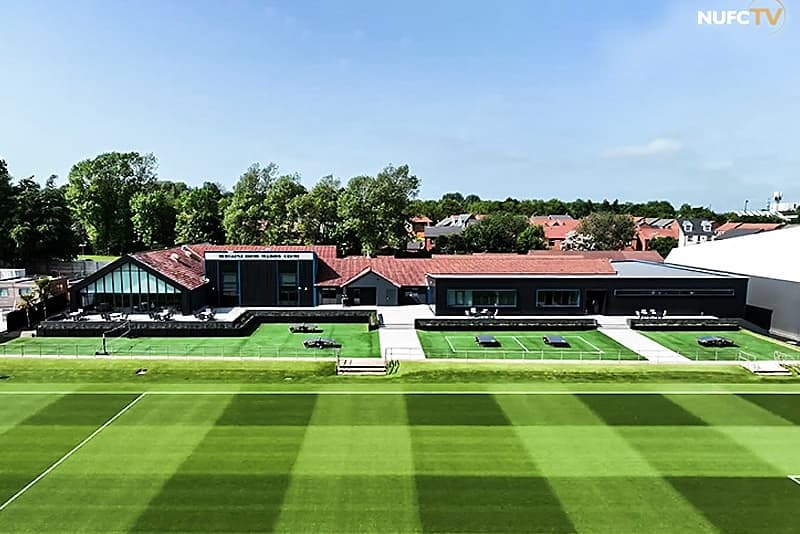

The annual strategic summit of Newcastle United’s leadership at Matfen Hall last week underscored the deepening role of Middle Eastern sovereign capital in shaping global sports infrastructure, with delegates from the Saudi Public Investment Fund (PIF) – the club’s majority owner – central to discussions on a £200m new training ground and a long-term roadmap for St James’ Park. PIF, which manages more than $700bn in assets under management, has already allocated eight-figure sums to upgrade the existing Darsley Park training site, with a new Woolsington-based facility now the preferred option for a purpose-built complex designed to match the “world-class” ambitions articulated by club CEO David Hopkinson at the recent SportsPro London conference. The presence of PIF chairman Yasir Al-Rumayyan at the summit confirms the sovereign wealth fund’s direct oversight of capital allocation for non-sporting operational assets, a pattern consistent with broader MENA sovereign wealth fund (SWF) strategies to deploy patient capital into globally scalable sports and leisure infrastructure.
Newcastle’s £18m naming rights partnership with hydration technology firm KNOX, which will rebrand Darsley Park as The KNOX from July, exemplifies the commercial monetization strategies MENA SWFs are prioritizing to offset infrastructure spend and build ancillary value chains. The deal, announced ahead of the Matfen Hall summit, aligns with PIF’s broader push to integrate portfolio companies with global sports assets, creating downstream venture capital opportunities in sports tech, sustainable facility operations and athlete performance analytics across the MENA region. Industry trackers note that more than $1.2tn in MENA sovereign capital has been deployed into global sports and adjacent infrastructure over the past five years, with Newcastle’s infrastructure planning serving as a testbed for operational models that will be replicated in Saudi’s $5bn sports city developments and similar projects across the Gulf Cooperation Council (GCC).
The summit’s structure, which included head coach Eddie Howe in high-level sporting reviews but excluded him from infrastructure deliberations, reflects the institutional governance frameworks MENA SWFs are rolling out across their global portfolio assets to prioritize long-term capital preservation over short-term operational noise. PIF’s deliberation over whether to renovate St James’ Park or commission a new-build stadium mirrors similar strategic trade-offs facing sovereign-backed infrastructure projects across the MENA region, where adaptive reuse of legacy assets is increasingly weighed against greenfield developments aligned with net-zero and smart city mandates. For regional policymakers, Newcastle’s infrastructure roadmap provides a blueprint for structuring public-private partnerships (PPPs) between sovereign capital, global commercial brands and local stakeholders, a critical capability as GCC states accelerate $2tn in planned infrastructure spend ahead of major regional sporting events including the 2034 FIFA World Cup in Saudi Arabia.