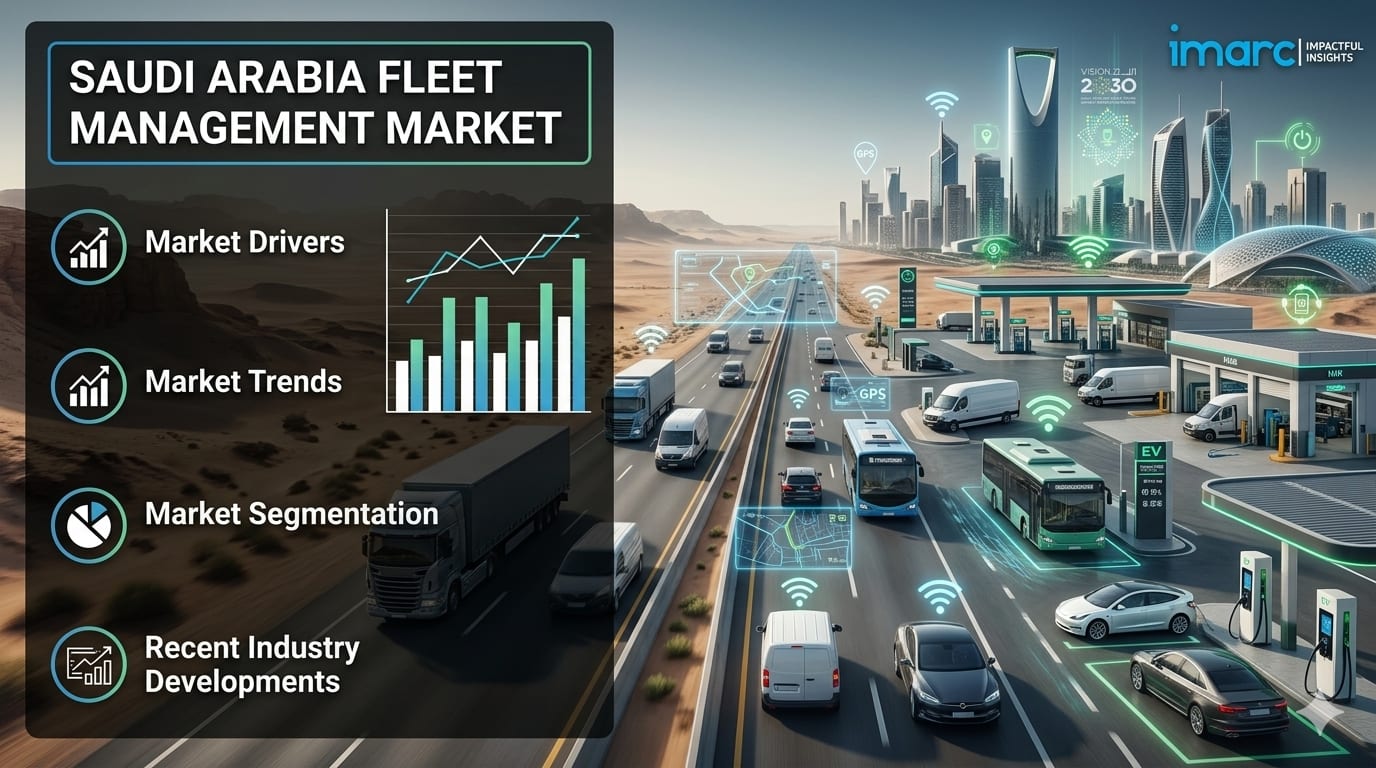

Saudi Arabia’s fleet management sector is evolving into a structural growth corridor anchored by sovereign balance-sheet deployment and Vision 2030 industrial policy. With the market projected to double to over USD 600 million by 2034, capital allocation is shifting from discretionary operational spend to mission-critical infrastructure. SAR 1.5 billion in committed smart-transport outlays and the National Industrial Development and Logistics Program’s USD 36 billion mandate for integrated logistics zones, rail, and port modernization are hardwiring demand for enterprise-grade telematics. For sovereign funds and state-affiliated utilities, fleet digitization is no longer ancillary—it is a procurement lever to extract efficiency from hydrocarbon-dependent supply chains while locking in vendor ecosystems aligned with localization mandates and data-sovereignty requirements.
MENA venture capital and sovereign-backed growth equity are recalibrating exposure to logistics technology as the Kingdom’s fleet mix scales beyond 1.6 million commercial units. Fuel-cost volatility and 30 percent attainable efficiency gains from AI-driven route optimization have shifted investor scrutiny from ride-hailing consumer plays to B2B infrastructure: cloud-based SaaS platforms, predictive maintenance stacks, and electric-fleet energy management. Recent partnerships—Swvl–G4S, Elm–Petromin, and ORBCOMM’s smart-container rollout—signal that regional corporate venture units and family offices are prioritizing scalable, subscription-based models that de-risk capex for mid-market logistics operators while expanding total addressable market share in high-margin verticals such as cold-chain, energy services, and cross-border freight.
Regional infrastructure strategy is being rewritten by the integration of real-time telematics, edge analytics, and electrification compliance into multi-modal corridors linking Gulf ports to Central Asian and North African gateways. Mandatory tracking across public fleets and the phased adoption of EV-specific fleet platforms are catalyzing demand for local cloud hosting, domestic cybersecurity standards, and Arabic-language control towers—effectively tilting procurement away from legacy multinational vendors. For GCC logistics hubs competing on speed and customs clearance, fleet management is becoming critical process infrastructure rather than back-office tooling, with implications for port throughput yields, last-mile cost structures, and power-demand forecasting as transport electrification scales inside industrial cities.
The balance of risks and opportunities tilts toward operators that can align with state-led decarbonization roadmaps and sovereign capital cycles. Carbon reporting mandates, smart-fleet procurement in national logistics assets, and 5G-enabled IoT along NEOM and Red Sea corridors will bifurcate the market between best-in-class platforms and legacy point solutions. Capital allocators across the MENA region should treat fleet management not as a cost center but as an investable layer of supply-chain resilience: one that compresses working-capital cycles, insulates logistics EBITDA from fuel spikes, and channels venture and sovereign dollars into infrastructure that exports operational standards to growth markets from Egypt to the Levant.