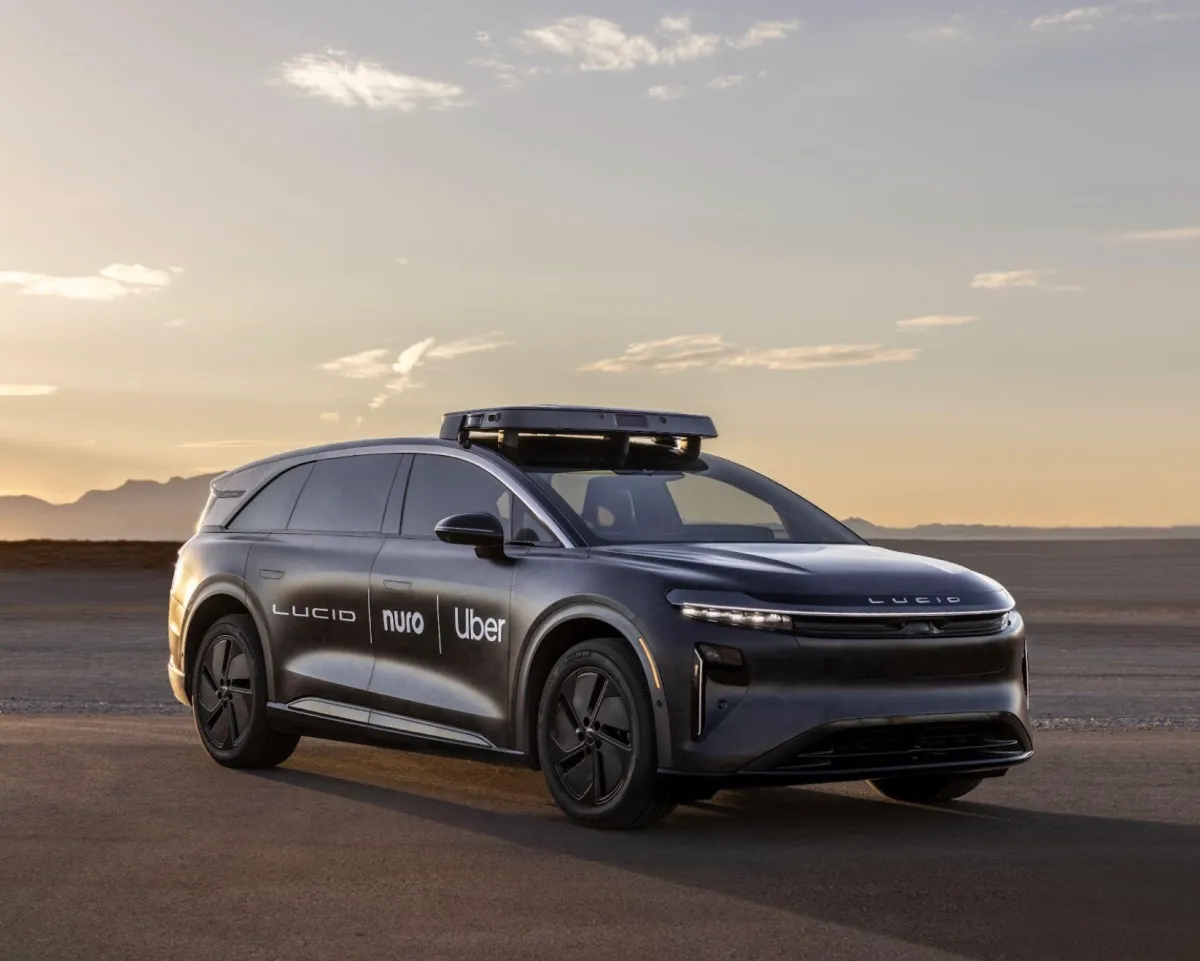

Nuro’s recent California driverless permit to test Lucid Gravity SUVs for Uber’s premium robotaxi service underscores a pivotal shift toward fully autonomous mobility-as-a-service, a model that can be transplanted into the MENA region where sovereign ambitions for high‑value mobility solutions are accelerating. The partnership exemplifies how deep‑pocketed corporates—backed by Nvidia’s AI hardware and Uber’s global platform—can catalyze a new class of mobility assets that integrate hardware, software, and fleet management at scale.
The involvement of sovereign capital in the Middle East adds a strategic dimension to such ventures, as regional wealth funds and government‑backed venture vehicles have already earmarked billions for autonomous transport, electric vehicle (EV) ecosystems, and AI‑driven logistics. By aligning these financing streams with partnership models like the Uber‑Lucid‑Nuro triad, MENA governments can de‑risk capital deployment while fast‑tracking the rollout of autonomous ride‑hailing tiers that serve both high‑density urban corridors and emerging suburban markets.
Venture capital dynamics in the region are being reshaped by the influx of corporate investors seeking proprietary mobility stacks, prompting a surge of micro‑funds and accelerator programs focused on autonomous driving, lidar, and edge‑computing. This convergence not seulement attracts top‑tier talent but also spurs localized R&D hubs that can supply components—from perception sensors to cloud‑based fleet orchestration—to broader autonomous ecosystems across the Gulf and North Africa.
Infrastructure implications are profound: the deployment of autonomous taxi fleets necessitates dense 5G/6G coverage, nationwide high‑definition mapping, and ubiquitous EV charging networks, all of which are being earmarked for public‑private investment under national digital‑infrastructure roadmaps. Consequently, sovereign and regional authorities are fast‑tracking regulatory frameworks and infrastructure financing mechanisms that will enable seamless integration of autonomous mobility, thereby positioning the Middle East as a testbed for next‑generation transport solutions that attract both domestic capital and international venture interest.