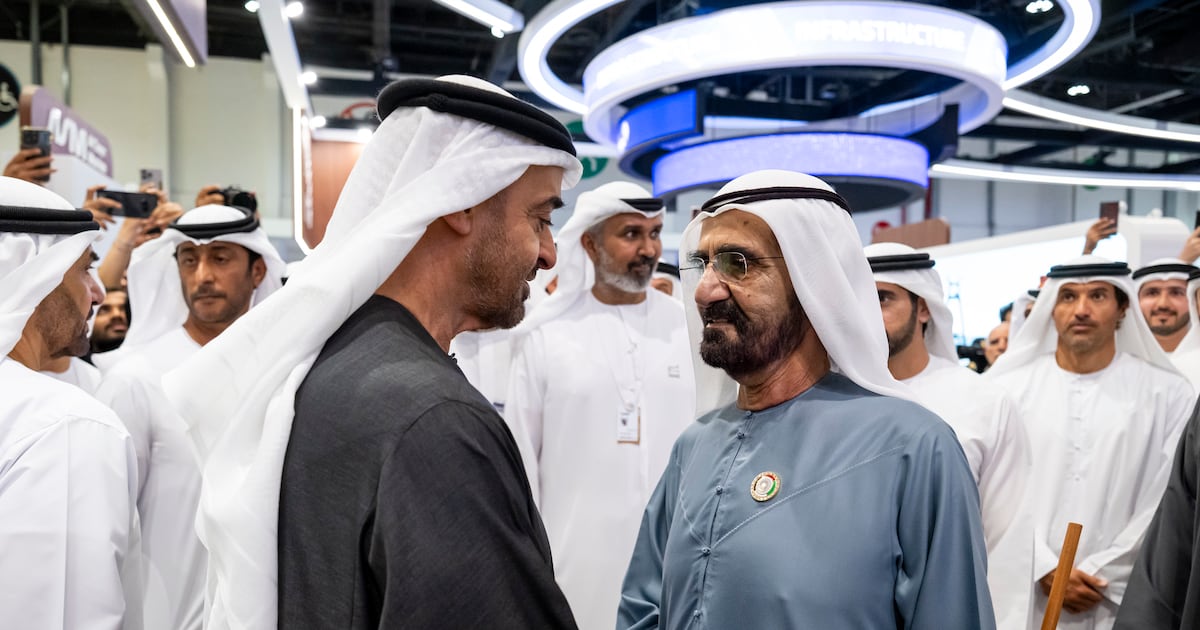
The United Arab Emirates’ strategic pivot toward industrial modernization and technology-driven economic diversification, exemplified by Sheikh Mohamed bin Zayed’s review of the “Make It in the Emirates” summit, signals a recalibration of sovereign capital allocation priorities across the MENA region. The event’s projected Dh168 billion ($45.7 billion) in industrial output agreements underscores the UAE’s aggressive leveraging of its sovereign wealth and state-owned enterprises to de-risk high-tech manufacturing clusters, particularly in renewable energy hardware and advanced materials. This aligns with broader Gulf strategies to repatriate capital from dwindling oil and gas revenues into sectors capable of absorbing 2–4% of GDP annually, a critical metric given OPEC+ production cuts and volatile hydrocarbon pricing.
Parallel efforts to cultivate venture capital ecosystems—such as Dubai’s Tech Valley and Abu Dhabi’s Mass Rapid Transit Authority’s spin-off incubator—reveal a dual focus on talent retention and geopolitical hedging. While sovereign funds like ADIA have prioritized direct equity stakes in AI infrastructure startups and hydrogen production hubs, regional accelerators are now courting diaspora entrepreneurs with tax-free innovation lanes, a model that could replicate the UAE’s success in attracting remote talent to NEOM-equivalent projects in Saudi Arabia and Qatar. However, the lack of cross-border VC collaboration between GCC jurisdictions remains a structural bottleneck, risking fragmented innovation ecosystems absent regulatory harmonization.
Regional infrastructure implications are profound: The UAE’s emphasis on “smart logistics networks” and AI-managed supply chains—highlighted during the summit—directly challenges Saudi Arabia’s NEOM-centric model, which prioritizes autonomous vehicle networks over industrial productivity. This rivalry forces policymakers to reconsider GCC-wide standardization of industrial data-exchange protocols, a prerequisite for achieving the UAE’s 2040 diversification target. Meanwhile, the $50 billion sovereign-backed capital injection into Jordan’s Port of Aqaba—a logistics node for UAE exports—reflects a recalibration of regional trade corridors away from Israeli markets, aligning more closely with Morocco and Turkey. These dynamics position the MENA as a contested pivot point for sovereign capital flows, where industrial modernization agendas now eclipse traditional petrorevenue-driven models.