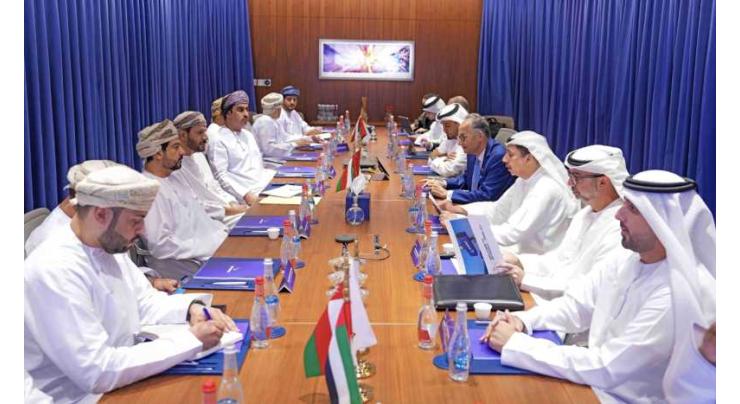

Oman’s Al Rawdah Special Economic Zone (SEZ), situated on the strategic UAE-Oman border with direct access to Sohar and Jebel Ali Ports, is poised to become a critical linchpin in the Gulf’s evolving logistics and industrial infrastructure. The recent collaboration between Oman’s Public Authority for Special Economic Zones and Free Zones (OPAZ), DP World, and Dubai’s Economic Agenda D33 underscores a deliberate effort to synergize sovereign capital deployment with public-private partnerships to catalyze trade facilitation and supply chain resilience. By aligning with Oman Vision 2040 and Dubai’s industrial diversification goals, the SEZ exemplifies how hyper-targeted geographic positioning—coupled with cross-border policy coordination—can transform peripheral regions into economic accelerators, drawing parallels to global zones like Dubai’s Jebel Ali SEZ or Namibia’s Logistics Corridor. This project’s emphasis on logistics, warehousing, and light manufacturing not only addresses regional cargo bottlenecks but also reflects a broader shift toward sovereign-backed initiatives that prioritize infrastructure as a key enabler of GDP growth.
The SEZ’s development strategy highlights the Gulf states’ pivot from resource dependency to capital-intensive, diversified economies reliant on institutional capital flows. DP World’s involvement—leveraging its $35 billion regional infrastructure portfolio—signals a strategic play to monetize scale while mitigating sovereign credit risks through shared liability models. For Oman, the project represents a calculated use of its $150 billion capital expenditures budget to de-risk frontier enterprises and attract venture-backed players to underpenetrated sectors like pharmaceuticals and industrial tech. Simultaneously, it positions the UAE as a gateway for GCC sovereign funds to channel capital into cross-border infrastructure plays, with DP World’s participation potentially unlocking secondary listings on Abu Dhabi’s equity markets or Dubai International Financial Centre’s fintech corridors. This convergence of public ambition and private execution exemplifies how MENA leaders are calibrating capital allocation to address both immediate economic challenges and long-term competitiveness.
Regionally, Al Rawdah’s proximity to the UAE-Oman border—within a two-hour drive of Muscat’s port and Sharjah’s industrial heartland—creates a nexus for cross-border just-in-time logistics, reducing transit times by 40% compared to traditional sea routes. This efficiency gain, critical for energy security and Gulf food-import dependencies, could redefine the Middle East’s trade architecture as a “buffer zone” between Asia and Europe, akin to the Panama Canal’s strategic role. Venture capital ecosystems are likely to follow, drawn to scalable blueprints for de-risking frontier markets through sovereign-guaranteed PPPs. However, success hinges on addressing Oman’s current liquidity constraints (its $100 billion external debt limit) and maintaining DP World’s operational agility amid rising regional debt costs. Should this blueprint prove replicable across GCC borders, it may catalyze a new wave of sovereign-backed venture finance, reshaping the continent’s capital markets landscape toward deeper institutional integration.