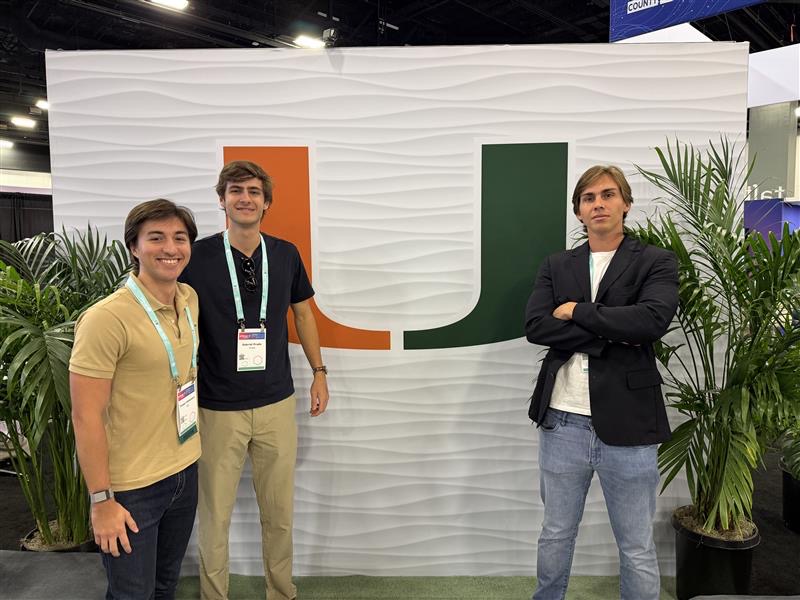

The establishment of a Venture Capital & Private Equity (VCPE) club at the University of Miami represents a strategic initiative with potential ripple effects across emerging markets, particularly in the Middle East and North Africa (MENA). While the club’s immediate focus is on fostering student engagement and professional development, its structural approach—emphasizing hands-on experiential learning, industry partnerships, and proactive networking—mirrors the demands of rapidly evolving VC and private equity ecosystems in MENA. These ecosystems are underpinned by a growing demand for specialized talent capable of navigating complex capital flows, regulatory frameworks, and regional growth imperatives. For MENA, where sovereign capital investments increasingly target high-growth sectors such as fintech, renewable energy, and digital infrastructure, the emergence of such educational models could catalyze a more robust pipeline of professionals equipped to manage and optimize sovereign funds. This aligns with regional efforts to diversify economic portfolios and reduce dependency on traditional hydrocarbon revenues, positioning VCPE as a catalyst for institutional knowledge transfer and capacity building.
The implications for sovereign capital in MENA are particularly pertinent, as governments and state-owned entities are increasingly leveraging venture capital to fund strategic initiatives. A VCPE club, by institutionalizing access to real-world dealmaking and partnership frameworks, could enhance the region’s ability to attract and retain foreign capital while strengthening local understanding of capital allocation principles. For instance, the integration of VCPE methodologies into academic curricula might better prepare students to advise sovereign wealth funds on high-risk, high-reward investments in venture-driven sectors. Furthermore, the club’s emphasis on proactive outreach—such as cold calls and systematic networking—reflects the competitive dynamics of MENA’s VC landscape, where firms often compete for limited deal flow. By emulating this proactive ethos, MENA-based institutions could improve their capacity to source innovative ventures, thereby enhancing the efficiency and impact of sovereign capital deployment. This is critical as regional governments seek to expand their influence in global investment markets while addressing domestic innovation gaps.
The regional infrastructure implications of such a VCPE model extend beyond financial systems to encompass the broader technological and logistical environments that support startup ecosystems. In MENA, where urban centers like Dubai, Riyadh, and Casablanca are emerging as tech hubs, the success of ventures often hinges on robust digital infrastructure, access to skilled labor, and regulatory support. A VCPE club could act as a multiplier for these ecosystems by training professionals who can identify and scale solutions addressing infrastructure bottlenecks—such as cross-border digital payment solutions, smart cities, or renewable energy projects. Moreover, by fostering partnerships with global firms (e.g., SoftBank, KKR), the model could facilitate technology transfer and investment flowed into MENA, accelerating infrastructure development. This synergy between education, private capital, and infrastructure is vital for MENA to transition toward a knowledge-driven economy, ensuring that sovereign investments are not only strategic but also sustainable in the long term.