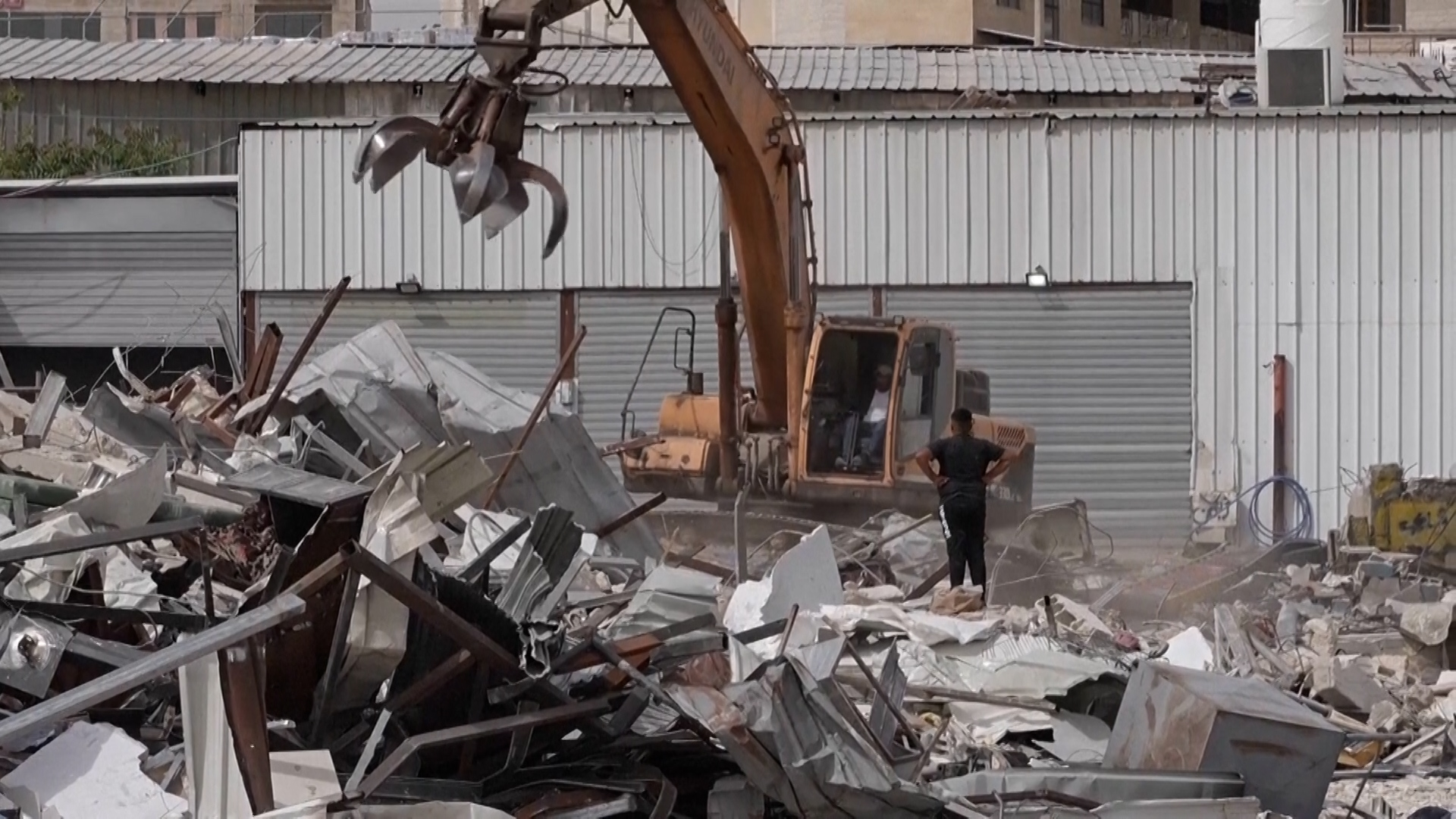

Al Jazeera’s report on Israel’s overnight demolition of 50 shops in al-Eizariya, displacing over 200 families, underscores a critical rupture in the region’s socio-economic fabric. Beyond the immediate humanitarian toll, this act exacerbates instability in the West Bank, where infrastructure investments and local economic resilience are already strained by decades of occupation. The destruction of commercial hubs directly impacts small businesses, eroding the capital base of Palestinian communities and deepening reliance on external aid. Such actions not only stifle grassroots economic activity but also signal a systemic disregard for the rule of law, as legal appeals to Israel’s Supreme Court were ignored—a blatant affront to judicial sovereignty and international norms.
The earmarking of land for a settlement corridor through the West Bank further compounds these challenges. This initiative, a cornerstone of Israel’s settlement expansion strategy, risks fragmenting regional infrastructure networks, including transportation and utilities, which are vital for both Palestinian and Israeli economic integration. For sovereign capital, the corridor’s construction entrenches a cycle of displacement and land appropriation, undermining long-term stability and deterring private investment in the region. Venture capital, already hesitant to engage due to geopolitical volatility, faces heightened risk as the corridor could disrupt supply chains and create regulatory uncertainties, deterring tech startups and cross-border collaboration.
Regionally, the corridor’s implications extend beyond the West Bank, threatening to destabilize the Middle East’s carefully balanced infrastructure and financial ecosystems. The North African dimension is particularly acute, as Gulf states and Western partners increasingly prioritize energy and investment ties with Israel, potentially sidelining Arab and North African economies. This dynamic risks entrenching regional bifurcation, with sovereign capital flows skewed toward entities aligned with Israeli interests, while venture capital opportunities remain concentrated in secure, politically insulated zones. Without a coordinated regional response to address these systemic inequities, the MENA region’s economic potential will remain fractured, perpetuating cycles of conflict and underdevelopment.