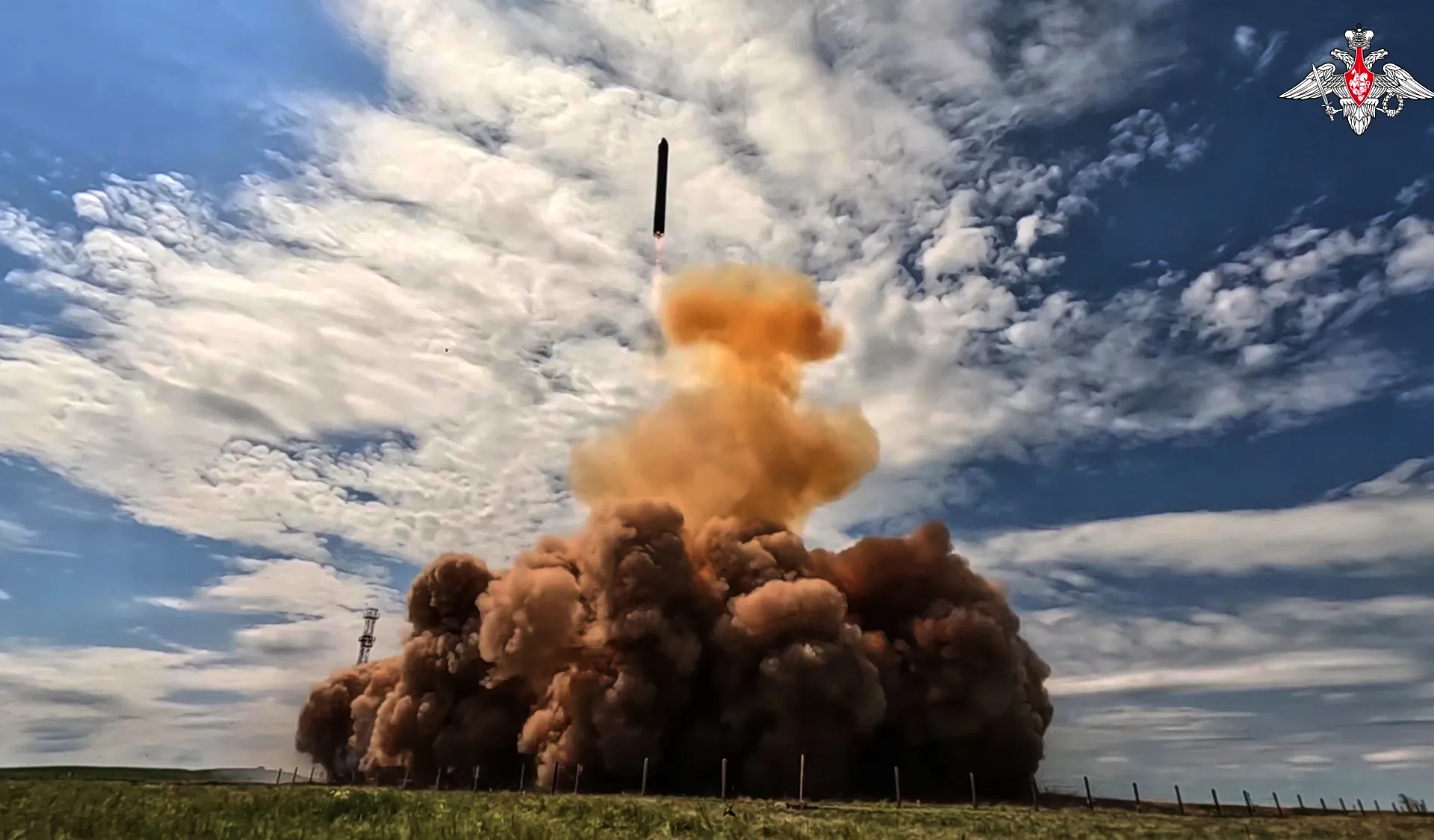

The recent test launch of Russia’s RS‑28 Sarmat intercontinental ballistic missile marks a pivotal moment for geopolitical stability in the MENA region, where sovereign capital and regional infrastructure projects are increasingly intertwined with global defence dynamics. By claiming the Sarmat to possess a range exceeding 35,000 km and a payload four times that of Western equivalents, Moscow signals a strategic recalibration that could unsettle the delicate equilibrium of deterrence on the Middle Eastern plateau. The MENA region, already grappling with the ramifications of U.S. missile defence initiatives such as the Golden Dome, must now factor in the potential of a Russian missile capable of breaching existent and prospective anti‑missile systems across vast swaths of the continent.
From a sovereign capital perspective, the Sarmat’s introduction underscores the urgency for Gulf states and North African governments to reassess their nuclear oversight frameworks and accelerate the diversification of revenue streams away from hydrocarbon dependence. Investment in resilient infrastructure—particularly critical transport corridors, energy supply chains, and digital communication networks—will become paramount if the region seeks to avoid becoming collateral pathways for a superpower’s strategic posturing. Enhanced Sanctions Compliance Units, as well as public–private partnerships in infrastructure resilience, will likely drive capital allocation and shape risk profiles for multinationals operating in the region.
Venture capital flows in the Middle East are already directed toward defense‑tech start‑ups, particularly those developing cyber‑security, missile‑tracking, and AI‑augmented counter‑measure systems. The Sarmat’s advanced propulsion and purported stealth capabilities will accelerate demand for high‑end sensors, low‑observable radars, and integrated command‑and‑control platforms. Early‑stage investors in firms that specialize in hypersonic detection and satellite‑based navigation are expected to see significant upside, as state‑backed procurement budgets expand to match Russia’s modernised arsenals. The development of hybrid maritime drones like the Poseidon, alongside aircraft platforms such as the Avangard glide vehicle, signals a trans‑regional shift toward integrated, multi‑domain offensive and defensive capabilities.
In the broader regional context, the Sarmat’s deployment represents a direct challenge to U.S. deterrence strategies that have long governed the security calculus of the MENA region. States may need to recalibrate their defence budgets, prioritise indigenous defence R&D, and seek diversified diplomatic ties to mitigate exposure to the fallout of escalated great‑power rivalry. For MENA sovereigns, the imperative is clear: leverage sovereign wealth funds not only to support critical infrastructure but also to underpin resilient, rapidly deployable defence ecosystems that can absorb, adapt to, and ultimately outpace shifts in the global security architecture.