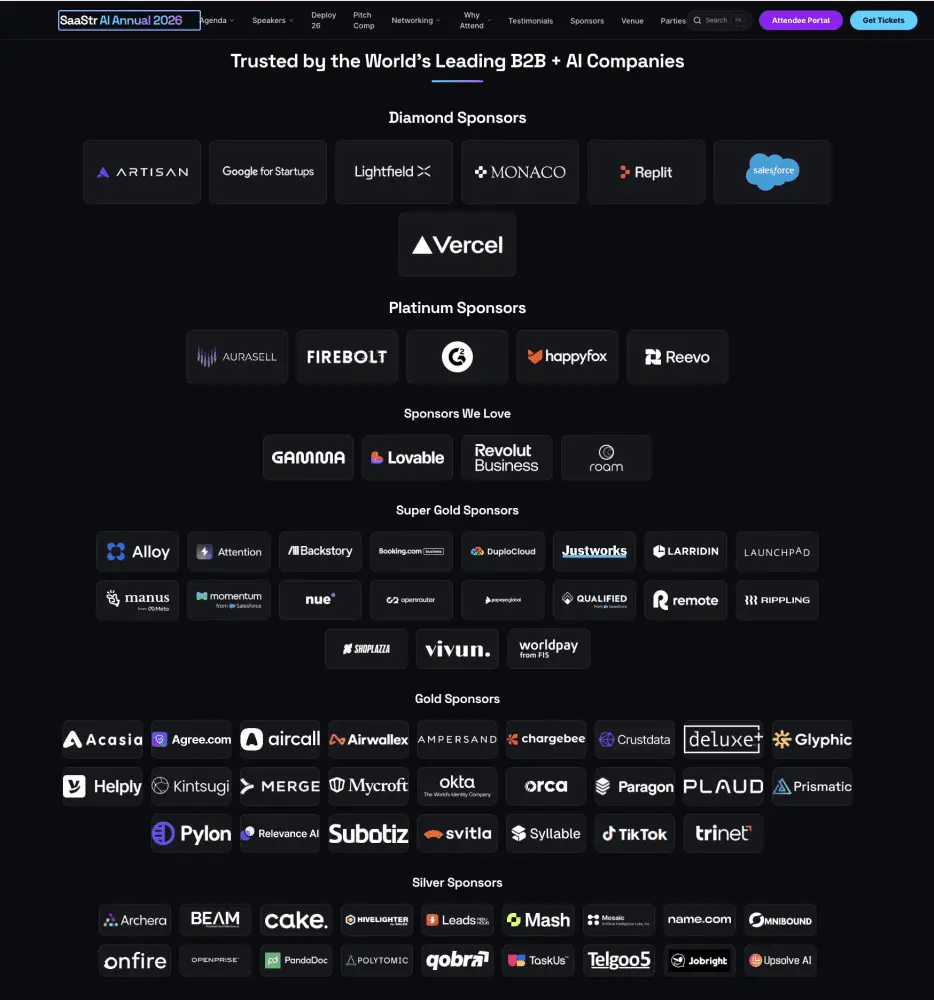

The seismic realignment currently reshaping B2B technology ecosystems carries profound implications for MENA markets, where sovereign capital allocators and venture funds are simultaneously navigating their own AI-driven transformation. The SaaStr case study—losing 75% of legacy sponsors while maintaining growth through a complete sponsor base reconstruction—mirrors the broader disruption facing regional technology investments. Across the Gulf and North Africa, family offices and sovereign wealth funds that anchored substantial positions in legacy B2B software models during 2021-2023 are now confronting portfolio companies experiencing precisely this same customer attrition dynamic, as traditional software budgets contract in favor of AI-first solutions commanding premium valuations.
For MENA-focused venture capital, this paradigm shift represents both opportunity and urgency. The region’s AI-native startups—particularly those emerging from Dubai’s rapidly expanding fintech corridor and Cairo’s burgeoning developer ecosystem—now find themselves positioned to command the same sponsorship and marketing budgets that previously flowed to established SaaS vendors. Regional infrastructure investors are witnessing similar patterns in data center deployments and cloud capacity allocations, where AI-specific computing requirements are driving facility designs unrecognizable from traditional enterprise hosting models. The $2.3 billion in announced AI infrastructure investments across Saudi Arabia and the UAE this year reflects this fundamental reconfiguration.
The implications extend beyond pure technology plays into the heart of regional economic diversification strategies. Saudi Arabia’s Vision 2030 and Egypt’s digital transformation mandates depend heavily on cultivating indigenous AI capabilities that can compete globally while serving local markets. However, the velocity of change illustrated by the SaaStr experience—where market leadership shifted entirely within a twelve-month window—suggests that regional policymakers and investors must accelerate their support mechanisms for AI-native companies. Traditional incubation models predicated on gradual scaling may prove inadequate for startups requiring immediate access to enterprise buyer networks and computational resources that legacy B2B ecosystems once monopolized.
The capital redirection underway signals deeper structural changes in how MENA investors evaluate technology risk and return profiles. Where 2022-2023 diligence emphasized predictable recurring revenue streams and established customer cohorts, 2026-2027 assessments increasingly prioritize AI-native market positioning and access to the same buyer pools now courting companies like Replit and Vercel. Regional sovereign funds that successfully identified and capitalized this transition early—particularly those that moved from passive software index positions to active AI ecosystem participation—are positioned to capture disproportionate value creation. This reallocation will likely intensify throughout 2026 as regional exchanges facilitate greater cross-border capital flows and secondary market liquidity for AI-focused enterprises.