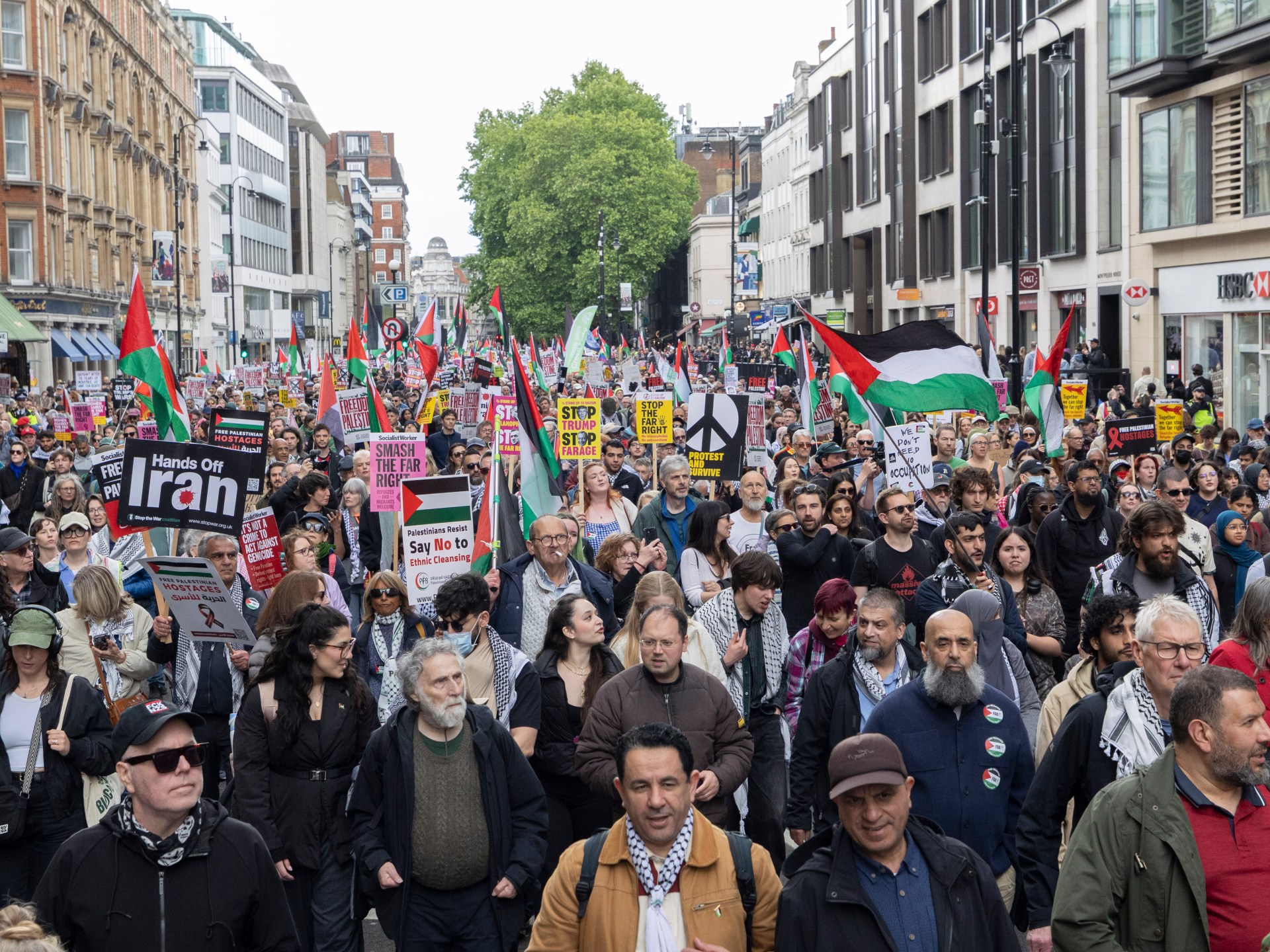

The convergence of far-right and pro-Palestine demonstrations in central London, backed by 4,000 police officers, armored vehicles, and live facial recognition, is not merely a public order crisis—it is a capital allocation signal. For sovereign wealth funds headquartered in Abu Dhabi, Riyadh, and Cairo, and for the regional venture capital ecosystem that funnels hundreds of millions into UK-based fintech and deep-tech startups annually, the chaos underscores a structural reassessment of political risk in Western host markets. The Crown Prosecution Service’s decision to hold rally organizers legally accountable for speaker conduct, coupled with the Home Office’s barring of 11 foreign nationals, signals a tightening regulatory perimeter that will inevitably ripple through compliance frameworks governing MENA institutional investors, diaspora-linked capital, and cross-border tech partnerships operating out of London.
London’s status as the primary Western gateway for Gulf sovereign capital—particularly the £4.5 million deployment cost alone reflects the fiscal burden of maintaining that gateway—hangs in the balance as the UK’s domestic political landscape fractures. Prime Minister Keir Starmer’s fragile position, eroded by Reform UK’s local election gains, mirrors a broader trend in Europe where nationalist surges threaten the multilateral consensus underpinning capital mobility. For Gulf sovereign investors already diversifying into North American and Asian markets, the London protests reinforce the calculus of geographic rebalancing. Venture capital firms from the UAE and Saudi Arabia, which have anchored anchor investments in London’s AI, cybersecurity, and clean energy corridors, will increasingly scrutinize whether the jurisdiction still offers the political stability and legal predictability that justify deployment of scarce dry powder.
The operational implications extend into regional infrastructure strategy. MENA governments financing ports, data centers, and digital backbone projects across North Africa and the Levant are watching how Western democracies manage civil disorder, protest polarization, and the use of surveillance technology in real time. Live facial recognition deployed by the Metropolitan Police sets a precedent that MENA regulators will either emulate or reject as they calibrate their own smart-city and national security architectures. The deeper risk for the region is reputational: if London cedes ground as a neutral financial platform, sovereign capital that currently flows through UK intermediaries for regulatory arbitrage will seek alternatives in Singapore, Dubai, or Luxembourg—accelerating the de-Westernization of MENA capital flows that has been quietly underway for a decade.
What the streets of central London are demonstrating, in the starkest possible terms, is that the soft infrastructure of a global financial hub—its political tolerance, its legal predictability, its capacity to host diverse capital without collapsing into polarization—has a tangible price. For a region that has spent the better part of two decades building out its own sovereign capital ecosystems, the lesson is unambiguous: capital follows institutional coherence, and institutional coherence is no longer a given in the markets MENA capital has long relied upon.