
The forced resignation of Sultan Ahmed bin Sulayem, following public scrutiny of his associations with Jeffrey Epstein, marks more than a personal fall from grace—it signals a critical inflection point in the geopolitical contest for control over the Red Sea’s strategic corridors. This episode, however, is not an isolated crisis of Dubai governance but rather an exposed fault line in the broader Emirati strategy of sovereign wealth deployment through maritime logistics. DP World, as a state-owned entity fully controlled by Dubai, has operated at the nexus of commercial ambition and strategic statecraft—placing the United Arab Emirates at the heart of global supply chains while extending its influence into highly contested regions such as the Horn of Africa. The ramifications for Middle Eastern sovereign capital flows, regional infrastructure competition, and the balance of power between dominant and vulnerable littoral states are profound and lasting.
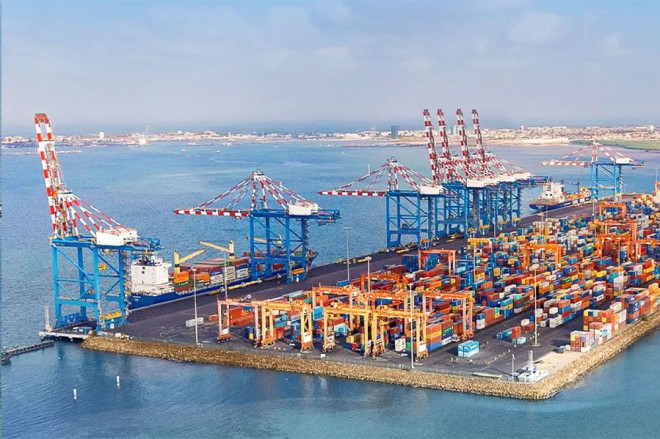
At the core of this strategic contest is the Doraleh Container Terminal in Djibouti—a site that became emblematic of the asymmetry between a global maritime operator backed by UAE sovereign capital and a small, logistics-dependent nation. The 30-year concession initially granted to DP World was not simply a private commercial arrangement; it represented a partial transfer of strategic control, embedding UAE influence directly into East Africa’s busiest maritime chokepoint. The role of intermediaries such as Abdourahman Boreh, who facilitated negotiations outside Djibouti’s institutional frameworks, reveals a recurring pattern where opaque governance, concentrated decision-making, and wealth-driven diplomacy converge. When Djibouti later terminated the contract in 2018, the dispute escalated into a high-stakes legal battle in London, ultimately exposing the limits of sovereign authority when faced with the financial and legal firepower of a Dubai-backed entity. The initial rulings against Djibouti gave way to partial vindication in 2025 when arbitration recognized its sovereign right to withdraw—an outcome that underscores the complex, often contradictory nature of international commercial arbitration in politically sensitive infrastructure disputes.
Yet the legal contest alone fails to capture the broader strategic ambition animating DP World’s actions. Djibouti’s termination of Doraleh triggered an immediate countermove: massive Emirati investment in the Port of Berbera, located in the autonomous but internationally unrecognized territory of Somaliland. This pivot to Berbera was anything but neutral—it represented a calculated attempt to divert Ethiopian trade away from Djibouti, thereby eroding the latter’s near-monopoly on landlocked East African economies’ maritime access. For Gulf sovereign capital, ports have become arenas for economic statecraft, where state-owned enterprises like DP World act as instruments of influence, capable of reshaping commercial flows and thereby redrawing regional allegiances. The Berbera investment, buttressed by infrastructure corridors toward Ethiopia, has effectively created a parallel logistics hub precisely timed to capitalize on Djibouti’s governance missteps and, crucially, the geopolitical realignments that followed the Abraham Accords. In this light, the UAE has strategically embedded itself within a wider regional framework that brings Israel, Somaliland, and Gulf capital into closer alignment—creating a nascent economic axis poised to challenge Djibouti’s entrenched dominance.
Beyond infrastructure and commerce lies the critical dimension of security. The Red Sea, already a militarized thoroughfare featuring Western, Chinese, and Middle Eastern military installations, is increasingly becoming a stage for non-kinetic competition through port ownership and logistics control. Here, DP World functions much like a state actor, leveraging Dubai’s financial depth to position Emirati influence across key maritime chokepoints. The Epstein revelations introduce a further dimension: the intersection of elite private networks with sovereign objectives. These connections, which made it possible for DP World to cultivate high-level political relationships and bypass formal diplomatic channels, blur the line between legitimate economic engagement and covert influence operations. For Djibouti and other regional actors, such dynamics magnify their vulnerability, complicating efforts to reclaim economic sovereignty when the operators controlling infrastructure are themselves extensions of state power.
The question now facing the Middle East and North Africa is whether this moment of exposure will catalyze a deeper reassessment of governance frameworks governing strategic port concessions—or whether the status quo of elite-driven commercial capture will persist. For investors, regulators, and sovereign wealth funds monitoring MENA geopolitical risk, the DP World saga offers a stark reminder that infrastructure is not neutral. It is as much an instrument of strategic competition as military bases or diplomatic outposts. The eventual rebalancing of Red Sea power will depend on whether smaller littoral states can assert greater regulatory oversight, diversify their infrastructure partnerships, and demand greater transparency in concession agreements. Failure to address these issues risks locking entire regions into patterns of economic dependency that persist for decades, quietly surrendering sovereignty through a thousand contracts rather than a single declaration of war. The controversy surrounding Sultan Ahmed bin Sulayem may dominate current headlines, but the lasting battleground will be the invisible contest for control over the world’s maritime arteries—where infrastructure is power, and hegemonic ambitions are financed by sovereign capital.