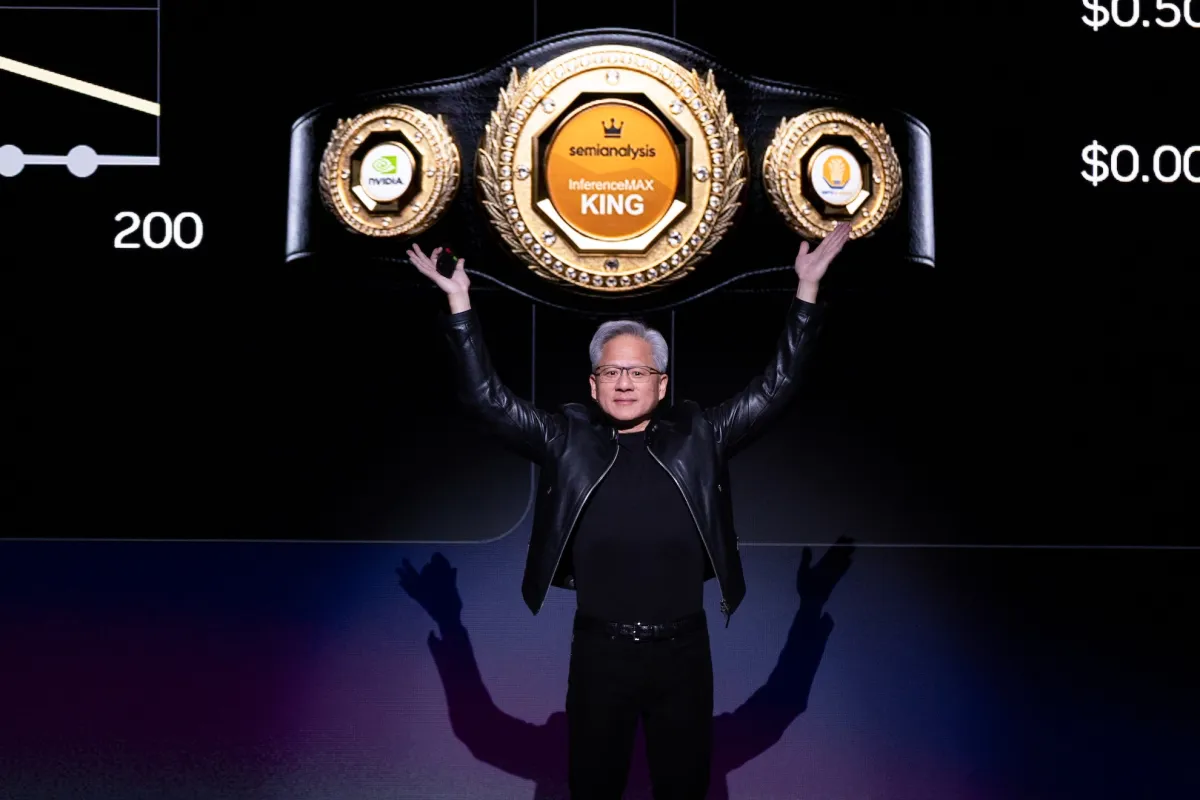

Jensen Huang’s projection of $1 trillion in orders for Nvidia’s forthcoming Blackwell and Rubin chip architectures represents a potentially transformative shift for the Middle East and North Africa’s technology landscape, with profound implications for sovereign wealth funds, venture capital activity, and regional digital infrastructure development. While the specifics of the chip’s performance – touted as a 3.5x improvement in model training and 5x in inference compared to Blackwell – remain technical, the sheer scale of the anticipated demand underscores a burgeoning AI ecosystem that will inevitably reshape industries across the region. This isn’t merely a hardware upgrade; it’s a catalyst for accelerated digital transformation, demanding significant investment in both talent and supporting technologies.
The immediate impact will be felt through increased sovereign capital allocation towards technology ventures. Gulf-based sovereign wealth funds, such as those in Saudi Arabia, the UAE, and Qatar, are already aggressively pursuing investments in AI and related sectors. Huang’s forecast provides a clear strategic imperative, likely accelerating the pace of these deployments. We anticipate a surge in venture capital activity focused on AI-driven solutions – from fintech and logistics to healthcare and smart city initiatives – as regional players seek to capitalize on the technological advantage offered by Nvidia’s architecture. Furthermore, the Rubin chip’s superior performance will incentivize local firms to prioritize AI adoption over legacy systems, driving a broader shift in operational strategies.
However, realizing this potential hinges critically on regional infrastructure development. The Rubin chip’s capabilities – particularly its 50 petaflop performance – necessitate substantial upgrades to data centers and connectivity networks. Current bandwidth limitations and the uneven distribution of digital infrastructure across the MENA region pose significant challenges. Governments across the area must prioritize investments in 5G rollout, fiber optic expansion, and the construction of robust, secure data centers to effectively support the demands of AI processing. This represents a multi-billion dollar opportunity, extending beyond simply procuring the chips themselves.
Ultimately, Nvidia’s ambitious projections are not just a corporate forecast; they are a geopolitical indicator. The Middle East’s strategic location and growing digital ambitions position it as a key player in the global AI race. Successful navigation of this technological shift will require a coordinated approach – combining strategic sovereign investment, targeted venture capital, and a sustained commitment to building the necessary digital infrastructure. Failure to adequately prepare will risk leaving the region behind in the burgeoning AI-driven economy.