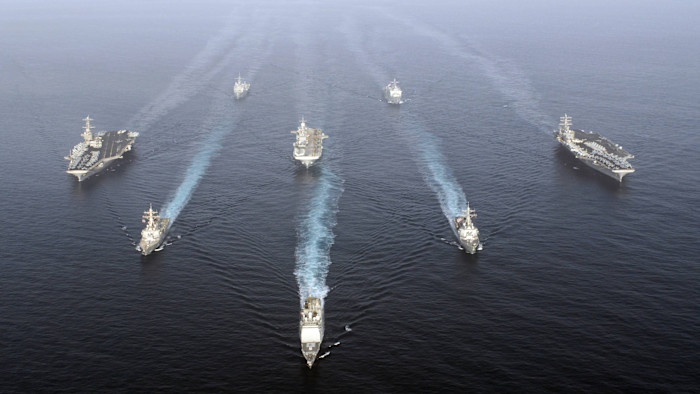

The redeployment of key U.S. mine-countermeasure vessels from the Gulf represents a significant recalibration of Western security guarantees for the Middle East, with immediate and material implications for regional energy markets and trade logistics. The perceived erosion of a reliable U.S. deterrent in the Strait of Hormuz—a chokepoint for nearly 20% of global oil supply—will embed a persistent geopolitical risk premium into energy prices and marine insurance tariffs. For oil-exporting nations in the Gulf, this introduces a critical variable in revenue forecasting and may compel accelerated engagement with alternative export routes, including pipeline networks and Red Sea terminals, to mitigate concentration risk.
Gulf sovereign wealth funds and state-owned investment vehicles will now conduct a fundamental reassessment of their capital allocation strategies, factoring in the reduced credibility of extended U.S. deterrence. We can expect a strategic pivot away from over-reliance on U.S. asset classes and toward domestic and regional defense-industrial capabilities, as well as investments in non-oil infrastructure that reduces strategic vulnerability. Entities such as Saudi Arabia’s Public Investment Fund and the Abu Dhabi Investment Authority are likely to increase allocations toward sovereign-backed ventures in maritime domain awareness, autonomous systems, and secure logistics platforms, viewing these as essential components of national economic resilience.
This environment will catalyze venture capital and technology investment across the MENA region, focusing on solutions that bypass or protect traditional chokepoints. Expect a surge in funding for startups developing AI-driven threat detection, alternative supply chain blockchain solutions, and satellite-based monitoring systems. Concurrently, large-scale regional infrastructure projects—from Saudi Arabia’s north-south railway networks to Algeria’s port expansions—will be appraised not merely on commercial merit but as critical strategic assets. The business imperative is clear: diversification of physical trade corridors is now a non-negotiable component of long-term sovereign and corporate capital planning in the region.