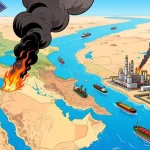
The protracted conflict in Sudan represents a profound systemic risk to the economic architecture and investment landscape of the Middle East and North Africa. The collapse of state institutions and the destruction of critical infrastructure—including port facilities, railways, and road networks—severely undermines a key geographic nexus for continental trade and energy transit, particularly along the Red Sea corridor. This instability directly threatens the operational integrity of regional logistics and supply chains, imposing significant cost premiums and rerouting pressures on commercial flows that depend on Sudanese territory or its proximate waterways. The humanitarian catastrophe, while a primary concern, is inextricably linked to a Business continuity crisis for the broader region, creating a security vacuum that disrupts cross-border commerce and deters long-term infrastructure development initiatives.
From a capital markets perspective, the Sudan conflict is triggering a conspicuous reallocation of sovereign wealth and venture capital away from high-risk frontier markets toward perceived safe havens within the GCC and stable North African economies. Regional sovereign wealth funds, which had previously explored horizons extending into East Africa, are executing a strategic retreat, consolidating portfolios around domestic mega-projects and lower-risk, politically stable jurisdictions. Concurrently, the venture capital ecosystem across MENA is experiencing a significant risk-aversion pivot, with Limited Partners demanding heavier de-risking for any fund with exposure to the conflict zone or its immediate neighbors. This flight to quality is accelerating the concentration of tech investment in hubs like the UAE, Saudi Arabia, and Egypt, while stunting the development of a pan-African startup corridor that once included Sudan as a potential bridgehead.
The diplomatic efforts, notably the “Quad” framework involving Saudi Arabia, the US, Egypt, and the UAE, must be analyzed through a pragmatic economic statecraft lens. For these regional stakeholders, resolving the Sudan crisis is not merely a humanitarian imperative but a core strategic and financial objective. Stability in Sudan is a prerequisite for securing Red Sea shipping lanes, which are vital for Gulf oil exports and Asian trade, and for containing spillover refugee and security pressures that destabilize Egypt and the wider Sahel. The Quad’s push for a phased ceasefire is thus a direct attempt to de-escalate a threat to regional GDP growth, foreign direct investment appetites, and the costly security apparatuses maintained by bordering states. A protracted war imposes a continuous fiscal drain on neighbors through emergency aid and border security, directly competing with capital allocated for Vision 2030-type diversification projects.
The path forward demands that the international financial institutions and regional capital pools condition any future reconstruction support—estimated in the tens of billions—on an irrevocable political settlement and robust governance safeguards. The lesson for MENA investors is clear: geopolitical fragility in one node can systematically degrade the investment thesis for an entire sub-region. The conflict crystallizes a new paradigm where sovereign and portfolio risk assessments are increasingly factoring in intra-regional spillover effects, making stability in markets like Sudan a non-negotiable component of broader regional economic resilience and infrastructure master plans. The Quad diplomacy, therefore, is an essential, if nascent, market-making effort to prevent the total erosion of a strategic economic geography.