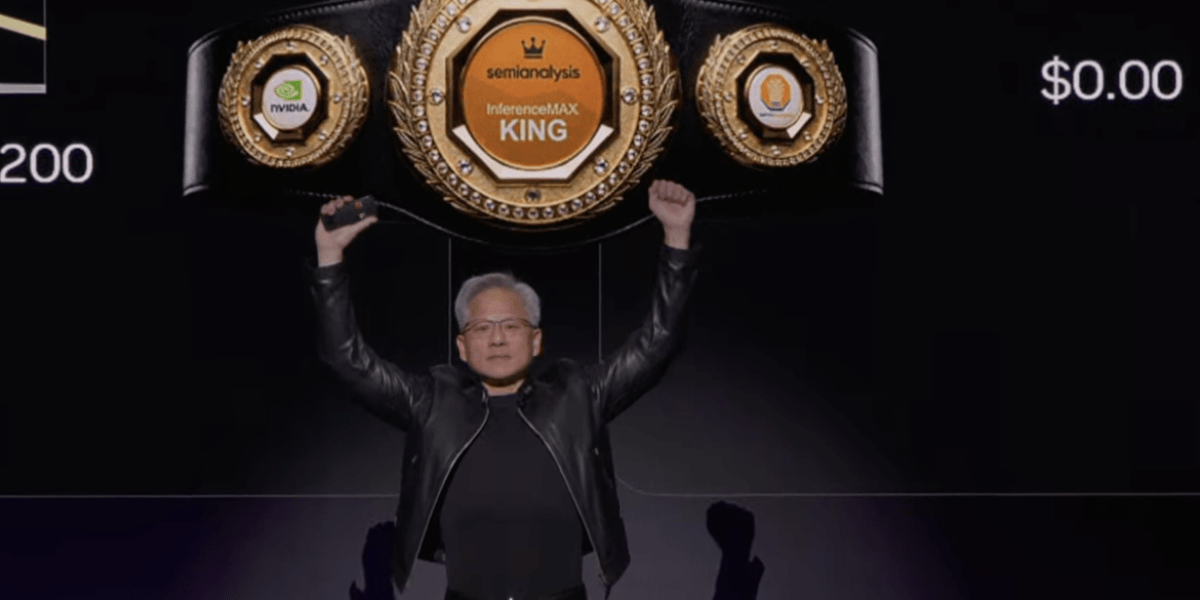

Nvidia’s projection of an additional $500 billion in AI‑chip demand through 2027, driven by its Blackwell and Rubin product lines and the newly unveiled inference‑optimized Groq‑Nvidia hybrid racks, signals a sizable expansion of the global compute base that Middle Eastern sovereign wealth funds are already positioning to capture. Funds such as Mubadala, ADQ, and the Public Investment Fund have earmarked multi‑billion‑dollar allocations for data‑center construction and AI‑focused venture platforms, viewing the inference shift as a catalyst for locating high‑density workloads closer to regional users—particularly in nearshore hubs like Dubai’s Data Park, NEOM’s Oxagon, and Qatar’s Lusail‑based facilities. The anticipated $1 trillion cumulative spend by 2027 therefore translates into a measurable pipeline of sovereign‑backed infrastructure contracts, colocation services, and edge‑node deployments across the GCC and North Africa.
OpenAI’s decision to decommission its internal data‑center build‑out in favor of purchasing capacity from third‑party cloud providers further accelerates the migration of AI workloads to regional hyperscale platforms. MENA cloud operators—including STC, e&, and the Saudi‑backed Aramco Digital—stand to benefit from the projected $665 billion of cloud spend OpenAI anticipates through 2030, especially as the company’s new commercial partnership team channels multi‑year chip agreements (e.g., the AMD deal) toward localized supply chains. Concurrently, venture capital activity in the region is pivoting toward AI‑native verticals: health‑tech, cybersecurity, biotech, and enterprise SaaS saw Q4 2025 deal values more than double historical averages, with sovereign‑backed funds co‑leading Series A and B rounds alongside global VCs such as Sequoia and Accel, thereby deepening the local ecosystem’s capacity to absorb and scale AI‑driven innovation.
The broader revival of previously “forgotten” tech sectors—healthtech, cybersecurity, biotech, and enterprise SaaS—underscores a structural shift in MENA venture markets where AI is now the primary value‑creation engine rather than a supplementary feature. Government‑backed initiatives such as the UAE’s National AI Strategy 2031, Saudi Arabia’s Vision 2030 AI pillar, and Egypt’s ICT‑2030 plan are aligning regulatory sandboxes, talent‑development programs, and public‑private R&D grants to attract both foreign AI chipmakers and domestic startups. This alignment creates a reinforcing loop: sovereign capital de‑risks large‑scale infrastructure investments, venture capital funds early‑stage AI applications, and the resulting demand for localized compute justifies further data‑center expansion—positioning the MENA region as a critical node in the next phase of the global AI supply chain.