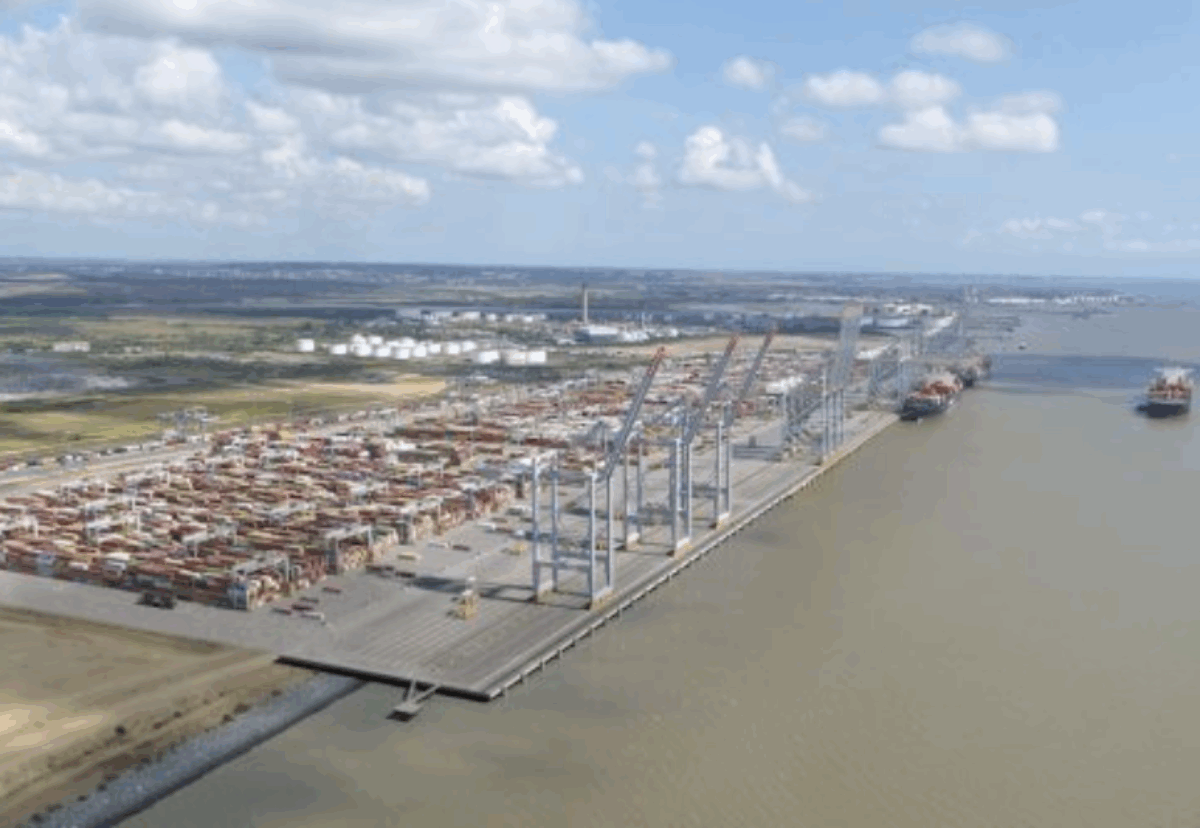

London Gateway Port, a key deep-sea container facility in the UK, is undertaking a significant infrastructure investment to bolster its capacity, a move with far-reaching implications for the Middle East and North Africa (MENA) region. The recent award of a contract to Gobion for the construction of a new automated container yard at Berth 5 represents a tangible step in this expansion strategy. This project, slated for completion by March 2027, underscores the growing global trend of port modernization driven by increasing trade volumes and the need for enhanced efficiency. The business impact extends beyond immediate operational improvements, signaling a commitment to long-term competitiveness in the global supply chain.
The project’s scale reflects the increasing importance of sovereign capital and venture capital in the MENA region’s infrastructure development. Governments across the region are recognizing the strategic role of ports in facilitating trade and economic growth, and are actively pursuing large-scale projects to achieve this. This initiative at London Gateway is a prime example of this trend, attracting significant investment and demonstrating the growing sophistication of the region’s financial markets. Furthermore, the emphasis on automation, incorporating 10 automated stacking crane modules, showcases a forward-thinking approach to operational efficiency, a critical factor for sustained competitiveness. Venture capital firms are increasingly focused on projects aligning with this technological advancement, recognizing the long-term returns associated with enhanced port capacity and streamlined logistics.
The implications for regional infrastructure are profound. London Gateway’s expansion aligns with the broader trend of port development spurred by major global trading powers to mitigate geopolitical risks and optimize supply chains. This investment in automation and advanced technologies serves as a model for other ports in the MENA region, particularly those seeking to modernize their operations and attract further foreign direct investment. The inclusion of electrical infrastructure upgrades to support these new technologies – 11kV power supplies, SCADA systems, and site-wide lighting – highlights the interconnected nature of port development and the need for integrated infrastructure planning. The utilization of high-energy impact compaction for pavements further demonstrates a sophisticated approach to engineering, ensuring durability and resilience against the demands of increased container traffic. The overall project contributes to a more robust and adaptable logistics ecosystem in the region.
The success of this project will further solidify London Gateway’s position as a leading port in Europe and an attractive hub for international shipping. This, in turn, encourages greater investment in related industries across the supply chain – from warehousing and logistics to freight forwarding – bolstering economic activity and job creation within the region. The project’s significance extends beyond immediate trade facilitation, contributing to the development of a more resilient and interconnected global economy. The careful integration of electrical systems and utility infrastructure, a key element of this project, sets a precedent for future port expansions in the MENA region, emphasizing the importance of comprehensive and well-planned infrastructure development to maximize economic benefits and ensure long-term sustainability.