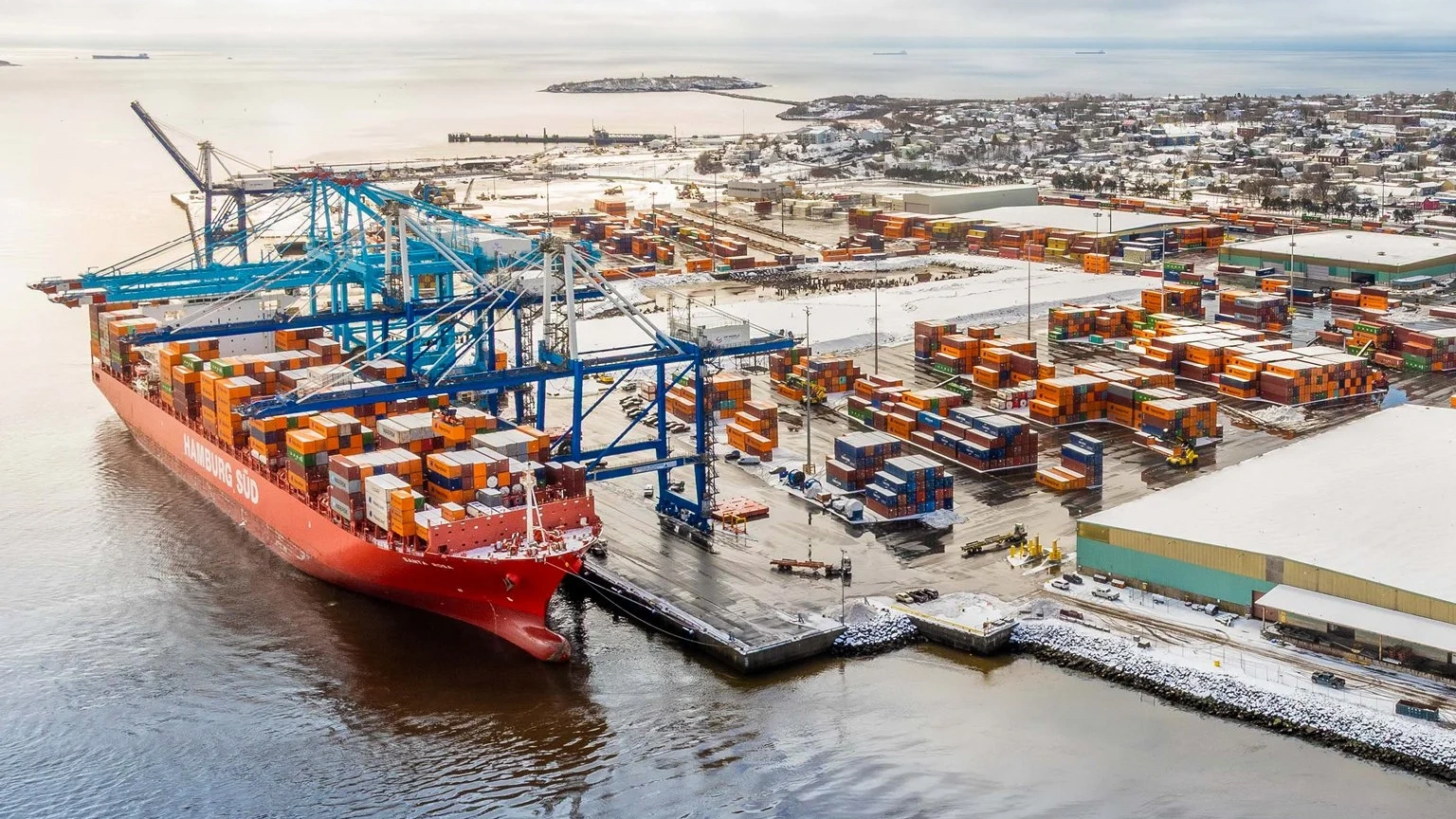

The Port of Saint John’s container throughput surged to 239,364 TEUs in 2025, marking a 29.4% year-on-year increase and a remarkable 175.2% rise since 2021. This explosive growth positions Saint John as one of eastern Canada’s fastest-expanding container gateways, outpacing peers such as Prince Rupert (+14%), Montreal (+3.6%), and Vancouver (+6%) in early-year gains. The acceleration stems from $247 million in coordinated public-private investment at DP World’s west-side terminal, underscoring how concentrated capital allocation and seasoned infrastructure operators can reshape regional trade dynamics.
For sovereign wealth funds and regional development agencies in the MENA region, Saint John’s transformation offers a replicable model: strategic port investment, when paired with operational expertise and multimodal connectivity, yields immediate throughput leverage. The terminal’s integration with NB Southern Railway and Class I carriers CPKC, CN, and CSX reinforces inland distribution reach, a critical infrastructure layer that extends port competitiveness far beyond berth-side efficiency. Logistics managers throughout the Gulf Cooperation Council (GCC) could apply these lessons in scaling transshipment hubs in locations like Duqm, Jeddah, or Khalifa Port, where inland rail and road networks remain a bottleneck to maximum cargo velocity.
The implications for venture capital are equally compelling. Early-stage logistics tech firms targeting real-time container tracking, predictive congestion analytics, or seamless rail-port data exchange stand to benefit from replication of Saint John’s network-expansion playbook. Streamlined berth operations and predictable vessel turnarounds reduce demurrage risk, creating a premium freight niche for high-value or time-sensitive MENA exports such as automotive components, perishables, and pharmaceuticals. As global shipping lines deepen their call patterns at Saint John, carriers’ route-optimization algorithms will increasingly factor alternative Atlantic gateways into trans-Atlantic and trans-Pacific string calculations.
While these gains are significant regionally, they do not instantaneously alter global rate structures or trigger a wholesale rerouting away from traditional West Coast or established East Coast hubs. Risks remain—Atlantic winter weather, labour availability, and inland rail/road capacity could cap throughput growth if not addressed concurrently.