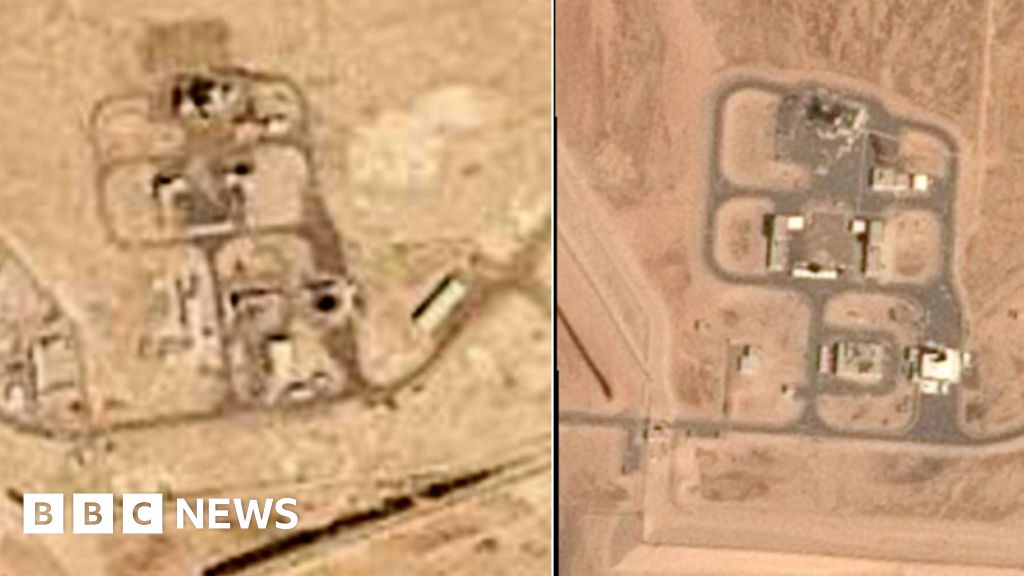

The underreporting of damage to US military infrastructure in the Middle East and North Africa (MENA) region underscores a growing strategic vulnerability with profound implications for regional stability and economic resilience. While the surface-level assessment of harm to bases may appear quantifiable, the cascading effects on sovereign capital allocation, venture capital investment climates, and critical infrastructure development remain obscured. This opacity not only complicates risk assessments for multinational corporations but also signals a potential erosion of confidence among regional investors, who may perceive heightened geopolitical uncertainty as a barrier to long-term capital deployment. From a business perspective, the disruption of logistical networks linked to military installations could further strain supply chains, exacerbating cost pressures for energy and technology firms operating in the region. Such volatility may accelerate the diversion of sovereign capital toward defensive infrastructure projects, diverting resources from private-sector growth initiatives and technology-enabled economic diversification efforts.
The implications for sovereign capital markets in the MENA region are particularly acute, as governments grapple with the dual challenge of maintaining security expenditures while preserving fiscal discipline. The underreported scale of base damage could strain public budgets, particularly in nations with limited fiscal space, forcing trade-offs between short-term defense spending and medium-term capital expenditures in energy, transportation, or digital infrastructure. Venture capital ecosystems, which have flourished in recent years across the Gulf and Levant, may face renewed uncertainty as geopolitical risks deter foreign capital inflows. Investors accustomed to leveraging regional connectivity—whether for fintech, renewable energy, or AI-driven solutions—may recalibrate risk appetite, leading to a contraction in early-stage funding or a strategic reallocation toward more secure jurisdictions. This dynamic could stifle innovation hubs that rely on cross-border collaboration and international capital access, ultimately undermining the region’s ambition to become a global tech frontier.
Regional infrastructure resilience is another critical domain where the fallout from underreported base damage could manifest. Military bases often serve as nodes in broader logistics and communication networks, supporting everything from energy distribution grids to telecommunications hubs. Damage to these facilities risks indirect disruption to commercial operations, particularly in sectors reliant on stable infrastructure—such as mining, oil and gas, or data centers. For technology firms, this instability could hinder the rollout of 5G networks or cloud services, which depend on uninterrupted energy and secure connectivity. Moreover, the erosion of trust in infrastructure reliability may deter public-private partnerships aimed at modernizing regional infrastructure, further delaying progress toward economic diversification goals. The strategic nexus between security, capital allocation, and technological advancement in the MENA region thus demands a transparent, proactive approach to risk management, one that transcends the limitations of current reporting frameworks.