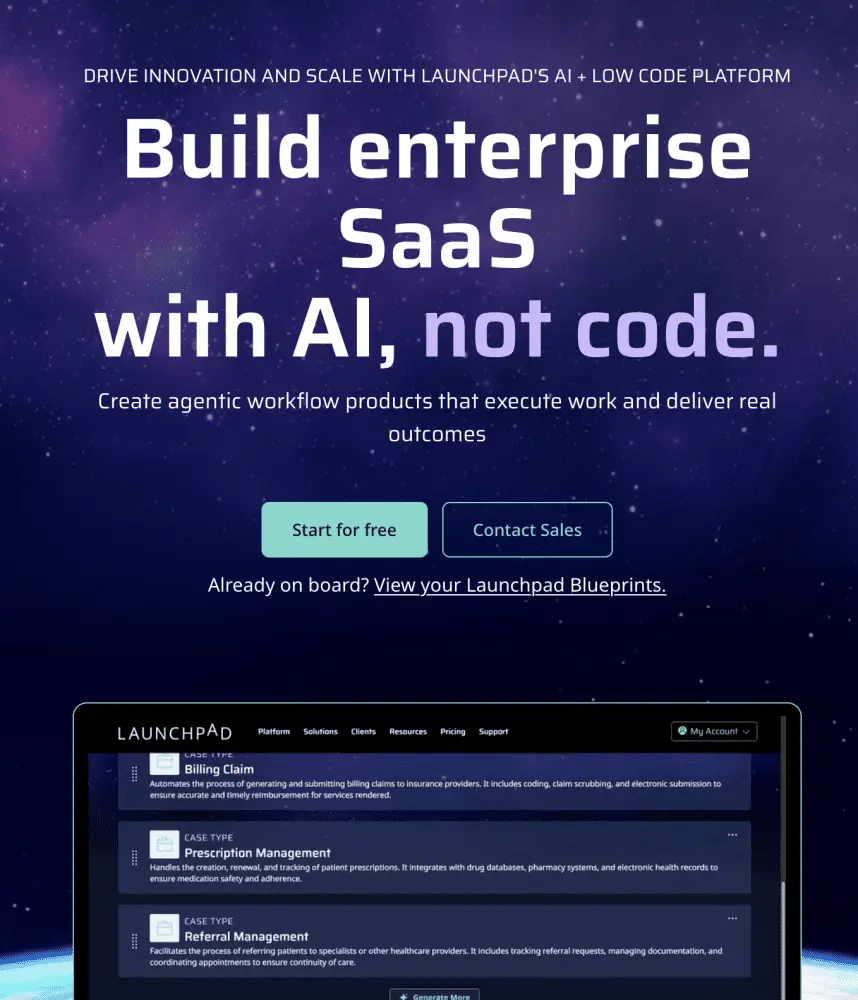

Pegasystems’ Launchpad delivers a fully managed, multi‑tenant SaaS stack that bundles AWS‑hosted cloud infrastructure, workflow automation, compliance certifications (SOC 2, ISO 27001, GDPR, HIPAA), subscriber management and AI‑assisted design tools into a single production‑ready environment. For B2B software firms in the Middle East and North Africa, where engineering talent is scarce and the cost of building undifferentiated plumbing—multi‑tenancy, security, auto‑scaling, and regulatory controls—can consume 60‑70 % of development budgets, the platform effectively reallocates capital from infrastructure to core product differentiation. By abstracting these mandatory layers, Launchpad enables regional startups to reach enterprise‑grade readiness in weeks rather than months, markedly improving unit economics and shortening the path to revenue.
The capital efficiency unlocked by Launchpad resonates strongly with the investment thesis of both venture capital firms and sovereign wealth funds across the MENA corridor. Early‑stage accelerators backed by entities such as Saudi Arabia’s Public Investment Fund, UAE’s Mubadala, and Egypt’s EFG‑Hermes can now deploy seed capital into SaaS ventures that demonstrate faster traction, lower burn rates, and clearer paths to Series A financing—factors that heighten deal flow for regional VCs and increase the likelihood of follow‑on investments from Pega Ventures or corporate strategists. Moreover, the platform’s availability on AWS Marketplace aligns with local data‑sovereignty mandates, allowing firms to operate within Bahrain, UAE, or Saudi cloud regions while satisfying regulators that require on‑shore processing of financial and health data.
Beyond financing, Launchpad’s adoption signals a broader shift toward industrial‑grade low‑code AI development in the region’s digital‑transformation agendas—Saudi Vision 2030, UAE’s National AI Strategy 2031, and Morocco’s Digital Morocco 2025. By reducing reliance on bespoke infrastructure builds, the platform frees up engineering capacity to focus on sector‑specific workflows such as fraud detection in banking, claims automation in insurance, and patient‑journey management in healthcare. This not only accelerates the deployment of mission‑critical applications but also drives higher utilization of existing data‑center investments and nurtures a homegrown talent pool proficient in enterprise‑grade AI‑enabled development—a dual benefit for regional economic resilience and technological sovereignty.