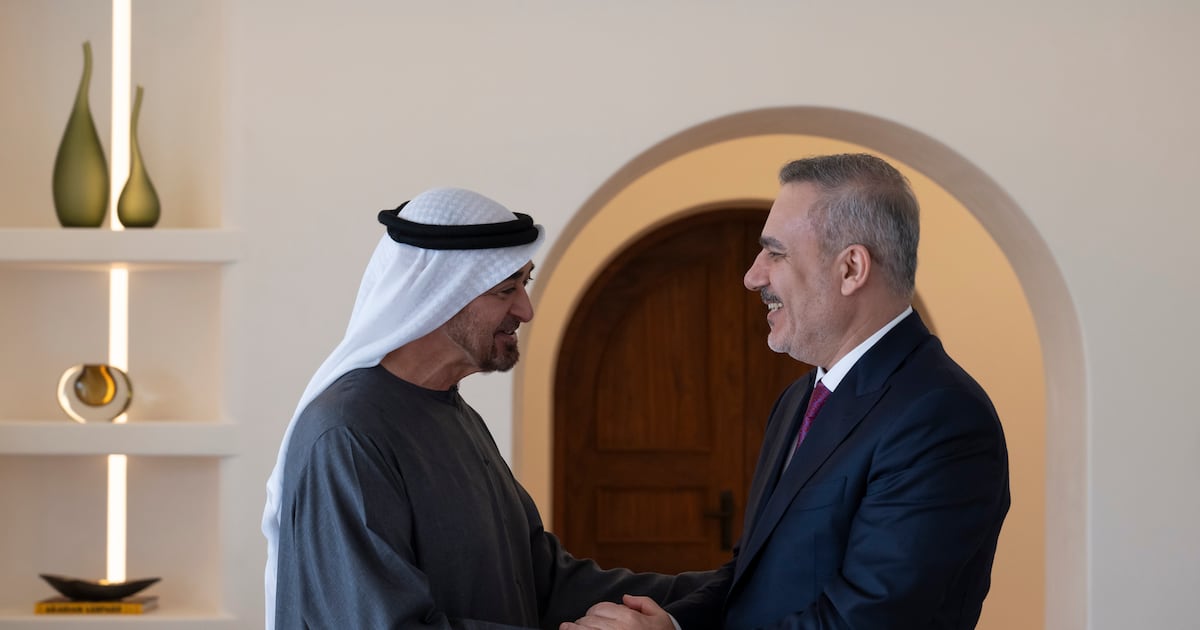

Berlin’s diplomatic choreography between President Mohamed bin Zayed Al Niyazi and Turkish Foreign Minister Hakan Fidan transcends ceremonial niceties; it signals a deliberate recalibration of strategic capital flows across the MENA corridor. The bilateral rapport, underscored by shared interests in energy transition and port‑centric logistics, creates a fertile substrate for sovereign wealth institutions to co‑invest in mega‑scale projects that can assume the mantle of regional economic anchors.
From a sovereign capital perspective, the encounter unlocks a new financing template: joint venture vehicles anchored in Abu Dhabi’s ADQ and Turkey’s TÜBİTAK can channel multi‑billion‑dollar allocations into infrastructure pipelines stretching from the Red Sea to the Bosphorus. Such alignment dovetails with the UAE’s “Operation 300 Billion” expansion and Turkey’s ambition to position the Istanbul Canal as a linchpin of maritime trade, thereby magnifying cross‑border efficiency and reducing logistical friction.
The reverberations reach venture capital ecosystems in both jurisdictions, where technology‑driven disruptions in fintech, agri‑tech, and renewable energy are poised to attract unprecedented private‑equity inflows. The diplomatic rapprochement furnishes a transparent regulatory environment, encouragingVCs to allocate capital toward high‑growth verticals that leverage the UAE’s fintech sandbox and Turkey’s burgeoning AI research clusters.
Long‑term infrastructure ramifications are perhaps the most consequential. Enhanced port connectivity, reinforced pipeline networks for natural gas, and synergistic renewable‑energy grids will necessitate coordinated engineering standards and shared financing mechanisms. This convergence not only accelerates the UAE‑Turkey axis of regional integration but also amplifies the strategic positioning of MENA’s emerging markets within the broader Eurasian economic architecture.