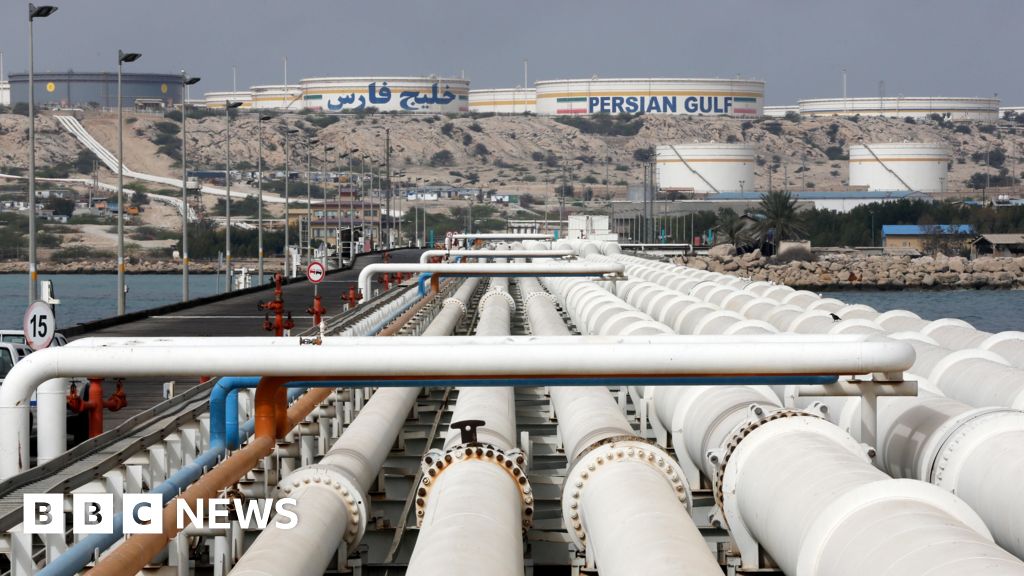

The prospect of a renewed U.S.–Iran confrontation would immediately reverberate through the hydrocarbon‑dependent economies of the Gulf, sharpening the calculus of sovereign wealth funds from Abu Dhabi to Riyadh. Higher risk premia on Brent crude would incentivize these SWFs to accelerate diversification into non‑oil assets, while simultaneously tightening liquidity buffers to hedge against potential supply disruptions. The attendant tightening of sanctions regimes would also constrain cross‑border financing channels, prompting MENA governments to reassess the composition of their foreign‑exchange reserves and to seek alternative settlement mechanisms that reduce reliance on the dollar‑dominated system.
China’s proposed playbook—offering balance‑of‑payments backstopping, sharing privileged access in the Strait of Hormuz, contributing to a global oil‑stability pool, and marshaling a green‑investment push—directly addresses the vulnerabilities highlighted above. By extending short‑term liquidity to stressed MENA balances, Beijing could cushion sovereign capital outflows while positioning its own state‑backed funds as preferred partners in infrastructure financing. Simultaneously, a joint oil‑stability facility with Saudi, Malaysian and Brazilian producers would create a new venue for price‑risk management, reducing the need for unilateral sovereign hedging. The green‑investment coalition, aimed at boosting demand for Chinese clean‑electrotech, would unlock fresh venture‑capital streams for MENA startups in solar, hydrogen and grid modernization, aligning with the region’s own decarbonization roadmaps.
For MENA policymakers, the strategic takeaway is twofold. First, sovereign capital allocation must become more nimble, blending traditional reserve assets with contingent credit lines from multilateral and bilateral partners—including China—to safeguard fiscal stability amid geopolitical shocks. Second, the surge in China‑linked green finance presents a clear avenue to catalyze venture‑capital‑driven innovation in renewables and related infrastructure, thereby reducing long‑term exposure to volatile hydrocarbon markets. Should Beijing proceed with a coordinated export‑restriction lever to press for ceasefire talks in Ukraine and the Gulf, the resulting realignment of trade flows would further incentivize MENA states to deepen intra‑regional supply chains and to invest in resilient logistics networks, reinforcing the region’s role as a pivot between Asian demand and European energy transition goals.