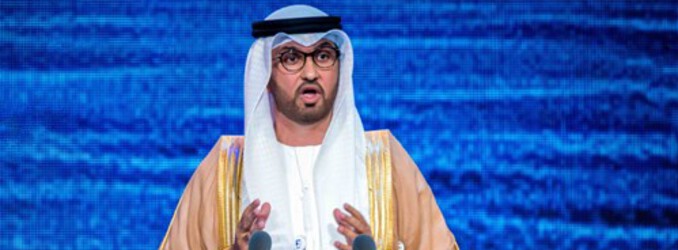

The disruption of the Strait of Hormuz constitutes a profound geopolitical and economic threat, demanding rapid sovereign capital reallocation to mitigate cascading risks across energy markets and regional stability. Commissioner Sultan Al Jaber’s characterization of attacks on Hormuz as “economic terrorism” underscores its strategic linchpin status, facilitating approximately 20% of global oil and gas flows. This vulnerability compels Middle Eastern and North African (MENA) sovereign entities to prioritize diversification of energy export routes, strategic storage infrastructure, and cyber-physical security protocols. ADNOC’s operational adjustments, including redirection of crude via the Red Sea, reflect a macro-level imperative for sovereign capital to anchor investments in resilient infrastructure and alternative logistics networks. The economic turbulence, marked by surging oil prices and supply-chain disruptions, necessitates coordinated sovereign intervention to stabilize commodity prices while avoiding overreliance on single chokepoints. Such measures directly impact venture capital (VC) ecosystems, which are increasingly channeling capital toward energy infrastructure modernization, digital supply-chain solutions, and renewable energy transitions to offset geopolitical volatilities.
The Hormuz crisis amplifies regional infrastructure fragility, catalyzing a sovereign-led surge in capital expenditure on robust energy systems and geopolitical risk mitigation strategies. Gulf states, under al Jaber’s guidance, are leveraging sovereign wealth funds to finance vertical integration projects—spanning LNG bunkering, desalination-linked storage, and hydrogen production—to decouple economic growth from Strait dependency. Venture capital is aligning with these priorities, with GCC-based funds backing technologies that enhance energy logistics transparency, such as blockchain-enabled shipping tracking and AI-driven route optimization. Concurrently, the region is witnessing a strategic pivot toward industrial infrastructure diversification, with sovereign-backed ventures targeting petrochemicals and advanced materials to buffer downstream exposure. This capital reorientation not only addresses supply constraints but also positions MENA as a hub for decentralized energy ecosystems, fostering VC growth in hybrid energy technologies and smart grid solutions tailored to regional challenges.
The long-term implications extend beyond immediate supply shocks, necessitating a fundamental reassessment of MENA’s infrastructure competitiveness and sovereign investment frameworks. Persistent Hormuz-related disruptions could erode market confidence in traditional energy-dependent economies, spurring sovereign entities to accelerate investments in energy-independent alternatives, including pumped hydro storage, hydrogen hubs, and cross-border renewable grids. Such shifts will reshape the VC landscape, redirecting capital flows toward startups and scale-ups that enable energy transition resilience—ranging from carbon capture retrofits in legacy oil facilities to decentralized microgrid technologies. In parallel, the crisis highlights the critical role of regional infrastructure in mitigating systemic risks, with sovereign states likely to underwrite large-scale, coordinated projects to fortify energy corridors. However, success hinges on supranational cooperation, as uncoordinated capital deployment risks fragmenting efforts and perpetuating volatility. Al Jaber’s call for international alignment reflects a broader recognition that securing energy markets demands not just local capital but a geoeconomic recalibration toward shared infrastructure resilience.*