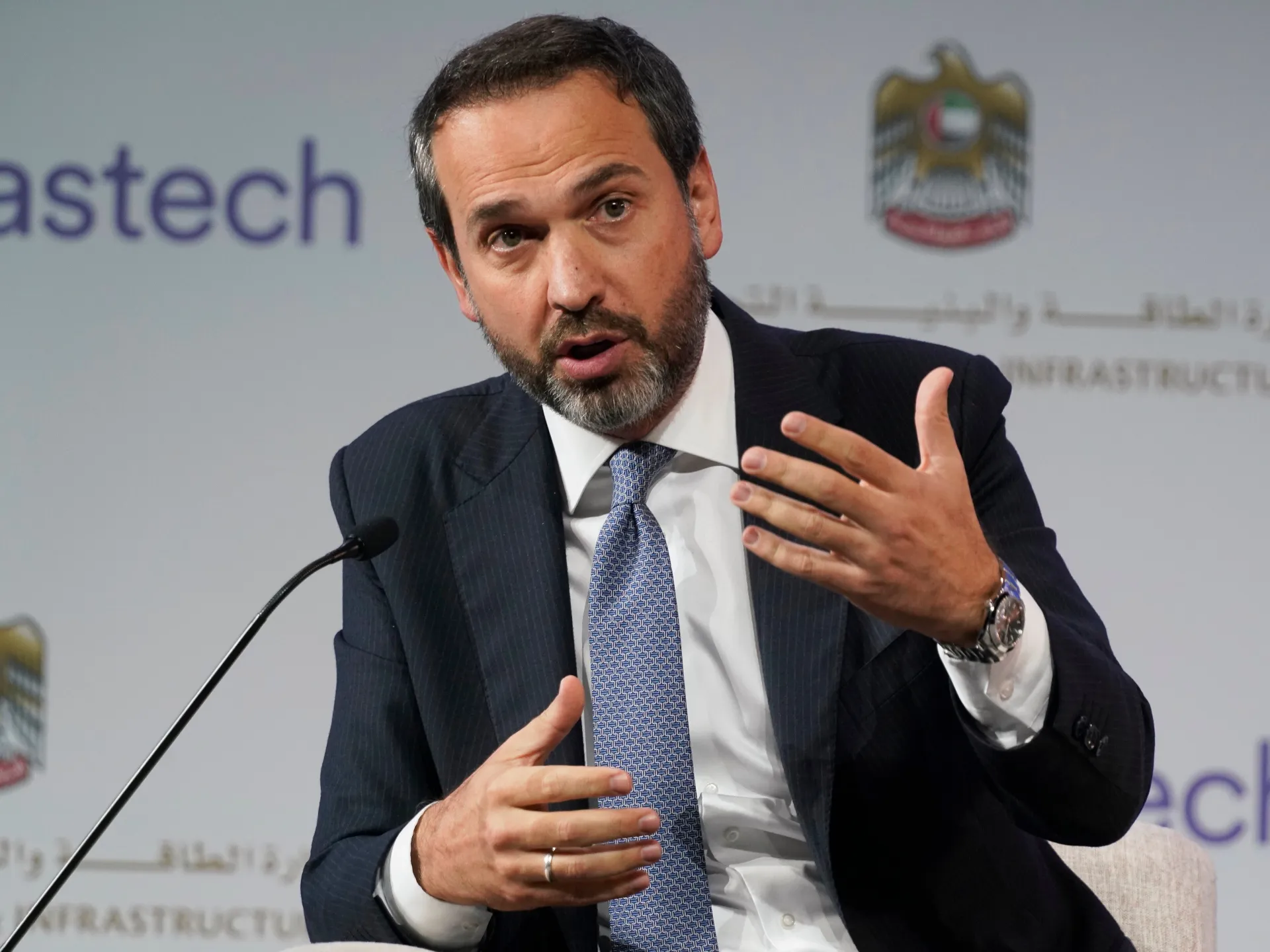

The protracted closure of the Strait of Hormuz, initiated during the escalation of US-Iranian tensions on February 28, represents a critical disruption to global energy flows, with profound implications for regional economic stability and international markets. Sultan Al Jaber, CEO of Abu Dhabi National Oil Company (ADNOC) and UAE Minister of Industry and Advanced Technology, has unequivocally demanded the Strait’s immediate reopening, framing Iran’s imposition of restrictions as coercive rather than navigational. Al Jaber’s assertion underscores the severe market uncertainty induced by the disruption, impacting not only ADNOC’s operations but the broader energy security architecture of the Middle East and North Africa (MENA).
This disruption manifests in tangible sovereign capital concerns. ADNOC, a cornerstone of UAE economic strategy and a major OPEC contributor responsible for approximately 4% of global oil supply, has been forced into widespread production curtailments exceeding 50% since the strait closure. While ADNOC leveraged higher Brent crude prices and alternative export routes to maintain March revenues broadly stable relative to prior years, the underlying vulnerability is stark. The incident highlights the susceptibility of MENA sovereign wealth and fiscal stability to energy infrastructure vulnerabilities and regional instability, potentially impacting investment flows and sovereign risk perceptions across the region. The UAE’s call for Iranian accountability for infrastructure attacks further intertwines energy security with geopolitical risk, demanding a resolution that addresses both market access and regional accountability mechanisms.
The ongoing attacks on civilian and energy infrastructure across MENA, including facilities in Saudi Arabia, Qatar, Kuwait, and Bahrain, exacerbate regional fragility and threaten long-term infrastructure resilience. Al Jaber’s emphasis on Iran’s responsibility for damages reinforces the nexus between security, economic output, and sovereign stability. This environment of persistent disruption and infrastructure vulnerability poses significant challenges for venture capital and private sector confidence, as the security of energy and critical infrastructure remains paramount for sustainable economic development. Restoring stable, secure maritime routes through the Strait of Hormuz and ensuring accountability for attacks is not merely an energy issue, but a fundamental prerequisite for regional economic recovery, sovereign capital preservation, and attracting the investment necessary for MENA’s future infrastructure needs.