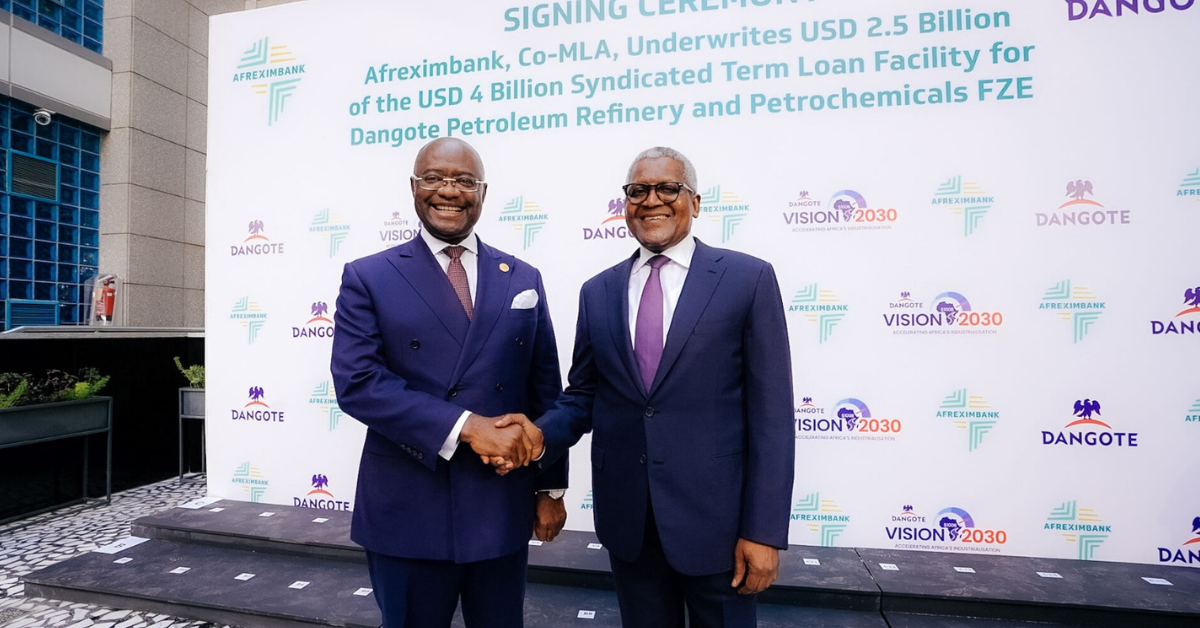

The Dangote Group’s Vision 2030 exemplifies a strategic imperative for African industrialization, offering a blueprint applicable to the MENA region. By securing $2.5 billion in Afreximbank financing to scale refining and agricultural capacity, the group demonstrates how sovereign capital, when strategically deployed, can catalyze self-reliance in resource-intensive sectors. For MENA, this model underscores the critical need to transition from import dependency to value-added domestic production, particularly in energy—a sector where the region holds significant sovereign assets. The venture capital implications are profound: such large-scale investments require not only public sector guarantees but also private-sector appetite for long-term bets in untapped industries like fertilizer manufacturing and data centers. This dual financing model could replicate in MENA, where sovereign wealth funds and regional development banks possess substantial resources to de-risk ventures aligned with energy security and digital infrastructure, which are foundational to diversified growth strategies.
The group’s expansion into cement, rice, and food production highlights the MENA region’s untapped potential to replicate such asset-light, high-margin industries. While MENA’s industrial base has historically lagged behind Africa in private-sector ambition, Dangote’s vision reveals a window for economic transformation through vertical integration and technology-driven supply chains. Sovereign capital in the region must prioritize co-financing such initiatives, especially in sectors like fertilizers—a critical linkage between energy-intensive exports and agricultural productivity. Venture capital, meanwhile, will need to adapt to fund complex, capital-intensive projects, bridging the gap between sovereign largesse and private-sector execution. The success hinges on accurate risk assessment, as MENA’s political and infrastructural environments vary widely. A coordinated approach, leveraging regional blocs’ fiscal policies, could position MENA as a counterbalance to global supply chain fragilities, mirroring Africa’s emerging leadership in localized production.
Regional infrastructure remains the linchpin of this industrial overhaul. Dangote’s plans for ports, pipelines, and data centers reveal that MENA’s economic future depends on modernizing logistical networks to support both internal and outward trade. The region’s existing infrastructure deficits—particularly in inland connectivity and digital hubs—present a crystalline opportunity for sovereign investment. By aligning infrastructure development with industrial hubs like Dangote’s, MENA can reduce energy and material transit costs, which are currently bottlenecked by fragmented networks. Moreover, the data center expansion in Africa underscores a nascent recognition of digital infrastructure as a sovereign asset. For MENA, mirroring this approach could unlock success in fintech, AI, and cloud services, which are critical to a post-petroleum economic agenda. The convergence of industrial, energy, and digital infrastructure investments will not only enhance regional competitiveness but also attract ESG-focused capital, reinforcing the narrative of MENA as a strategic, sustainable growth destination in a protectionist global order.