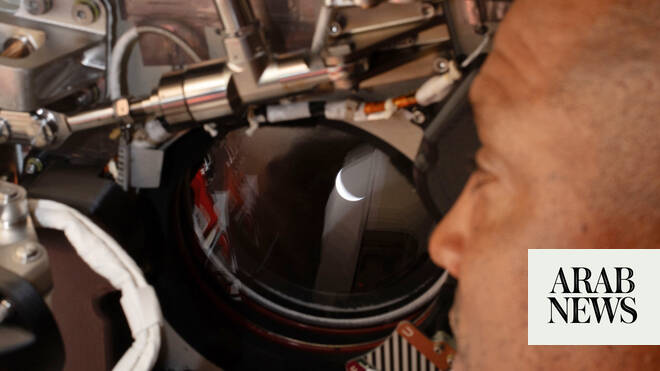

The Artemis II mission underscores a seismic shift in private and public-sector investment toward space technology, with profound implications for the Middle East and North Africa (MENA) region. As nations and private entities pour capital into aerospace innovation, sovereign funds in the MENA could begin redirecting portions of their sovereign wealth portfolios toward space-related ventures, anticipating returns from lunar resource exploration, satellite communications, or Earth observation technologies. This aligns with a growing trend where space infrastructure—such as reusable rockets, advanced propulsion systems, and AI-driven mission control—becomes a focal point for sovereign capital allocation. For MENA countries, this presents an opportunity to position themselves as hubs for space-tech R&D or capital intermediaries, leveraging regional strengths in engineering and telecommunications to attract venture capital (VC) focused on aerospace applications. The Artemis program’s reliance on precognitive infrastructure, from ground systems to orbital logistics, mirrors the MENA’s need to modernize its technological backbone, creating a parallel demand for scalable digital infrastructure investment.
The venture capital landscape in the MENA is poised to benefit from the commercialization of space technologies highlighted by Artemis II. Startups specializing in miniaturized satellites, AI for autonomous spacecraft navigation, or lunar mining simulations could attract VC attention, particularly as governments and private corporations push for spin-off innovations from programs like Artemis. Sovereign players in the region might also fund space-tech incubators or enterprise partnerships to diversify their portfolios beyond traditional energy or oil sectors. Furthermore, the mission’s emphasis on long-term infrastructure—such as the reusable Orion spacecraft—signals a strategic shift toward sustainable tech investments. MENA’s VC ecosystem, often concentrated in fintech or e-commerce, could expand into aerospace-adjacent fields, though success will depend on regulatory frameworks that incentivize risk-taking in high-cost, high-reward domains. The regional business impact hinges on building a ecosystem capable of translating space science into marketable products, a challenge requiring collaboration between startups, academia, and state-backed entities.
Regionally, Artemis II’s technical advancements reinforce the urgency for MENA to invest in resilient infrastructure capable of supporting next-generation technologies. The mission’s success relies on a global network of ground systems, which parallels the need for MENA to upgrade its digital and physical infrastructure to compete in the global tech arena. Sovereign capital could prioritize projects like 5G expansion, data centers, or cybersecurity frameworks to support space-tech ventures, while VC firms might back companies bridging space innovation and regional infrastructure gaps. For instance, lunar communication satellites or Earth-observation platforms could address local challenges in agriculture or disaster management, provided MENA’s infrastructure can handle the associated data flows and energy demands. The Artemis program’s $90 billion+ budget underscores the scale required for such transitions; replicating this ambition in the MENA would necessitate coordinated public-private partnerships and targeted foreign investment. Without parallel strides in regional infrastructure, the area risks being left behind as the global shift toward space-driven economies accelerates.