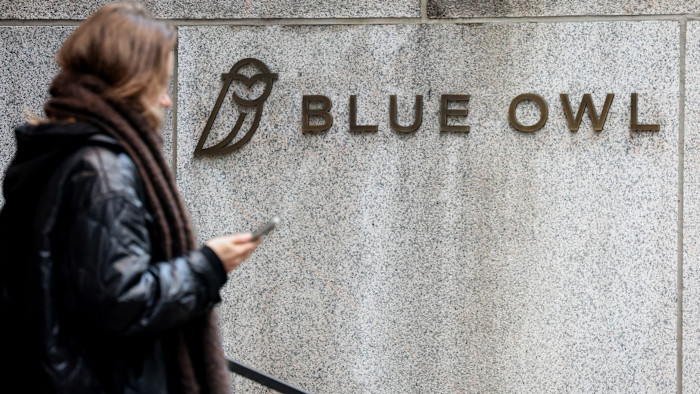

The turmoil at Blue Owl Capital, marked by a surge in redemption requests from its private credit funds, has sent shockwaves through global investment markets, raising critical questions about the sustainability of the asset class and the stability of firms at its core. While the immediate fallout is concentrated in the United States, the ripple effects are poised to reverberate across the Middle East and North Africa (MENA) region, where sovereign capital allocation, venture capital ecosystems, and regional infrastructure development are increasingly intertwined with global financial trends. The liquidity crunch in private credit underscores the vulnerabilities of non-traditional investment vehicles, which have long been touted as stable alternatives in periods of macroeconomic stress. For MENA, a region grappling with sovereign balance sheet challenges and the need for capital-intensive infrastructure modernization, the fallout from Blue Owl’s crisis could exacerbate existing pressures on capital deployment and investor confidence.
The business impact of this crisis is particularly acute for MENA’s emerging private credit market, which has seen rapid growth as sovereign entities and institutional investors seek higher-yielding alternatives to traditional banking channels. The recent turmoil highlights the risks of overreliance on illiquid private credit structures, which may deter further inflows into the region’s nascent private credit platforms. Sovereign capital programs, such as Saudi Arabia’s Public Investment Fund and the UAE’s sovereign wealth funds, are already facing mounting pressure to diversify their portfolios amid global market volatility. The redemptions at Blue Owl, coupled with similar moves by peers like KKR and Ares Management, signal a shift in investor sentiment that could complicate MENA’s efforts to attract private capital for large-scale infrastructure projects, such as renewable energy initiatives or smart city development. This dynamic may force regional governments to reassess their capital allocation strategies, potentially accelerating the integration of public-private partnerships and equity-based financing models.
For venture capital and regional infrastructure, the current instability in private credit markets could both hinder and catalyze growth in the MENA region. On one hand, the heightened risk premium associated with private credit may disincentivize early-stage venture capital investments, as investors prioritize liquidity and transparency. However, the crisis also presents an opportunity for MENA’s venture capital ecosystem to differentiate itself by emphasizing technology-driven, scalable solutions that align with global decarbonization and digital transformation trends. Additionally, the region’s sovereign capital initiatives, aimed at fostering innovation and economic diversification, may need to prioritize venture capital-friendly policies to offset the declining appeal of traditional debt instruments. The interplay between sovereign capital, venture capital, and infrastructure investment will be critical in determining whether MENA can transition from a region reliant on external capital to one capable of self-sustaining growth through robust financial architecture.
The broader implications for MENA’s financial and technological sectors are profound. As private credit grapples with liquidity challenges, the region’s strategic focus on building resilient financial systems and fostering innovation will determine its capacity to navigate the post-pandemic and post-geopolitical realignment landscape. Sovereign capital programs must evolve beyond traditional debt markets to embrace hybrid financing models that better align with the risks and returns of modern private credit. Simultaneously, the venture capital community in MENA must leverage this moment to strengthen regulatory frameworks, enhance transparency, and build institutional trust, ensuring that the region remains an attractive destination for long-term, patient capital. In this context, the Blue Owl crisis serves as a stark reminder of the interconnectedness of global financial markets and the urgent need for MENA to solidify its position as a stable, innovative, and self-reliant investment destination.