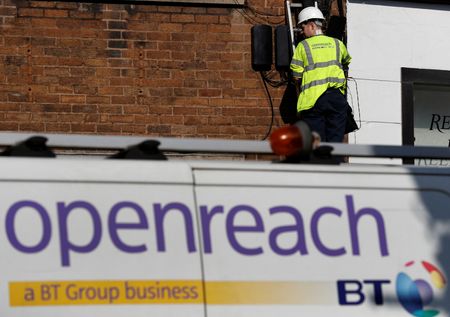

Openreach’s strategic alliance with Google Cloud to deploy AI-driven solutions for fiber network expansion and fleet optimization underscores a critical shift in global infrastructure development, offering lessons for the Middle East and North Africa (MENA) as it accelerates digital transformation. The integration of artificial intelligence to optimize logistics and reduce carbon emissions by 10,000 tons annually demonstrates how advanced technologies can unlock efficiency gains while aligning with sustainability goals. For MENA nations grappling with aging infrastructure and escalating demand for high-speed connectivity, this partnership highlights the economic necessity of adopting similar public-private collaboration models. By leveraging AI for asset management and route optimization, companies in the region could reduce operational costs, mitigate fuel expenditures, and meet sovereign climate commitments—a direct parallel to Openreach’s success in scaling its 24,000-vehicle fleet sustainably.
Regional sovereign capital allocation strategies in MENA, such as Saudi Arabia’s $500 billion Sovereign Wealth Fund or the UAE’s $11 billion Circular Carbon Economy Fund, could reorient toward technologies that amplify infrastructure productivity. The Openreach-Google Cloud model reveals how AI-enabled mapping of residential zones—covering 35 million properties in the UK—creates hyper-localized data frameworks essential for energy distribution, urban planning, and last-mile connectivity projects. In MENA, where fiber rollout faces logistical complexity due to fragmented urbanization and geopolitical volatility, such data-driven approaches could attract venture capital inflows targeting smart city initiatives. For instance, Dubai’s $170 billion Smart Dubai Plan or Egypt’s $41 billion Digital Transformation Strategy could benefit from analogous AI-driven spatial analytics to prioritize infrastructure investments in underserved areas.
The $700 million Openreach contract with Google Cloud—and its projected ROI through reduced emissions credits and operational savings—reflects a broader trend where sovereign and private investors demand measurable returns on technology integration. MENA’s venture capital ecosystem, though nascent compared to Silicon Valley, is witnessing a surge in climate-tech startups, with $1.2 billion raised in 2022 for region-specific solutions. Scaling these efforts will require cross-border partnerships akin to the UK-Google Cloud model, where multinational tech firms provide scalable AI tools while local governments offer policy incentives. Challenges persist: MENA’s reliance on fossil fuels for power generation contrasts sharply with Openreach’s electric vehicle transition goals, necessitating parallel decarbonization investments to fully replicate such partnerships’ impact.
Ultimately, Openreach’s initiative serves as a blueprint for MENA to bridge the sovereign-technology divide. By combining regional capital reserves with AI-driven demand forecasting, MENA states could future-proof infrastructure spending amid volatile global markets. However, success hinges on addressing policy fragmentation, data privacy concerns, and workforce upskilling to match the technical demands of such collaborations. As the region competes to avoid a 2035 Middle East Connectivity Shortfall, adopting these scalable, data-centric models will determine whether infrastructure investments catalyze sustained economic growth or remain stranded assets.