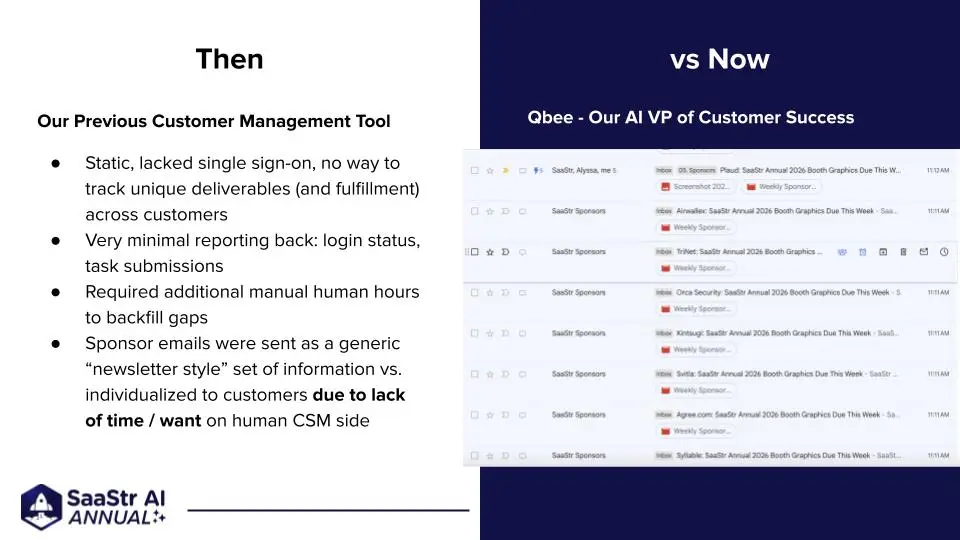

In the Middle East and North Africa, where economic diversification and digital transformation are top priorities, the emergence of AI-driven solutions like Qbee marks a pivotal shift in operational efficiency. This tool exemplifies how hyper-specific, low-cost AI agents can address long-standing challenges in customer success management—a critical bottleneck for scaling B2B enterprises. By automating 95% of routine customer operations, Qbee achieves a 70% reduction in human labor costs while improving task completion rates by over 10x, a performance metric that resonates deeply in regions grappling with labor shortages and rising operational expenses. The MENA private sector, still reliant on fragmented, legacy systems, stands to gain immensely from such tools, which can be deployed with minimal engineering resources and negligible monthly AI token costs, aligning with the region’s need for agile, capital-light innovation.
The financial implications for sovereign and venture capital are equally stark. Governments in the MENA region are increasingly prioritizing AI adoption as part of their economic modernization agendas, with Saudi Arabia’s Vision 2030 and the UAE’s Centennial 70 Strategy both emphasizing digital infrastructure and workforce upskilling. Qbee’s model—a $2,000 build with zero engineers—challenges traditional VC paradigms focused on high-headcount startups, instead showcasing the viability of asset-light, AI-first businesses that can scale across sectors like fintech, logistics, and energy. For sovereign wealth funds and regional venture capital arms, this underscores a strategic opportunity: directing capital toward AI-enabled tools that address pain points in customer retention and process optimization, areas where traditional SaaS offerings have historically underperformed in the MENA context.
Yet, the broader infrastructure demands of such a transition remain non-trivial. While Qbee’s deployment via Replit highlights the potential for localized, on-demand development, the MENA region’s digital infrastructure—including connectivity gaps in rural areas and inconsistent data privacy frameworks—poses risks to widespread adoption. Governments must urgently invest in cloud resilience, cybersecurity, and regulatory sandboxes to enable safe, scalable AI deployment. Additionally, the rise of “vibe coding” platforms like Replit and Lovable, which democratize AI agent creation, argues for regional partnerships between startups, governments, and cloud providers to build localized AI ecosystems. Without addressing these infrastructural gaps, the region risks ceding ground to external tech players even as it seeks to harness AI’s economic multiplier effects.
Qbee’s success also serves as a litmus test for MENA businesses navigating the future of customer success. The tool’s ability to free up human capacity for strategic engagement mirrors a broader societal shift toward valuing high-touch relationships in digital economies. For a region where enterprise software adoption has been stymied by one-size-fits-all solutions, Qbee’s customization potential—which allows adaptation to regional nuances in client communication and workflows—could catalyze a new generation of AI-native SaaS platforms. As the Middle East and North Africa race to redesign their economic models, the lesson is clear: the tools that automate the mundane while amplifying human expertise will define the next wave of regional competitiveness.