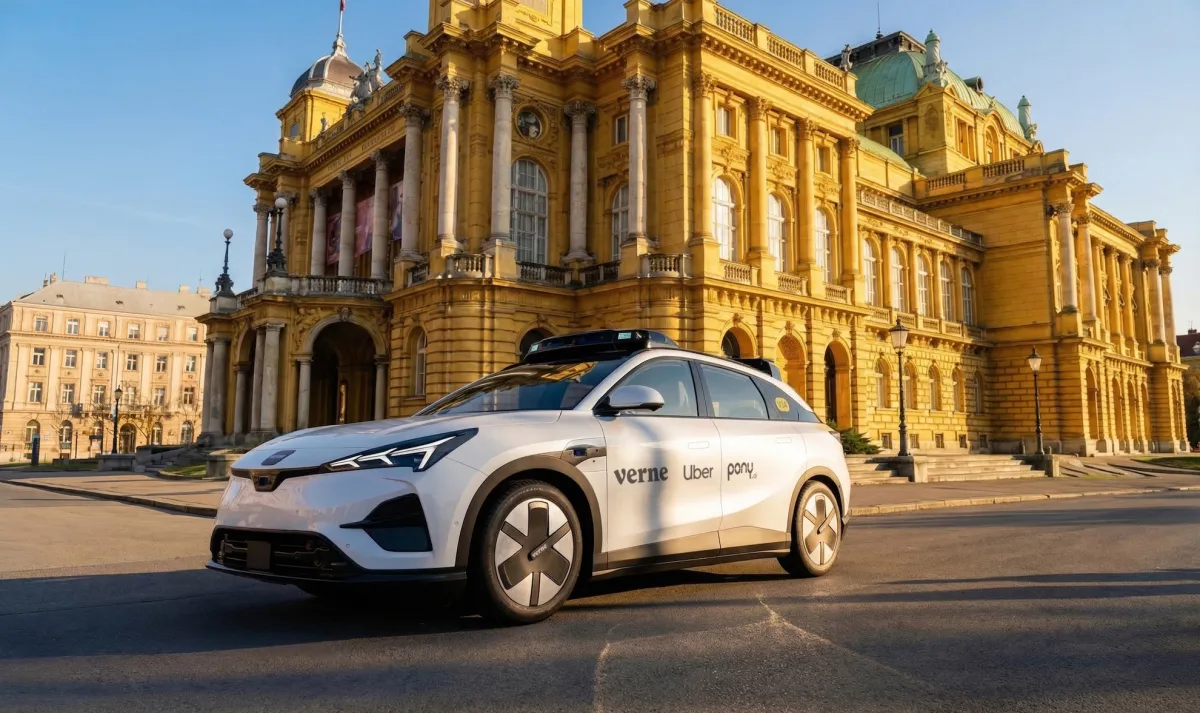

The recent formation of a strategic alliance between Uber, Pony.ai, and Verne to deploy a commercial robotaxi service in Zagreb represents a pivotal convergence of autonomous mobility innovation and operational scalability. While the immediate focus is on European markets, the business implications for the Middle East and North Africa (MENA) are profound. MENA’s economic diversification agendas, predicated on technological autonomy and smart city development, position the region to emulate or adapt such models. The partnership underscores the growing recognition that sovereign capital must prioritize investments in locational flexibility—particularly in urban mobility infrastructure—and autonomous vehicle (AV) ecosystems. For MENA, this could accelerate interest in sovereign-backed venture capital (VC) opportunities targeting AV startups or retrofit solutions that integrate with existing transportation networks. The ability to bypass traditional manufacturing dependencies, as seen in Verne’s operational model, offers a blueprint for MENA states seeking to build sovereign capital allocators that de-risk AV adoption through private-public partnerships.
The venture capital dynamics surrounding Verne’s €100 million funding round highlight a critical trend for MENA’s financial ecosystems. Sovereign investors in the region are increasingly channeling capital into technology startups that address infrastructure gaps while aligning with national digital transformation goals. The Verne-Uber-Pony.ai collaboration exemplifies how VC portfolios could shift toward operational platforms rather than purely hardware-driven ventures. For MENA, this signals a potential pivot toward supporting startups that offer turnkey AV solutions, particularly in markets grappling with congestion and aging infrastructure. The lack of a dominant homegrown AV brand in the region further amplifies the relevance of such partnerships, as MENA governments and private investors may prioritize scalable, ready-to-deploy technologies over early-stage innovation. This could reshape regional VC strategies, emphasizing cross-border alliances to bridge technological and financial gaps while mitigating sovereign risk.
The regional infrastructure implications of this robotaxi initiative are equally consequential for MENA. Sovereign infrastructure spending in the region has traditionally focused on energy and telecommunications, yet the proliferation of autonomous systems necessitates a reorientation toward digital and mobility ecosystems. MENA cities, already investing in smart infrastructure projects like Dubai’s autonomous transport corridors or Riyadh’s Neom, could adopt a modular approach inspired by Verne’s fleet management framework. This would require coordination between public entities and private players to standardize data governance, urban planning, and charging network deployment. Furthermore, the success of Uber’s ride-hailing network in regional MENA markets demonstrates the potential for integrated service ecosystems. By leveraging existing revenue models and payment infrastructures, MENA states could replicate this partnership’s scalability, embedding AV adoption into broader urban development strategies. The business impact hinges on recognizing AVs not as isolated tech evolutions but as catalysts for holistic infrastructure modernization across the region.