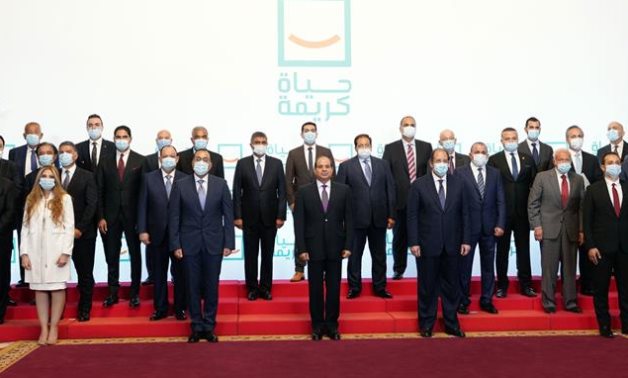

Egypt’s Decent Life initiative in Sohag Governorate exemplifies a strategic allocation of sovereign capital toward infrastructure modernization, with LE 45 billion invested in the first phase alone. This large-scale deployment underscores Egypt’s commitment to addressing multi-dimensional poverty in Upper Egypt through pharaonic-scale public-private partnerships. The initiative’s focus on decentralized governance—prioritizing governorate-level development—aligns with broader regional trends where MENA countries are reallocating sovereign resources to mitigate urban-rural disparities. For the Cairo Institute of Development Economics, such investments signal a recalibration of capital flows toward infrastructure as a catalyst for economic resilience, particularly in the water-stressed MENA region. The success of Sohag’s project could set a precedent for replication across the Arab world, attracting additional sovereign funding and reducing reliance on external concessional financing.
Beyond immediate infrastructure gains, the Decent Life program unlocks significant business opportunities across the MENA value chain. The expansion of water networks and sanitation systems creates a fertile ground for venture capital investment in watertech, smart metering, and waste management solutions tailored to arid climates. Notably, the integration of solar-powered pumping stations in Sohag—a subtly mentioned innovation in the source text—highlights a shift toward decarbonized infrastructure, a priority for Gulf sovereign wealth funds deploying capital in the region. Venture capitalists are likely to monitor the initiative’s scalability, given its microfinancing components and entrepreneurship programs, which could spawn accelerators focused on social impact ventures. Furthermore, the initiative’s emphasis on job creation in manufacturing and agriculture may catalyze industrial clusters, particularly in Egypt’s Upper Nile region, where underdeveloped logistics networks have long hindered private-sector growth.
Regionally, Sohag’s transformation reflects the MENA infrastructure imperative—a necessity rather than an option. The governorate’s achievement of serving 240,000 citizens through the Tahta Sewage Treatment Plant at LE 500 million illustrates the cost-effectiveness of prioritizing foundational infrastructure in neglected areas. This model could influence regional cooperation, particularly within Egypt’s tourist and agricultural corridors, where cross-border water infrastructure projects are politically sensitive but economically vital. Moreover, the initiative’s alignment with Egypt’s Vision 2030 may spur regional standardization of urban planning and public health metrics, lowering barriers for Gulf and North African investors seeking to replicate similar outcomes. For sovereign investors, the success of Decent Life represents a dual dividend: enhancing domestic stability while positioning Egypt as a hub for infrastructure innovation in a region grappling with climate-induced resource constraints.