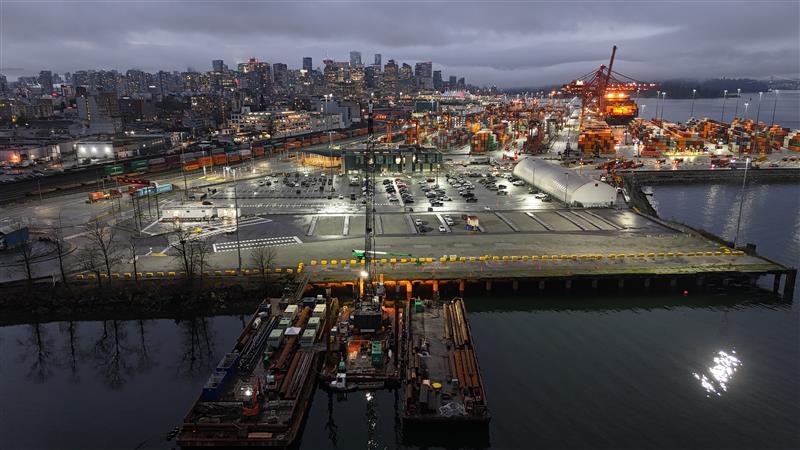

DP World’s two-decade investment of CAD$1.7 billion into Canadian supply chain infrastructure, directly supporting 100,000 jobs and driving terminal capacity expansion tenfold, serves as a strategic blueprint for MENA’s sovereign capital deployment in global logistics. This long-term commitment by a UAE-based global giant underscores the efficacy of integrating sovereign wealth with private enterprise to build resilient, scalable infrastructure capable of anchoring regional economic diversification. For MENA, this model demonstrates how state capital can catalyze sustained economic multipliers beyond hydrocarbon dependence, particularly as the region seeks to position itself as a critical node in global reconfigured trade corridors.
The evolution of DP World’s Canadian operations from a terminal operator to an integrated logistics provider spanning marine, inland, and freight forwarding sites offers significant lessons for MENA’s infrastructure development ambitions. The MENA region, with its sovereign capital pools exceeding USD$3.6 trillion, can leverage this integrated approach to transform ports and logistics hubs into interconnected ecosystems supporting high-value sectors like advanced manufacturing, technology, and consumer goods. The expansion into Ontario and Quebec showcases the strategic imperative of seamless hinterland connectivity, a gap MENA must urgently address through coordinated investment in rail, industrial parks, and digital freight platforms to unlock its untapped export potential and attract venture capital into supporting supply chain technology startups.
Crucially, DP World’s operational rigor and commitment to sustainability—evidenced in hydrogen fuel adoption and ecosystem preservation—set a benchmark for MENA’s sovereign-backed infrastructure projects. As regional sovereign funds increasingly invest in global logistics to secure returns and diversify portfolios, the integration of ESG principles becomes paramount for attracting international venture capital and meeting global trade standards. MENA nations must replicate this convergence of scale, sustainability, and integrated solutions, positioning their sovereign capital and regional venture ecosystems not merely as infrastructure financiers, but as architects of next-generation logistical infrastructure essential for MENA’s pivotal role in the future of global trade.