
DP World’s 2025 financial performance underscores the growing strategic importance of its integrated logistics platform for the Middle East and North Africa, where sovereign wealth funds and national development agencies are increasingly aligning capital with global trade‑flow resilience. Record revenue of $24.4 billion and adjusted EBITDA of $6.4 billion, driven by a 5.8 % rise in group throughput to 93.4 million TEU, reflect not only disciplined cost management but also the company’s ability to capture higher‑yield cargo amid volatile shipping corridors. For MENA policymakers, these results validate the premise that investments in port and logistics infrastructure can generate sustained cash‑flow uplift while buffering economies against geopolitical shocks.
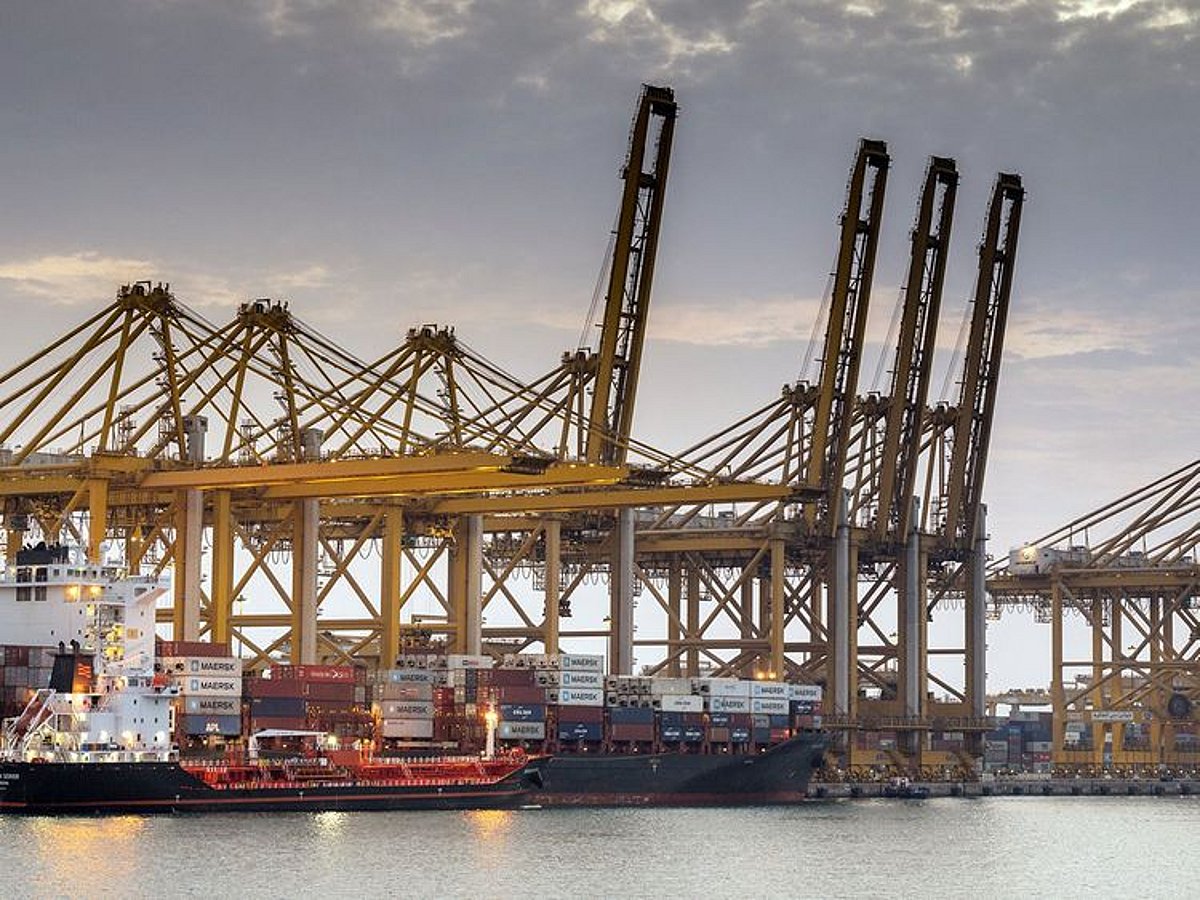
In the region, DP World’s capex surge to $3.1 billion in 2025—and the planned $3 billion outlay for 2026—directly fuels flagship projects that dovetail with national visions. Expansion of Jebel Ali’s capacity to 109 million TEU reinforces Dubai’s role as a trans‑continental hub, while the newly inaugurated Sokhna Logistics Park in Egypt and the ongoing $29 million cold‑storage facility at Elsewedy Industrial Development Park enhance the Suez Canal corridor’s value‑added logistics offering. Simultaneously, investments in Jeddah’s port and the Ndayane terminal in Senegal illustrate a broader MENA‑African connectivity strategy that attracts sovereign capital seeking long‑term, infrastructure‑backed returns.
The rollout of DP World’s “One DP World” operating model, which melds ports, terminals, and digital trade services, is catalyzing a nascent venture‑capital ecosystem focused on logistics automation, blockchain‑based documentation, and AI‑driven yard optimization across the Gulf. Startups in these niches are gaining access to DP World’s operational testbeds and, increasingly, to co‑investment vehicles backed by regional sovereign funds seeking to diversify beyond hydrocarbons. This symbiotic relationship accelerates technology adoption, improves terminal yields—evidenced by the 8.5 % like‑for‑like revenue per TEU uplift in the Ports & Terminals division—and creates a pipeline of high‑growth assets that can be monetized through future infrastructure‑as‑a‑service platforms.
Looking ahead, the improvement in return on capital employed from 8.9 % to 9.9 % signals that DP World’s disciplined allocation is translating into superior asset efficiency, a metric that regional infrastructure financiers monitor closely when evaluating public‑private partnerships. Continued volatility in global trade will keep demand for flexible, scalable logistics solutions high, ensuring that MENA‑centric investments in port automation, multimodal corridors, and cold‑chain facilities remain attractive to both sovereign capital and venture‑backed innovators. The region’s ability to harness these dynamics will determine its success in converting trade‑flow volatility into enduring, value‑creating infrastructure.