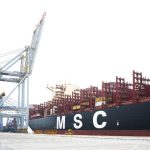
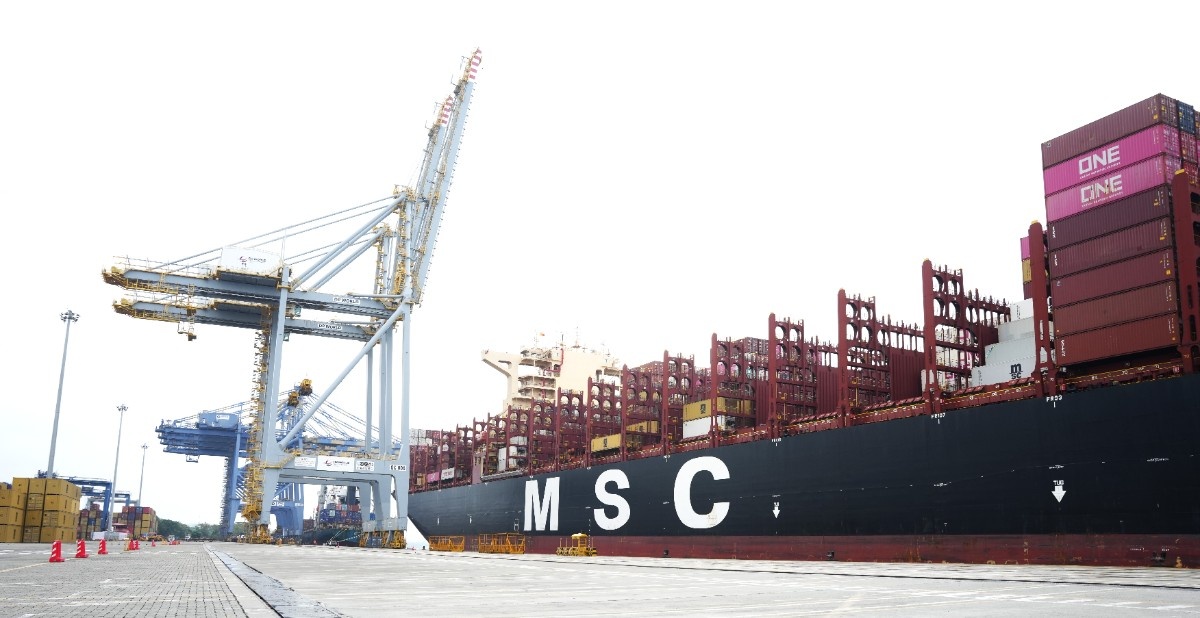
DP World Cochin’s record handling of 8,000 TEUs from the MSC Ilaria vessel underscores the accelerating demand for transshipment infrastructure in India, a trend with profound implications for the Middle East and North Africa (MENA). The terminal’s upgrades—enhanced by 5 MVA power systems, electrified rubber-tyred gantry cranes, and a dedicated solar plant—signal a critical shift toward scaling operations to accommodate ultra-large container vessels (ULCVs), which now dominate global trade routes. For MENA, where ports like Dubai and Rotterdam are investing similarly to handle megaships, this development highlights the necessity of sovereign-backed infrastructure projects to maintain competitiveness in regional trade networks. The Indian government’s public-private partnership model, which facilitated Cochin’s capacity expansion, offers a replicable framework for MENA states seeking to attract capital-intensive logistics hubs through fiscal incentives and regulatory stability.
The financial ripples of Cochin’s achievement extend to venture capital dynamics in the global shipping ecosystem. The terminal’s integration of automated yard systems and renewable energy infrastructure mirrors a growing VC appetite for decarbonizing logistics, a sector responsible for 3% of global emissions. In MENA, where sovereign wealth funds are increasingly channeling capital into ESG-aligned infrastructure, this convergence of sustainability and operational efficiency could attract early-stage investments in port automation tech, dry port digitalization, and cross-border freight corridors. Notably, the terminal’s transshipment model—optimized for multi-segment cargo—parallels the MENA’s strategic pivot to multi-modal logistics hubs, aiming to reduce reliance on single-modal transit corridors and enhance connectivity between Africa, the Middle East, and Asia.
Regionally, India’s push to modernize ports amid fierce competition—evidenced by Cochin’s $1.4 billion expansion—echoes the MENA’s race to secure dominant roles in global supply chains. The Cochin case exemplifies how sovereign capital, channeled through infrastructure bonds and green financing initiatives, can de-risk port modernization projects, a strategy MENA nations are adopting to position themselves as linchpins for post-pandemic trade. However, the success of such investments hinges on regional coordination to standardize port operations and cargo security protocols, enabling seamless integration into ULCV-centric networks. As emerging economies from the Horn of Africa to the Gulf States re-evaluate their port strategies, Cochin’s operational benchmarks serve as a blueprint for balancing capital outlays with the long-term imperative of aligning infrastructure capacity with evolving global trade geographies.