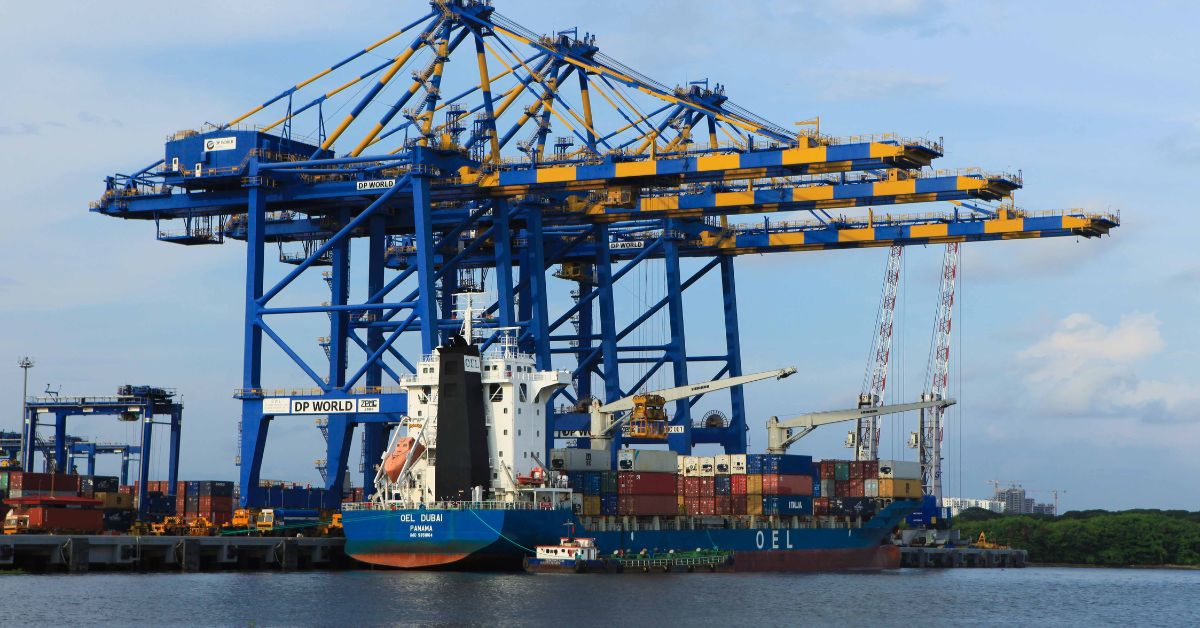

DP World Cochin’s recent single‑vessel record of 8,000 TEUs aboard MSC Ilaria underscores its emergence as a fully ULCV‑ready hub within the Indian Ocean container network. By surpassing the previous 6,000‑TEU benchmark set by MSC Aurora, the terminal has demonstrated the operational maturity required to compete directly with established transshipment gateways such as Colombo and Singapore. This capability not only reinforces Cochin’s strategic positioning for MSC’s expanding mainline services but also creates a corridor that can channel high‑volume cargo destined for the Gulf Cooperation Council (GCC) and broader MENA markets, thereby amplifying the terminal’s attractiveness to sovereign investors seeking diversified logistics assets.
The successful handling of an Ultra‑Large Container Vessel of MSC Ilaria’s size signals a pivotal shift in sovereign capital allocation toward advanced port infrastructure across the region. Governments in the GCC and North Africa, which have traditionally funded port modernisation through state‑owned enterprises, are now allocating venture‑backed financing to private‑sector initiatives that replicate Cochin’s throughput gains. The resulting influx of private equity and development capital is expected to accelerate the deployment of automated gate‑stacking systems, deep‑water berth upgrades, and digital twin simulations—features that are increasingly viewed as essential arbitrage tools for attracting ultra‑large liner services.
Parallel to maritime capacity building, the UPSIDA‑JNPA memorandum of understanding to develop the Lalitpur Pharma Park exemplifies a new model of sovereign‑private collaboration that integrates land‑locked industrial clusters with premier maritime gateways. By leveraging JNPA’s 8.17 million TEU annual throughput and its temperature‑controlled reefer services, the partnership creates a logistics spine that can support high‑value pharmaceutical exports to MENA markets with stringent cold‑chain requirements. Sovereign funding mechanisms and venture capital interest are converging on such integrated pharma‑logistics hubs, reflecting a broader regional trend where sovereign wealth funds are prioritising assets that deliver both economic diversification and export‑oriented growth.
Collectively, these developments illustrate a reinforcing loop between sovereign investment, venture capital, and regional infrastructure planning across the Middle East and North Africa. As Indian terminals like Cochin and JNPA secure strategic maritime slots, they generate spill‑over demand for enhanced intermodal connections—ranging from dedicated freight corridors to automated customs platforms—that are increasingly financed through private capital streams. This dynamic positions the GCC and Maghreb states to reassess their own port expansion roadmaps, seeking to emulate the data‑driven, partnership‑centric approach that is reshaping global container logistics and cementing the region’s role as a pivotal node in the next generation of maritime trade.