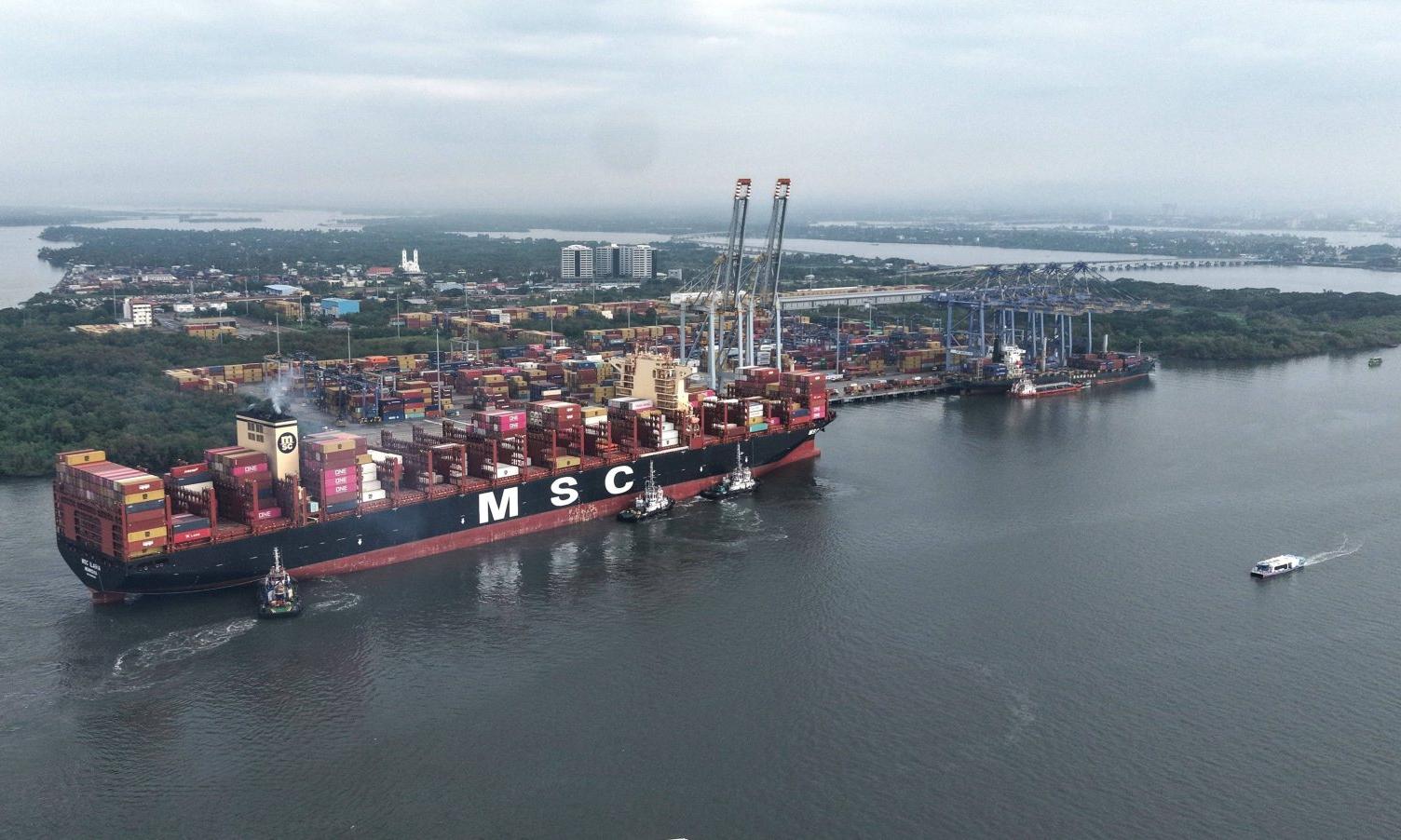

DP World’s record handling of 8,000 TEUs at its Cochin terminal is not merely an operational footnote; it is a strategic indicator of how Gulf-backed logistics operators are repositioning sovereign capital deployment across high-growth trade corridors. For institutional allocators in the MENA region, terminal scalability in South Asia translates directly into supply chain resilience and pricing leverage. The deliberate integration of ultra-large container vessels into regional routing networks validates the thesis of cross-border port concession investments, shifting the capital mandate from legacy volume acquisition to elastic throughput capacity. This operational scaling reinforces Dubai’s broader logistical hegemony and provides sovereign wealth funds in Abu Dhabi, Riyadh, and Doha with a replicable, infrastructure-heavy asset class that hedges against geopolitical fragmentation and trade route volatility.
The infrastructure blueprint executed at Cochin—encompassing yard expansion, grid hardening, and the wholesale electrification of material handling equipment—establishes a new capital allocation standard for MENA’s domestic corridor development. State-backed development authorities across Egypt’s Suez Canal zones, Oman’s Duqm hub, and Saudi Arabia’s western gateway networks are actively replicating this template to attract post-Panamax traffic while adhering to stringent net-zero mandates. Sovereign capital is now financing the heavy capex lift for shore power integration, automated yard orchestration, and solar-backed microgrids, recognizing that green infrastructure is a prerequisite for securing international project finance and capturing premium tariff spreads in adjacent free trade warehousing zones.
From a venture capital and enterprise technology perspective, this throughput expansion is triggering a structural repricing of maritime tech assets across MENA’s digital logistics ecosystem. Regional institutional LPs and corporate venture arms are reallocating growth-stage capital away from consumer-facing freight marketplaces toward mission-critical terminal operating systems, AI-driven cargo forecasting, and predictive maintenance platforms that minimize vessel turnaround variance. The commercial proof of tech-enabled mega-terminals is funneling late-stage venture and private equity into supply chain digitization ventures headquartered between Abu Dhabi and Riyadh, particularly in blockchain-backed trade finance and automated port security. As MENA operators leverage sovereign balance sheets to acquire and vertically integrate these technology stacks, the region is cementing its status as the primary capital and innovation nexus for automated, high-margin maritime logistics across the Indo-Mediterranean trade arc.