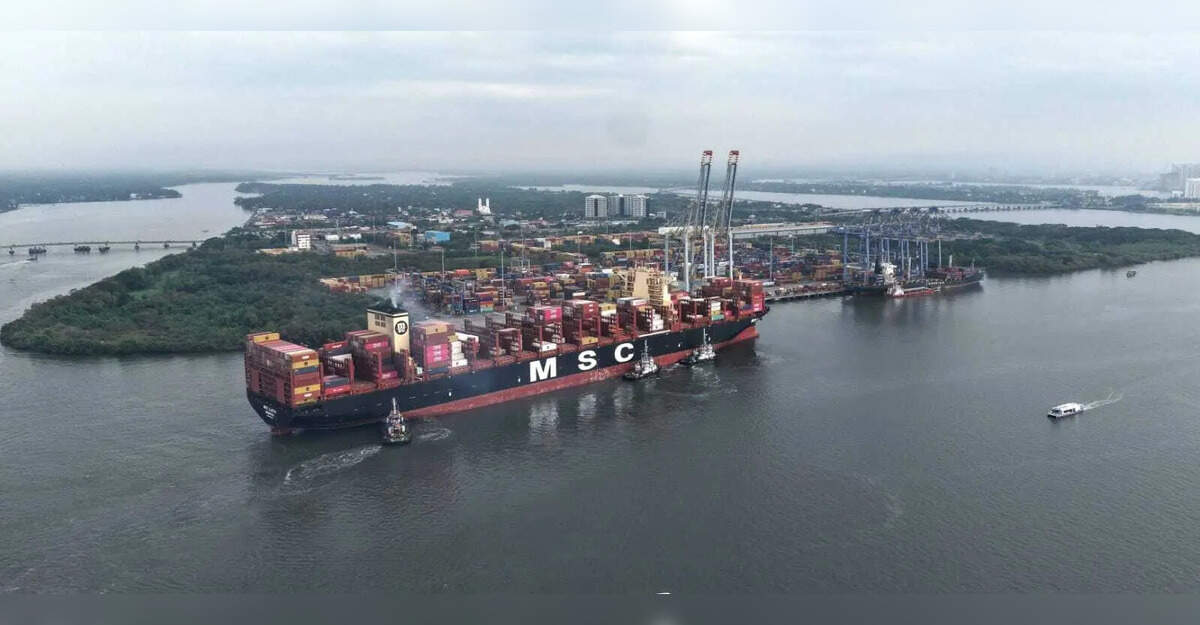

The recent handling of MSC Ilaria at DP World Cochin’s International Container Transshipment Terminal represents a significant inflection point for regional trade dynamics within the Middle East and North Africa. The vessel’s record-breaking 8,000 TEU throughput – surpassing previous benchmarks – underscores a burgeoning capacity expansion across South India’s port infrastructure, directly impacting the flow of goods and bolstering the competitiveness of the broader Indian subcontinent as a logistics hub. This event isn’t merely a terminal record; it’s a tangible demonstration of the escalating demand for efficient transshipment services, a demand increasingly driven by the rapid growth of e-commerce and the diversification of supply chains away from traditional European gateways.
The strategic investments underpinning this operational success – including the deployment of advanced STS cranes, electrified RTGs, and expanded yard space – have profound implications for sovereign capital flows and venture capital activity. Increased port capacity invariably attracts further investment, not just from DP World itself, but also from regional and international logistics providers seeking to capitalize on this enhanced connectivity. We anticipate a surge in private equity interest in infrastructure projects focused on optimizing port operations and related value chains, particularly those incorporating sustainable technologies like the terminal’s solar plant and 100% electrification initiatives. Furthermore, the demonstrated ability to accommodate ULCVs necessitates a reassessment of existing infrastructure standards across the MENA region, potentially triggering a wave of modernization projects.
Beyond the immediate operational improvements, DP World Cochin’s strategic location – benefiting from minimal deviation from established sea routes and proximity to key cargo origins – positions it as a critical transit point for trade between India’s eastern and western coasts. This effectively expands the terminal’s influence beyond South India, creating a ripple effect across the wider MENA corridor. The enhanced coastal connectivity, facilitating movement from Gujarat to Kolkata, will likely incentivize greater utilization of Indian ports for onward shipments to North Africa and the Levant, potentially diverting some volume from established European hubs. This shift necessitates a careful evaluation of existing trade agreements and port tariffs to ensure a level playing field and avoid unintended disruptions.
Ultimately, the success at Cochin highlights a broader trend: the Middle East and North Africa are increasingly reliant on efficient, technologically advanced port infrastructure to maintain their competitive edge in global trade. Sovereign wealth funds and regional development banks must prioritize investments in port modernization and digital transformation to avoid falling behind. The demonstrated commitment to sustainability, exemplified by the terminal’s carbon footprint reduction initiatives, will also become a key differentiator, aligning with global ESG mandates and attracting environmentally conscious investors. The data from Cochin provides a compelling case study for a region-wide strategic recalibration of its logistics priorities.