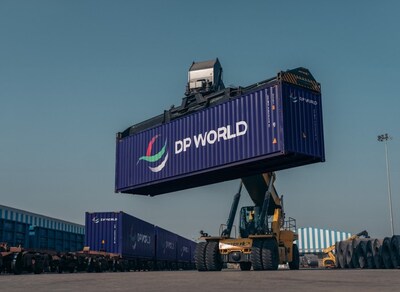

DP World’s decision to reroute cargo from Jebel Ali through the eastern UAE ports of Khorfakkan and Fujairah is a strategic lever that safeguards a critical artery of global trade while underscoring the resilience of the Gulf’s logistics backbone. By diverting shipments around the Strait of Hormuz via bonded road transit, the group mitigates exposure to maritime chokepoint risk and offers shippers a credible continuity option amid escalating West‑Asia tensions. This maneuver not only protects near‑term cargo flows but also validates the infrastructural depth of the UAE’s port network, reinforcing its attractiveness to sovereign wealth funds that view resilient logistics platforms as low‑volatility, inflation‑hedged assets.
The rerouting highlights the complementary roles of Khorfakkan and Fujairah within DP World’s integrated ecosystem. Khorfakkan’s 5 million TEU capacity and high‑velocity operations provide a cost‑effective bypass, while Fujairah’s deep‑water, multi‑purpose berth—central to the region’s oil storage and bunkering—adds a strategic layer for energy‑linked cargoes. Such dual‑use capability signals to regional venture‑capital investors that ancillary services (bonded trucking, customs facilitation, digital tracking via the CARGOES platform) present scalable investment opportunities, especially as supply‑chain diversification and nearshoring drive demand for agile, risk‑adjusted logistics solutions across MENA.
From a broader macro‑perspective, the episode reinforces the imperative for GCC governments to allocate sovereign capital toward redundant, multimodal infrastructure—expanding rail links, enhancing bonded highway corridors, and investing in port automation—to absorb geopolitical shocks without sacrificing trade throughput. Continued upgrades to Jebel Ali’s expansion toward 22.4 million TEUs, coupled with the strategic positioning of eastern ports, will sustain the UAE’s status as a global trans‑shipment hub. In turn, this infrastructure robustness underpins investor confidence, supports the growth of tech‑enabled logistics startups, and ensures that the region’s trade corridors remain open and efficient even amid persistent regional volatility.