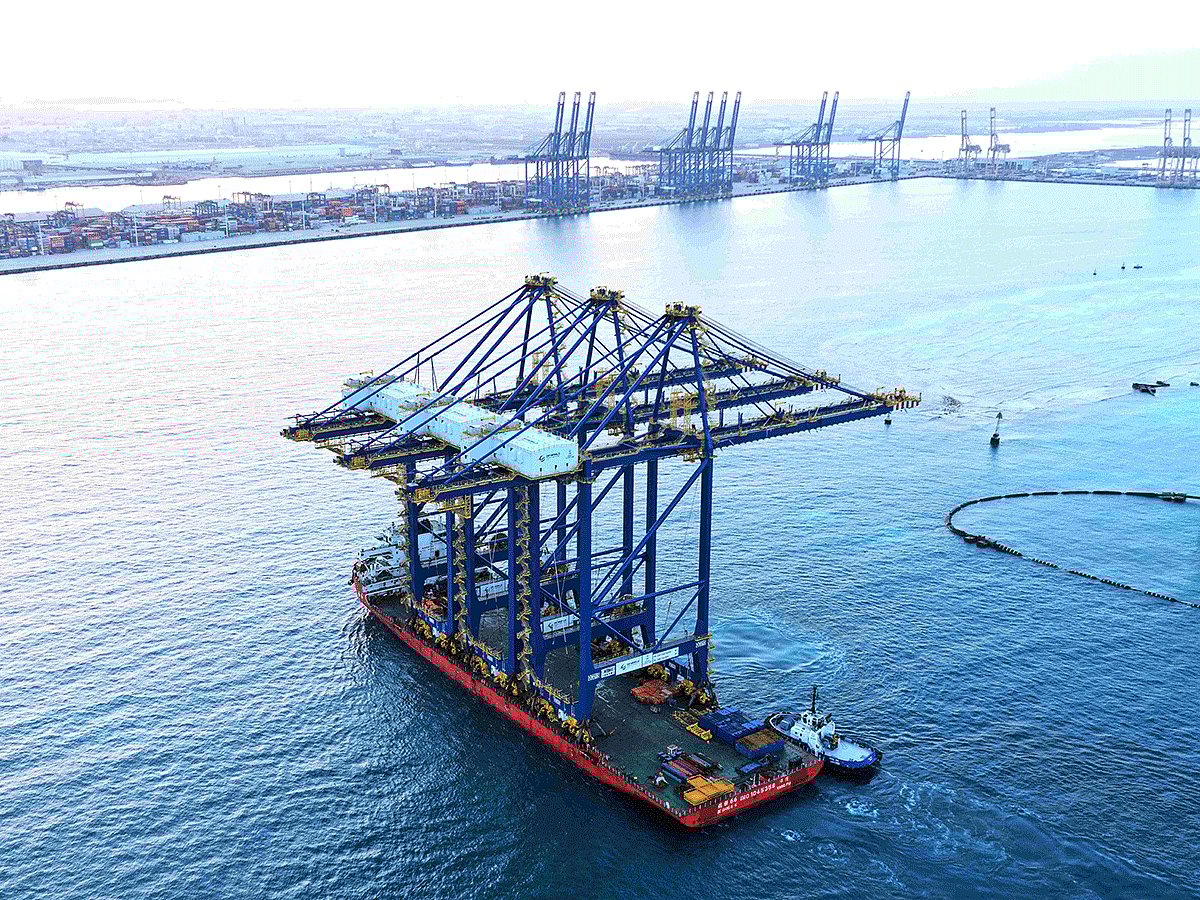

DP World Saudi Arabia’s latest expansion of its King Abdulaziz Port infrastructure underscores the strategic imperatives of scale, speed, and security in Saudi Arabia’s cargo-handling ambitions. The introduction of 17 semi-automated, 65-tonne cranes—part of a broader $800 million modernization push—positions the terminal as a critical node for accelerated throughput, capable of simultaneously servicing multiple ultra-large container vessels in a high-volume trade environment. Such consolidation of asset velocity directly aligns with Vision 2030’s logistics modernization trajectory and sets the operational pace for what is expected to become a regional freight hub servicing intra- and extra-regional commerce.
Operational efficiency underpins the economics of high-volume terminals, where lifting capacity and quay depth translate to concrete cost-per-TEU gains. King Abdulaziz Port’s 2,150-metre berth and 18-metre depth allow it to handle up to five large vessel calls concurrently—an advantage that compresses liner turnaround, reduces demurrage risks, and supports the terminal’s delivery of a capacity jump from 1.8 million TEUs to a projected 5 million TEUs. This expansion not only secures terminal throughput during a projected decade of sustained container growth but also signals to sovereign investors the upstream value of throughput-linked economic multipliers, such as warehousing, inland haulage, and freight-forwarding services.
Geopolitical sensitivity remains a prism through which the terminal’s economic resilience must be measured. Red Sea shipping, central to Gulf intermediation between Asian manufacturing and European consumption markets, remains exposed to maritime security disruptions. DP World’s operational coordination with port authorities and security partners aims to mitigate such downside risks, helping stabilize weekly call volumes—now at 38—as global liners adjust service density in response to regional flux. The company is also investing upstream in freight forwarding and inland connectivity to vertically integrate the logistics chain, a move that reinforces Saudi Arabia’s status as a transshipment corridor well before industrial real estate and pipeline capacity trials test the system by decade’s end.