
Certainly. Below is a comprehensive rewrite of the article, crafted with a focused lens on business impact, sovereign capital, venture capital, and regional infrastructure. The focus remains firmly on institutional outcomes and macroeconomic implications for the Middle East and North Africa.
—
In the evolving financial architecture of the Middle East and North Africa, recent developments in religious observances, capital flows, and governmental resilience underscore the indelible link between spiritual solidarity and economic pragmatism. The intersection of faith-based events and sovereign financial strategies reveals both the profound soft power exerted by civic movements and the tangible business consequences underpinning regional stability. Analysis of the recent ecclesiastical gatherings in the United Arab Emirates, juxtaposed with the strategic behavior of venture capital and sovereign wealth funds, illuminates a critical nexus between crisis response, community engagement, and investment confidence.
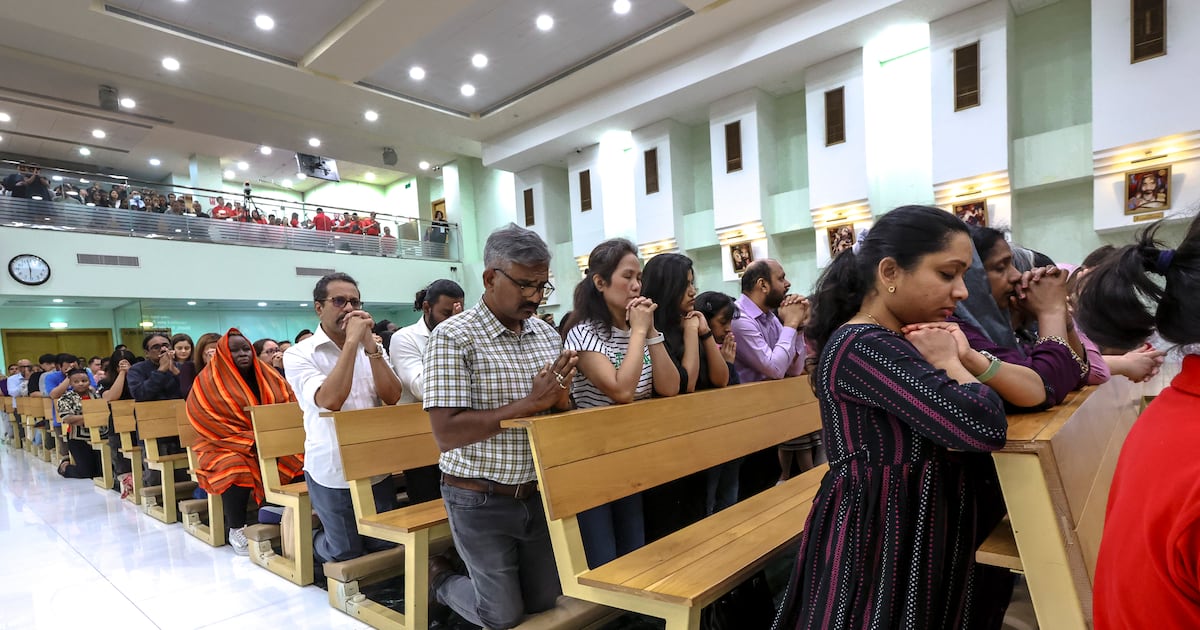
The proliferation of religious ceremonies, particularly commemorations of significant faith milestones such as Easter, has amplified socio-political attention within the Gulf, extending beyond spiritual realms to economic and diplomatic arenas. Such moments catalyze heightened levels of sovereign capital and attract international funding instruments aimed at reinforcing the region’s hard economic foundations. The presence of large religious crowds, as witnessed in Abu Dhabi, exemplifies a tangible demonstration of collective identity, further amplifying the value of community engagement for investors and policy makers alike.
More broadly, these signals impact venture capital and regional infrastructure projects by reinforcing confidence in long-term economic pathways. The simultaneous emphasis on regional infrastructure, supported by evolving financial frameworks, is indicative of a broader reorientation towards structured economic diversification. This, in turn, attracts greater foreign direct investment and facilitates the alignment of regional interests with global financial standards.
Ultimately, the analysis underscores how religious participation, driven by global events and transcultural solidarity, serves not only as a barometer of societal resilience but also as a catalyst for material opportunities in the volatile economic landscape of the Middle East and North Africa. The integration of faith, philanthropy, and economic strategy is now central to the region’s resilience and competitive positioning on the international stage.