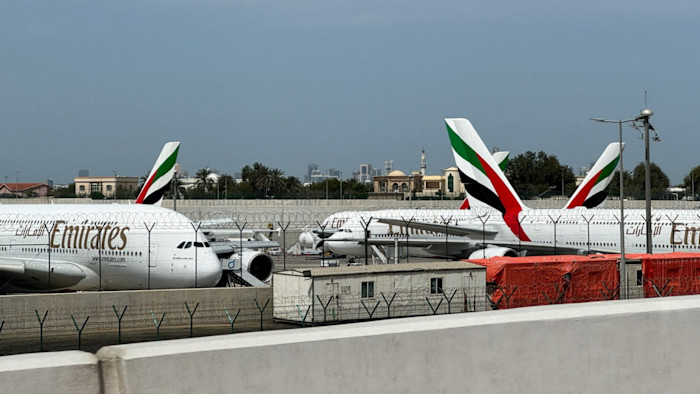

The business impact of Emirates’ preferential war risk insurance coverage underscores a strategic asymmetry within the Middle East and North Africa’s (MENA) aviation sector, with profound implications for sovereign capital allocation and venture capital (VC) risk appetite. By securing coverage at a fraction of the premiums demanded of European and non-Gulf carriers, Emirates leverages its scale, operational expertise, and existing infrastructure investments—particularly its $2bn liability cap—to insulate itself from financial liability in a volatile Middle Eastern conflict landscape. This differential pricing model not only preserves the airline’s profit margins but sets a precedent that could disrupt regional aviation pricing norms. Sovereign entities in the Gulf, where state-owned enterprises dominate critical infrastructure, may increasingly subsidize or back expanded insurance security frameworks to prevent similar asymmetries in other sectors. Such dynamics could skew VC investment toward MENA’s most resilient or state-aligned businesses, marginalizing uninsured or high-risk ventures amid heightened geopolitical instability. The operational reality underscores that sovereign capital is not merely a financial cushion but a geopolitical tool, with Gulf states positioning themselves as insurers of regional economic continuity.
Regional infrastructure in the MENA is both a vulnerability and a strategic asset in this conflict-ridden environment. Dubai’s airport, a linchpin of Gulf economic resilience, has repeatedly faced operational paralysis due to missile threats, exposing intrinsic weaknesses in air traffic security systems. While the UAE’s deployment of advanced air defense and coordinated military operations has restored partial functionality, the recurring disruptions highlight vulnerabilities that sovereign investment must address. Future capital expenditure in MENA’s infrastructure—particularly in aviation, cybersecurity, and satellite communications—must prioritize redundancy and real-time threat mitigation to sustain global connectivity. For VC ecosystems, this creates a bifurcated landscape: established players with sovereign-backed infrastructure, like Emirates, thrive, whereas startups or non-state actors may face prohibitive barriers. The irony is that the region’s physical infrastructure, engineered for high-volume trade and tourism, now becomes a liability unless augmented by sovereign resources capable of rapid adaptation to hybrid warfare threats.
The insurance dynamics at play also signal a recalibration of VC strategies in the MENA. High risk premiums, as seen with European carriers, could deter investment in aviation-adjacent ventures or logistics startups reliant on regional transit security. Conversely, Gulf-based VC funds may prioritize insured investments or partnerships with state-backed entities to hedge against conflict-related losses. This shift could accelerate the region’s transformation into a risk arbitrage hub, where sovereign resources and VC capital converge to fund ventures with embedded security assurances. Moreover, the success of Emirates demonstrates that sovereign capital, when strategically deployed, can toleratably absorb financial shocks, fostering confidence in high-risk sectors. However, this model risks entrenching dependency on Gulf states for infrastructure and market access, potentially deterring non-Gulf private capital from entering or scaling operations in a region where capital allocation is increasingly politicized and security-centric.