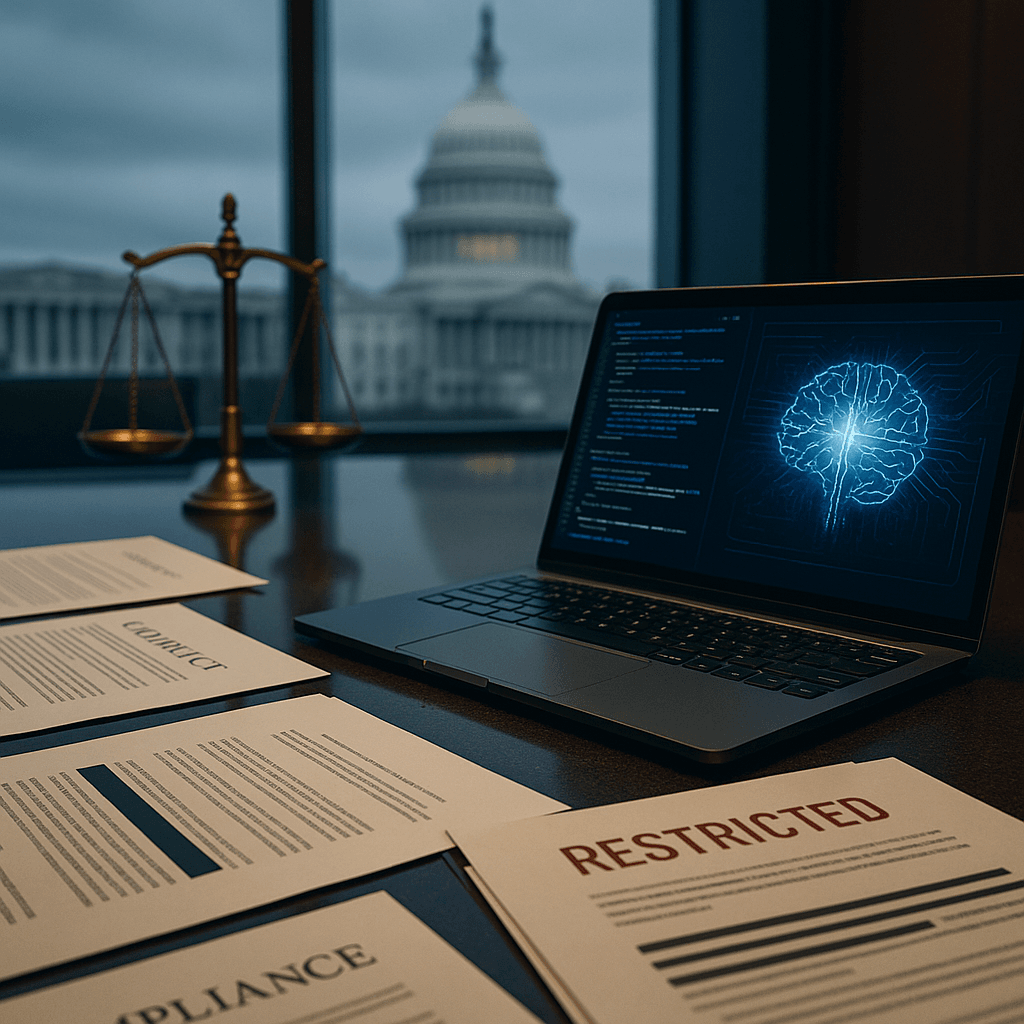

The Justice Department has escalated its battle with artificial intelligence developer Anthropic, arguing in legal filings that companies cannot impose ethical restrictions on military AI applications if they wish to secure defense contracts. This confrontation represents a watershed moment in defining the boundaries between AI safety principles and national security imperatives, with profound implications for the global AI industry’s trajectory.
At stake is the fundamental question of whether AI developers can maintain ethical safeguards on their technology while engaging with government clients. The Justice Department contends that Anthropic’s attempts to restrict its Claude models from certain military applications disqualified the company from handling classified warfighting systems. This position introduces unprecedented commercial risk for AI companies balancing ethical principles against defense sector opportunities in an increasingly competitive global battlefield for technological supremacy.
The case creates a stark precedent for the MENA region’s sovereign AI ambitions. As Gulf states accelerate AI infrastructure development and seek to position themselves as strategic partners to multiple global powers, the exclusionary stance taken by U.S. authorities could push regional players toward alternative technological ecosystems. Middle East capital allocators may view this as validation for maintaining independent AI development pathways rather than aligning with Western ethical frameworks that could limit future applications in autonomous systems and defense technologies.
For the broader Middle Eastern tech ecosystem, this legal confrontation signals potential fragmentation in global AI governance standards. Venture capital flowing into the region’s AI startups will likely factor in the emerging geopolitical dimensions of AI safety versus utility, while national data infrastructure policies will need to address these competing imperatives. The case ultimately frames a critical choice for AI innovators between commercial opportunity with major powers and the right to impose ethical constraints on technology deployment – a dilemma that MENA’s sovereign AI strategies must now navigate with exceptional care as they build capabilities to serve diverse strategic interests.